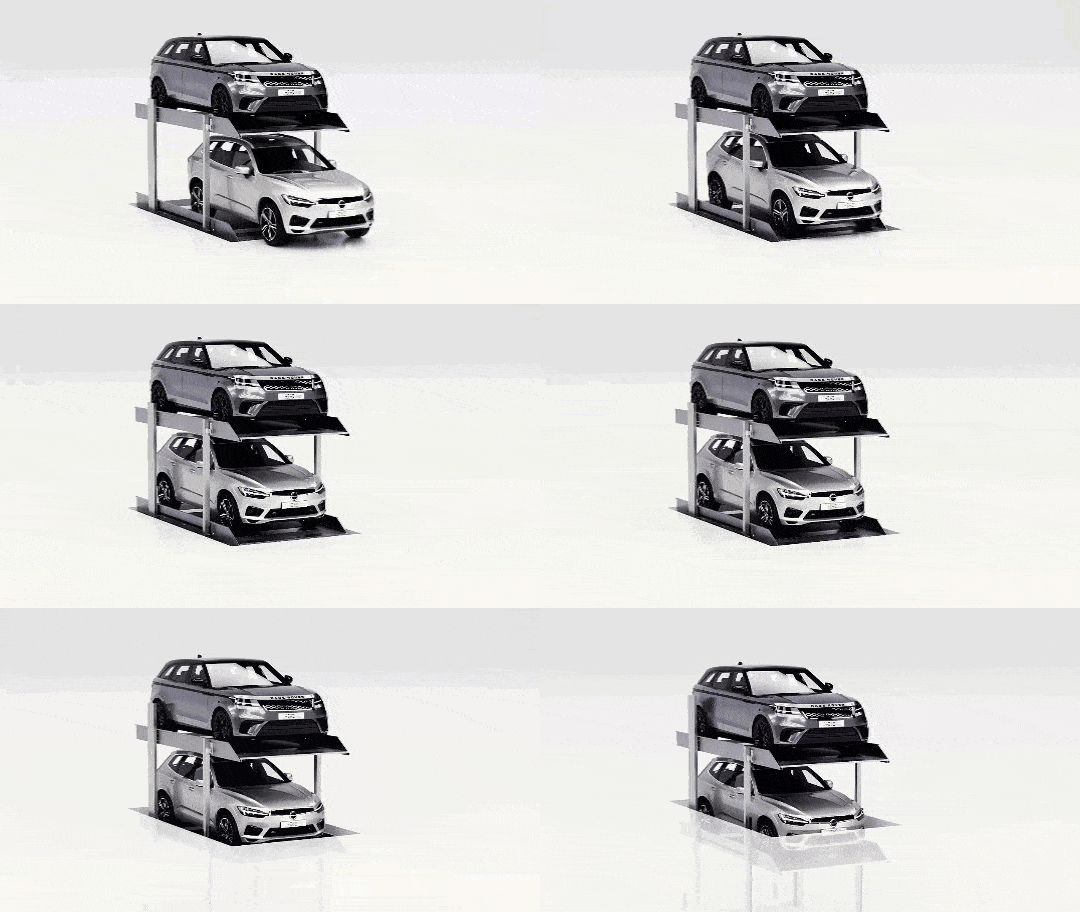
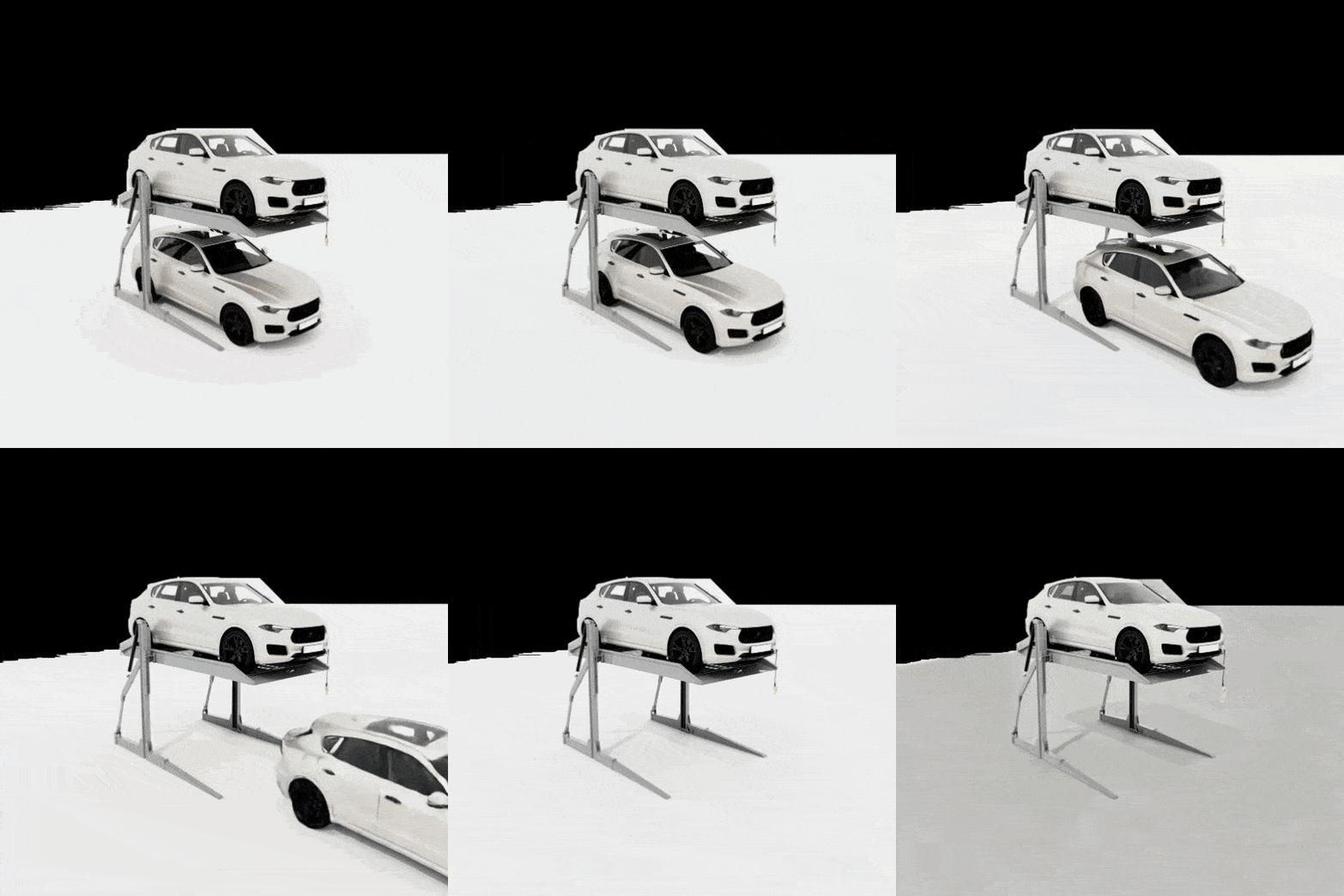
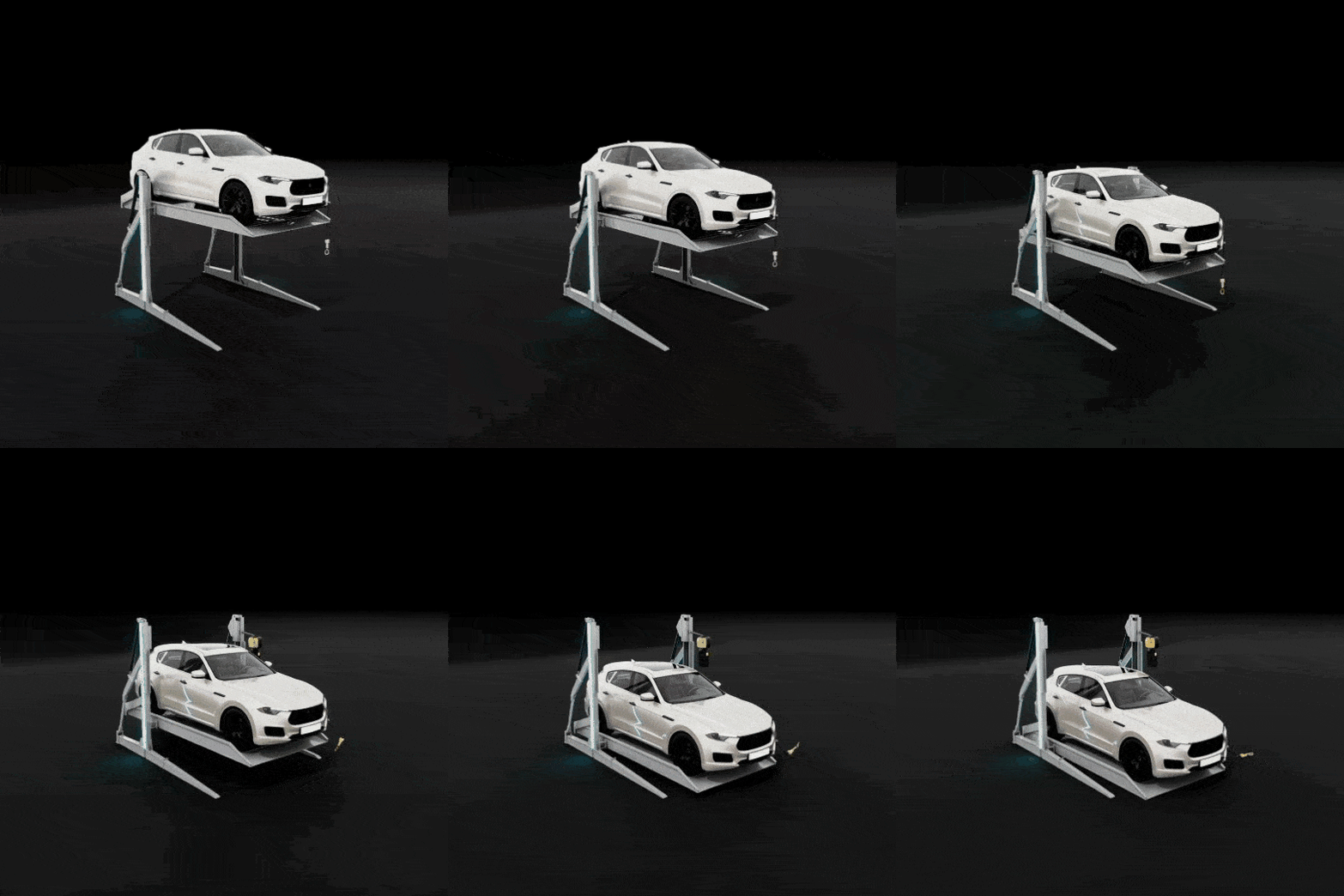
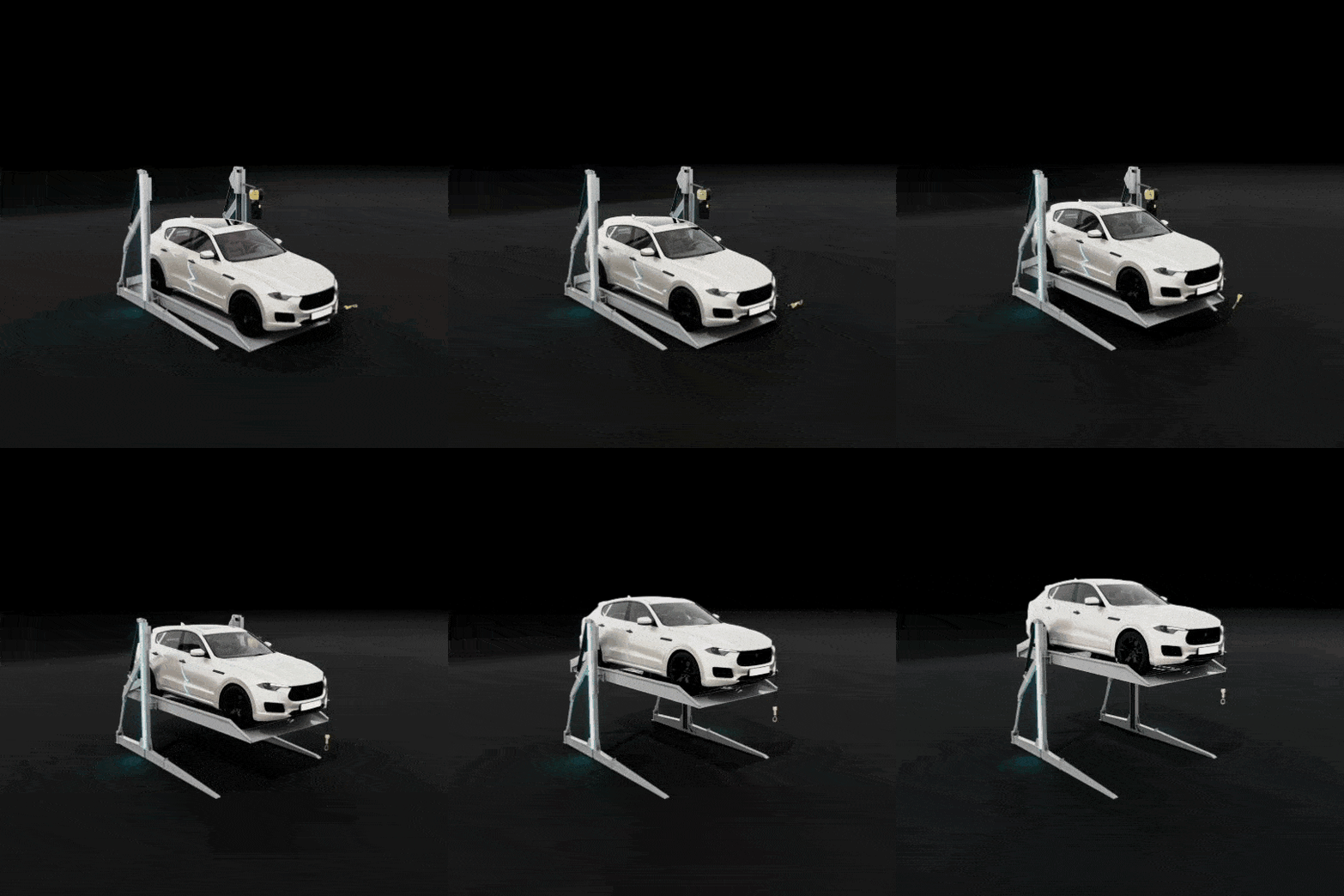
Can Automated Parking Reduce My Parking Costs? An Insider’s Honest Answer
I’ve worked in automated parking since 2016. As Business Development Director at TAPCO, I build relationships with real estate developers, owners, architects, and general contractors. I coordinate designs and budgets, close deals with my team, and stay in touch with clients for the life of their projects.
The question I hear most often is simple: “Can automated parking reduce my parking costs?”
The honest answer is that it depends. When the conditions are right, it can save a great deal. It can even be what makes a project feasible. Here’s how I think it through with clients.
Look Past the Equipment Line Item
The most common mistake I see is focusing only on the parking equipment cost. A developer looks at the price of the parking system, compares it with the cost of a parking space in a conventional design, and stops there.
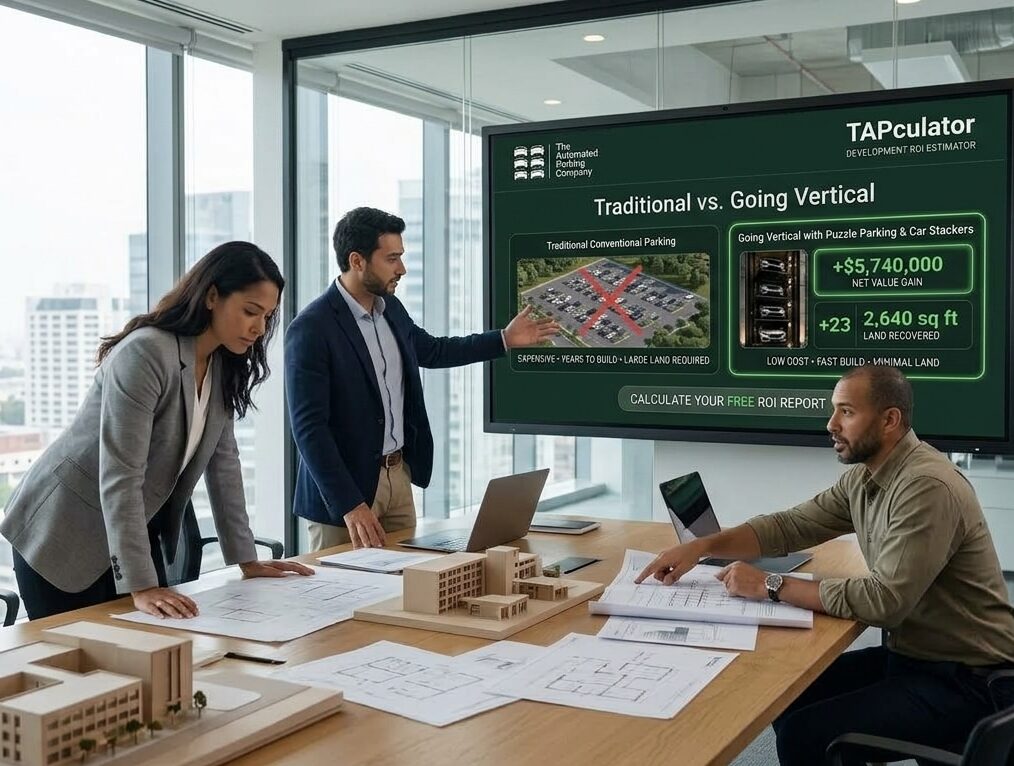
That misses the bigger picture. The savings from automated parking rarely come from the equipment itself. It comes from everything the equipment lets you avoid: excavation, extra decks, ramps, drive aisles, months of construction, and wasted square footage.
8 Ways Automated Parking Can Cut Your Project Costs
Park more cars in less space.
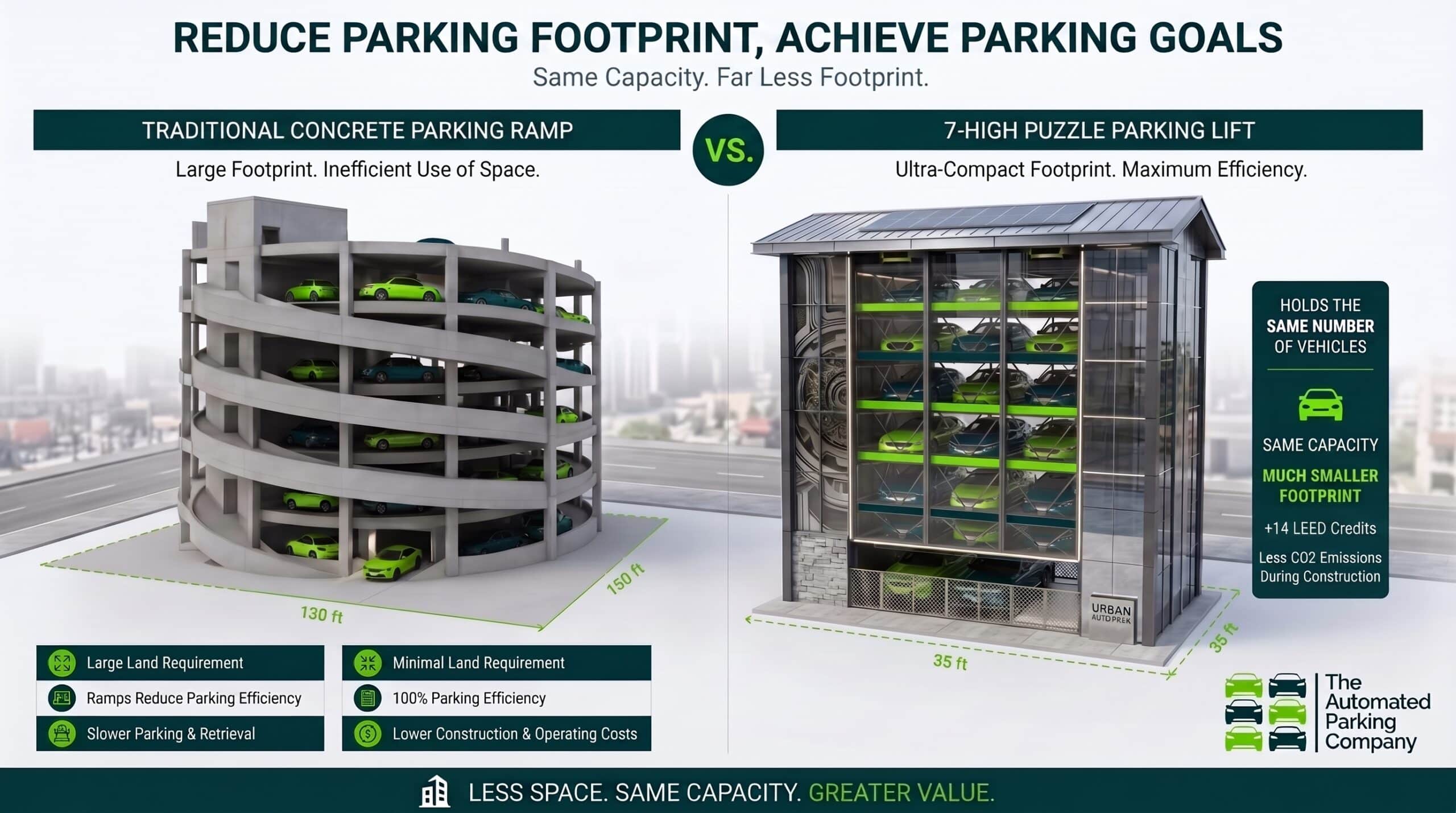
If you can’t reach your parking count with conventional parking, automated parking can often solve it, because it fits more cars into the same footprint.
Reduce or eliminate expensive excavation.
Digging is one of the most expensive parts of any project. Builders often quote about $1 million per subterranean parking deck, and on a project I’m working on in Las Vegas, it’s closer to $5 million per deck. Deck size varies, so these costs vary widely, but they add up fast.
Reduce or eliminate intermediate parking decks.
Here’s a rule of thumb I use. When I see a garage design with three subterranean levels, there’s a good chance we can fit all those cars on one level with a puzzle system. Removing two levels of excavation often saves enough to pay for the parking system itself.
Reduce construction costs.
Fewer levels mean less concrete, shoring, waterproofing, and structural work.
Speed up the critical path and shorten build time.
This is the benefit clients underestimate most. A shorter schedule means lower carrying costs, less interest on construction loans, and earlier lease-up. These savings don’t appear on the equipment quote, but they show up in your returns.
Free up space for higher-value uses.
A smaller parking footprint leaves room for more units, retail, amenities, or storage, all of which earn more than concrete ramps.
Faster depreciation.
In many cases, automated parking systems can be classified as equipment rather than part of the building. A conventional parking structure is generally depreciated with the building: over 27.5 years for residential rental property or 39 years for nonresidential property. Qualifying equipment has a much shorter recovery period and may be eligible for 100% bonus depreciation, which lets you deduct the full cost in the year the system is placed in service. That can speed up your ROI significantly.
Tax treatment depends on your project, how the system is classified (often confirmed through a cost segregation study), and current tax law. Consult your tax professional to see how these rules apply to you.
Repurpose the space later.
All-steel automated systems can be removed if you want to use the space differently in the future. That’s much easier than demolishing a concrete parking structure.
What Does Automated Parking Really Cost?
Every project is different. Cost per space depends on the type of system, the number of spaces, the municipality, and whether the project uses union or non-union labor. Here are some ballpark figures to start with.
Puzzle systems: When someone needs a rough order of magnitude (ROM) and doesn’t have many project details yet, I start at about $25,000 per space. The final price depends on the number of levels and whether the system is indoors or outdoors.
AGV (robotic) systems: Pricing depends heavily on the number of spaces. A project with fewer than 10 spaces might cost about $90,000 per space, while a 300-space project could come in around $18,000 per space.
Case Study: Student Housing in Los Angeles, We installed a 32-space, 2-high, 1-deep tandem puzzle system for a student housing project in the City of Los Angeles.
Automated parking cost: about $31,000 per space, all-in
Estimated cost to excavate for conventional parking: $50,000–$75,000 per space. That’s roughly a 40–60% saving per space, or about $600,000 to $1.4 million across the project. This project also shows that automated parking can get approved in a demanding jurisdiction. The City of LA is one of the most rigorous municipalities we work with, with strict requirements for fire, electrical, ASTM steel, and AISC welds. With the right partner, those requirements are manageable.
Operating Costs and the Maintenance Myth
Many people believe a conventional garage needs no maintenance. That isn’t true. A poorly maintained concrete parking structure can eventually need repairs costing millions.
Automated parking has a predictable lifecycle:
The steel structure is designed to last 30 years.
Components are replaced on a set maintenance schedule.
A more thorough refurbishment happens about every 7 years.
Maintenance runs about $30 per space per month after the first year. The first year includes warranty, maintenance, and service, and extended warranties are available.
Puzzle semi-automated parking systems also need less lighting, ventilation, staffing, and valet service than a conventional garage.
From Cost to Revenue
Automated parking can also earn money:
Parking fees: Many of our installations charge users a monthly fee, and add another fee for dedicated EV charging. Expect roughly $100–$200 per month, depending on the city. At $150 a month, one space earns about $1,800 a year, compared with about $360 a year in maintenance.
Storage units: Spaces in our system can be converted to storage. One developer told us they expect to earn more from storage units than from parking.
Higher-value space: A smaller parking footprint frees up area for uses that earn more.
Security: Tenants value a secure place to keep their cars.
Parking minimums are disappearing in many cities. But builders who skip parking entirely often find their units harder to lease. Automated parking offers a middle path: parking for residents without giving up the whole project to it.
When Automated Parking Isn’t the Right Fit
I’d rather tell you upfront when automated parking doesn’t make sense. It generally isn’t the best fit when:
Land is plentiful. Automated parking makes the most sense in dense urban areas and on infill lots where space is tight. When land is plentiful, it usually doesn’t pencil, though there are exceptions.
An above-ground concrete structure already meets your space count. There are exceptions, but this is usually not a good fit.
Large numbers of people leave at once. Venues like stadiums need many cars out at the same moment, and conventional parking handles that better.
Common Mistakes and When to Call Us
Bring us in early. The ideal time is during the conceptual and schematic design phases. If we’re brought in only after the project is funded, we often have to resolve MEP, structural, and fire conflicts late, and that leads to change orders.
Value engineering only works early. Many people assume we can find savings after the design is finished. The biggest value engineering opportunities exist during the conceptual and schematic phases.
Don’t choose a vendor by spreadsheet alone. Comparing equipment prices line by line and treating every vendor the same ignores the most important factor: experience. A successful installation depends on four things:
Design
Equipment and manufacturing
Installation
Maintenance and service
Some projects look great in the pro forma. What matters is how the system performs every day for decades.
Why the US Is Catching Up
Automated parking has been mainstream in Europe and Asia for more than 25 years, and it’s growing steadily in the United States. In my experience, four things have held it back here:
Fear of something new
Habit
Limited expertise
Conventional parking is the path of least resistance
As land and construction costs keep rising, more developers and architects are taking a closer look, and they like what they find.
How to Choose the Right Partner
Automated parking is a capital investment, so take the time to choose well:
Check references.
Tour existing projects.
Talk with property managers who use the systems every day.
The Automated Parking Company has installed more than 150 puzzle systems, and we keep improving the technology and user experience. We’re proud of our track record and happy to connect you with a long list of references. A well-designed system should serve you for 25+ years without breaking the bank.
Your Next Step
If you’re wondering whether automated parking could reduce costs on your project, schedule a call with us. It helps if you have plans, but we’re glad to talk at the concept stage too.
Ideally, send us PDFs and CAD files of the parking area. We can provide CAD blocks, Revit files, and specs so your design team can take a first pass, and we’ll give guidance from there.
We’d love to have you join the growing community of developers, architects, owners, and builders who are parking smarter. Let’s talk about your project.
The Automated Parking Company’s Is A Manufacturer of Three Systems:
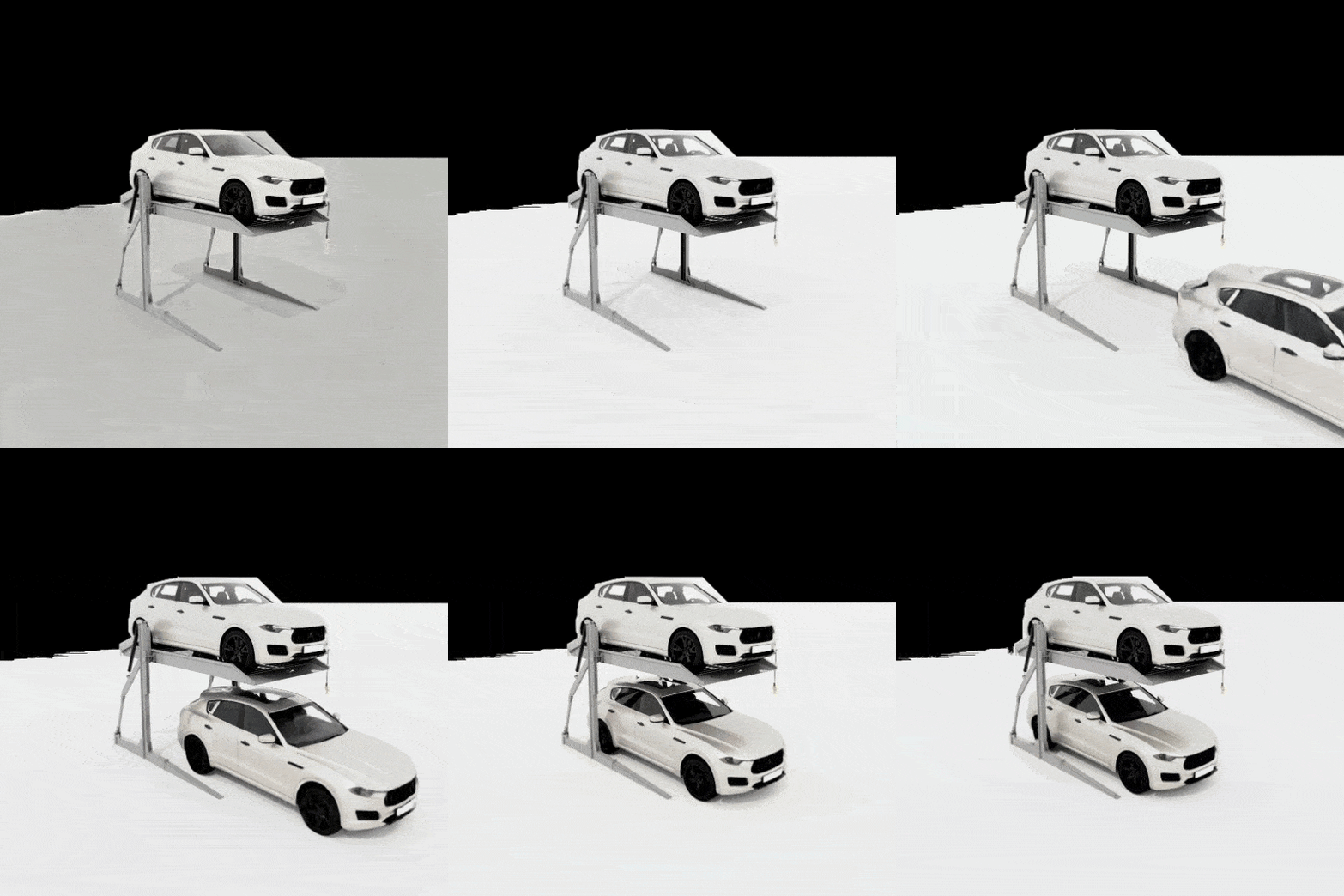
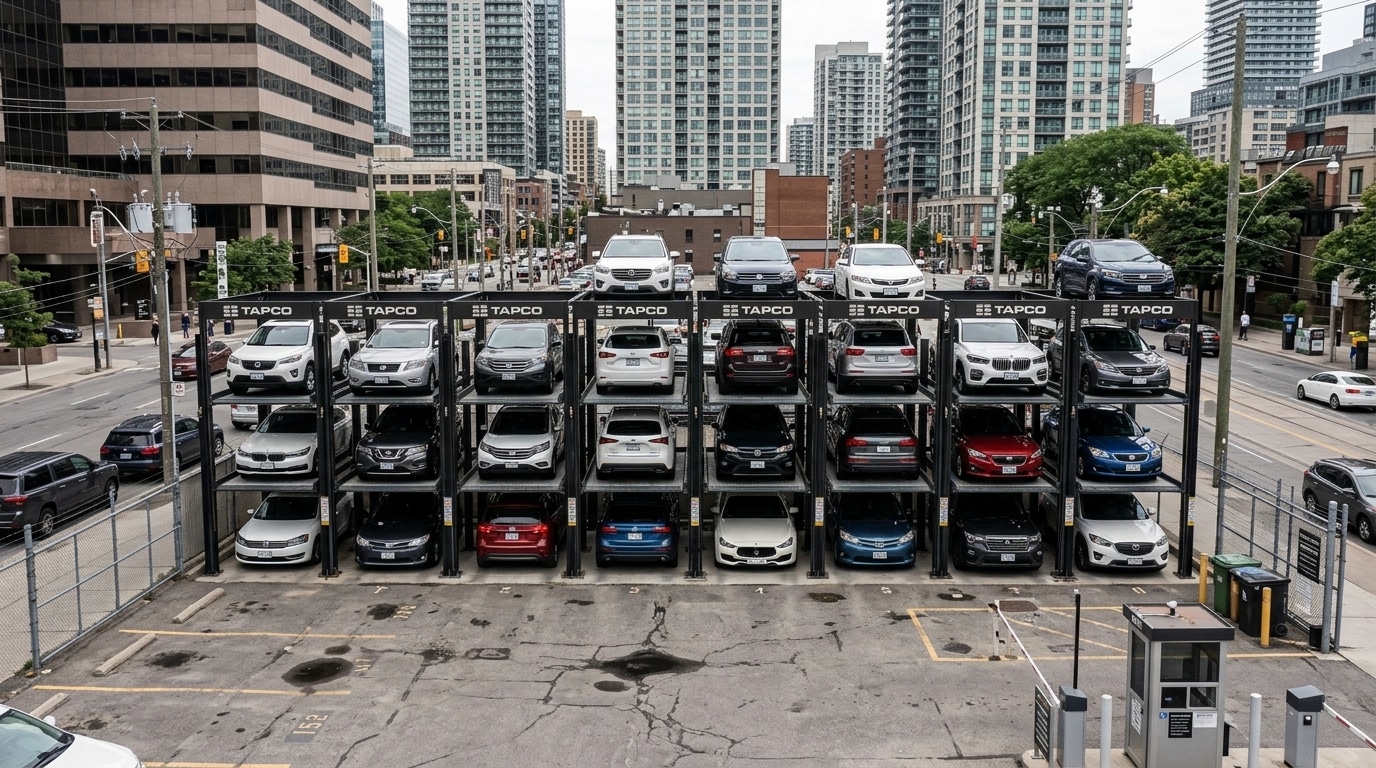
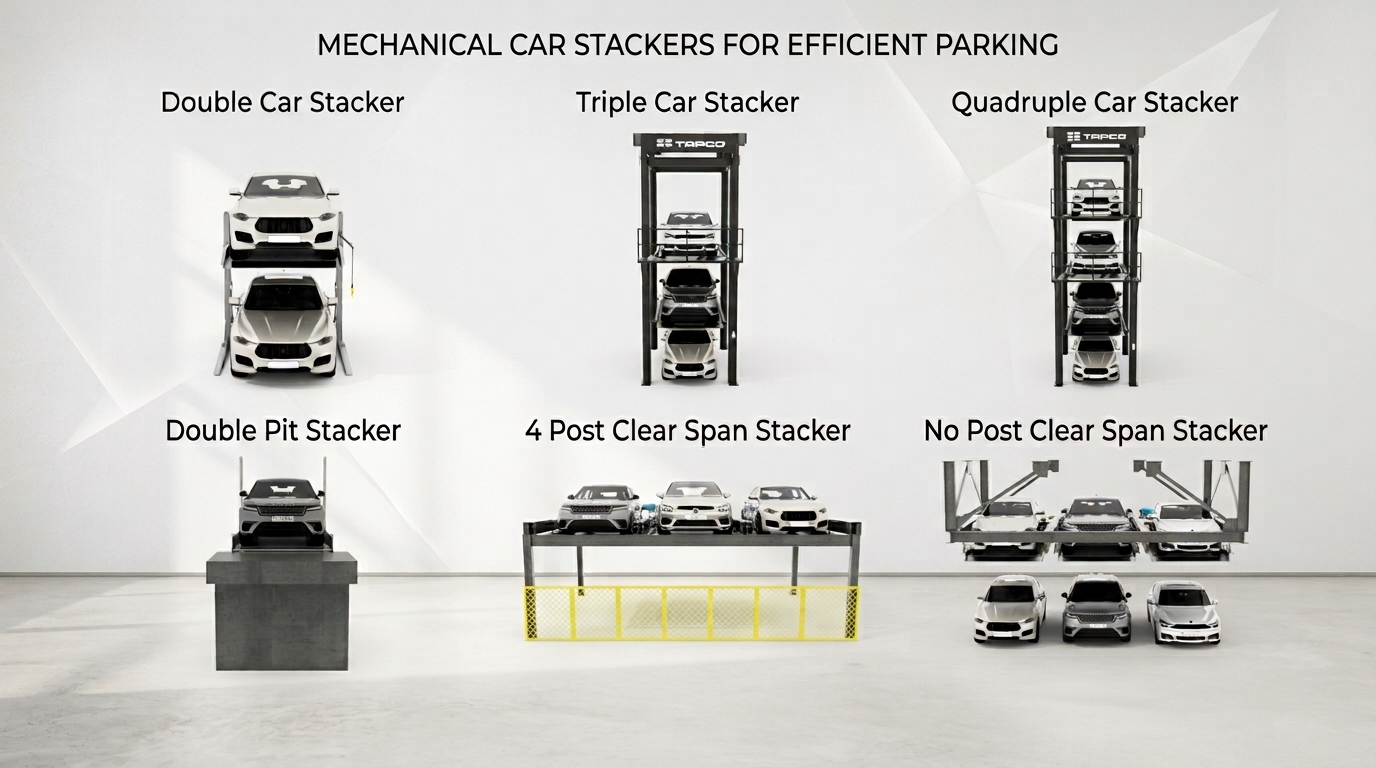
The Automated Parking Company furnishes and installs Double Car Stackers, Triple Car Stackers, Quadruple Car Stackers, Pit Car Stackers, No Post & Clear Span Car Stackers. These are mechanical and hydraulic driven systems that can be installed indoor and/or outdoor. These systems “typically” require attendants to manage both the retrieval and stowing processes. We find these systems useful for car collectors and surface lots where you want to increase your revenue and capture an accelerated ROI. These solutions offer you a very low Capex and Opex.
The Automated Parking Company manufactures, installs, maintains and services a variety of car lift parking & storage solutions designed to incorporate the assistance of parking attendants or valet operations utilizing our No Post Clear Span Car Stackers, 4 Post Clear Span Car Stackers, Pit Car Stackers,Double Car Stackers, and both our Triple Car Stackers and our Quadruple Car Stackers. These attended car stacker parking lifts can instantly add to or enhance parking capacity and storage and are ideal for use in attended parking facilities. From Quadruple car stackers to No Post solutions, we offer convenient stacked parking options for efficient space utilization and convenient parking.
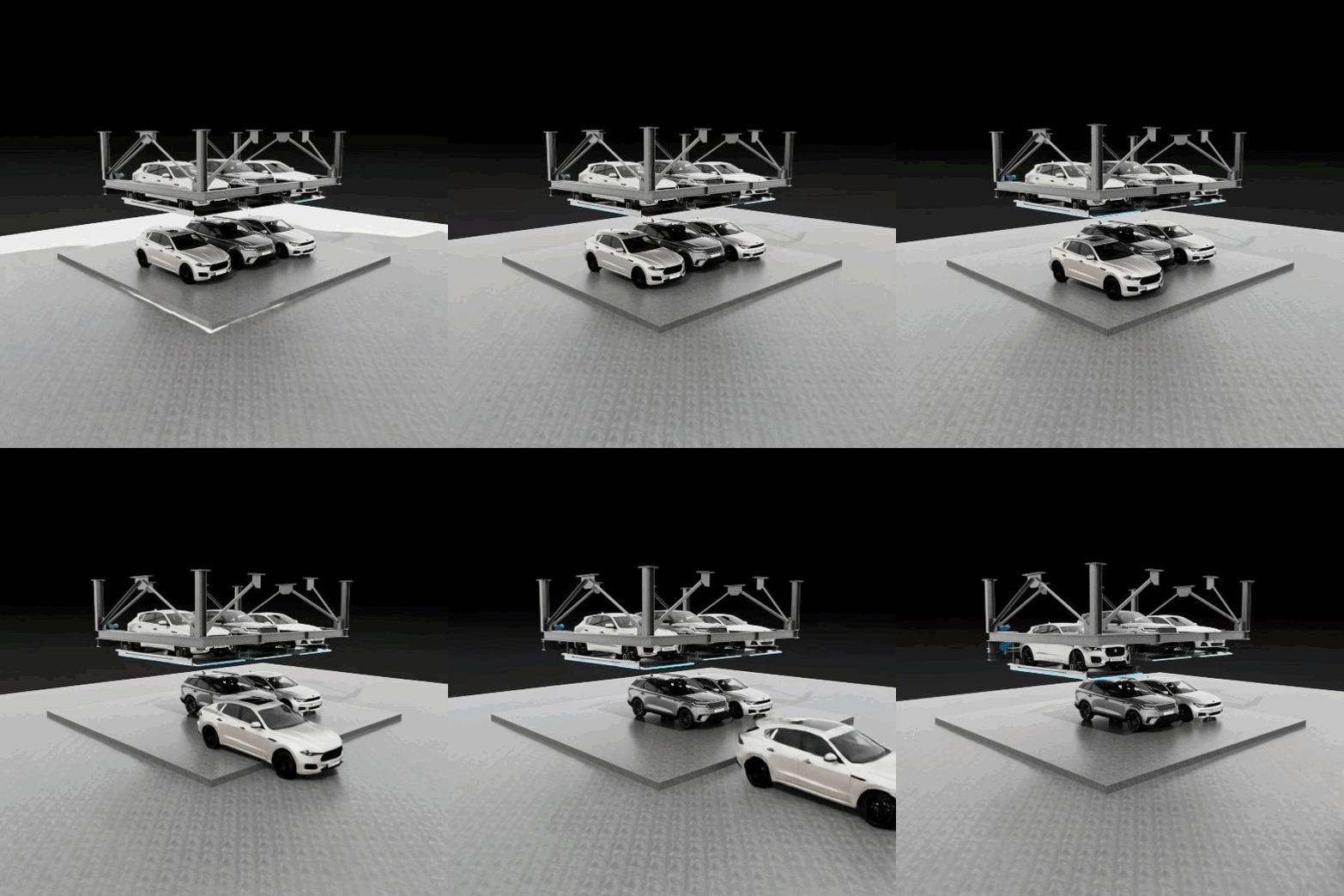
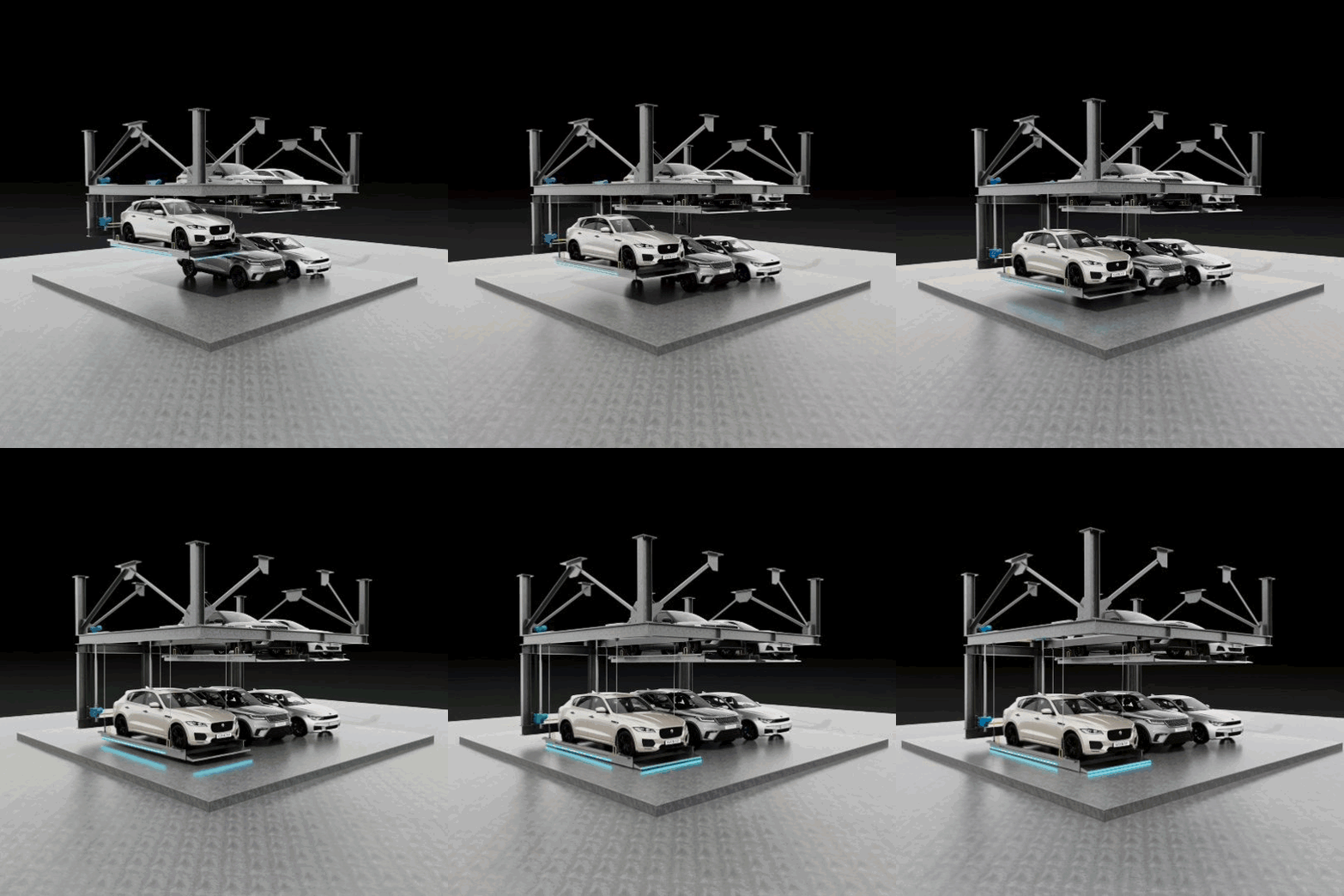
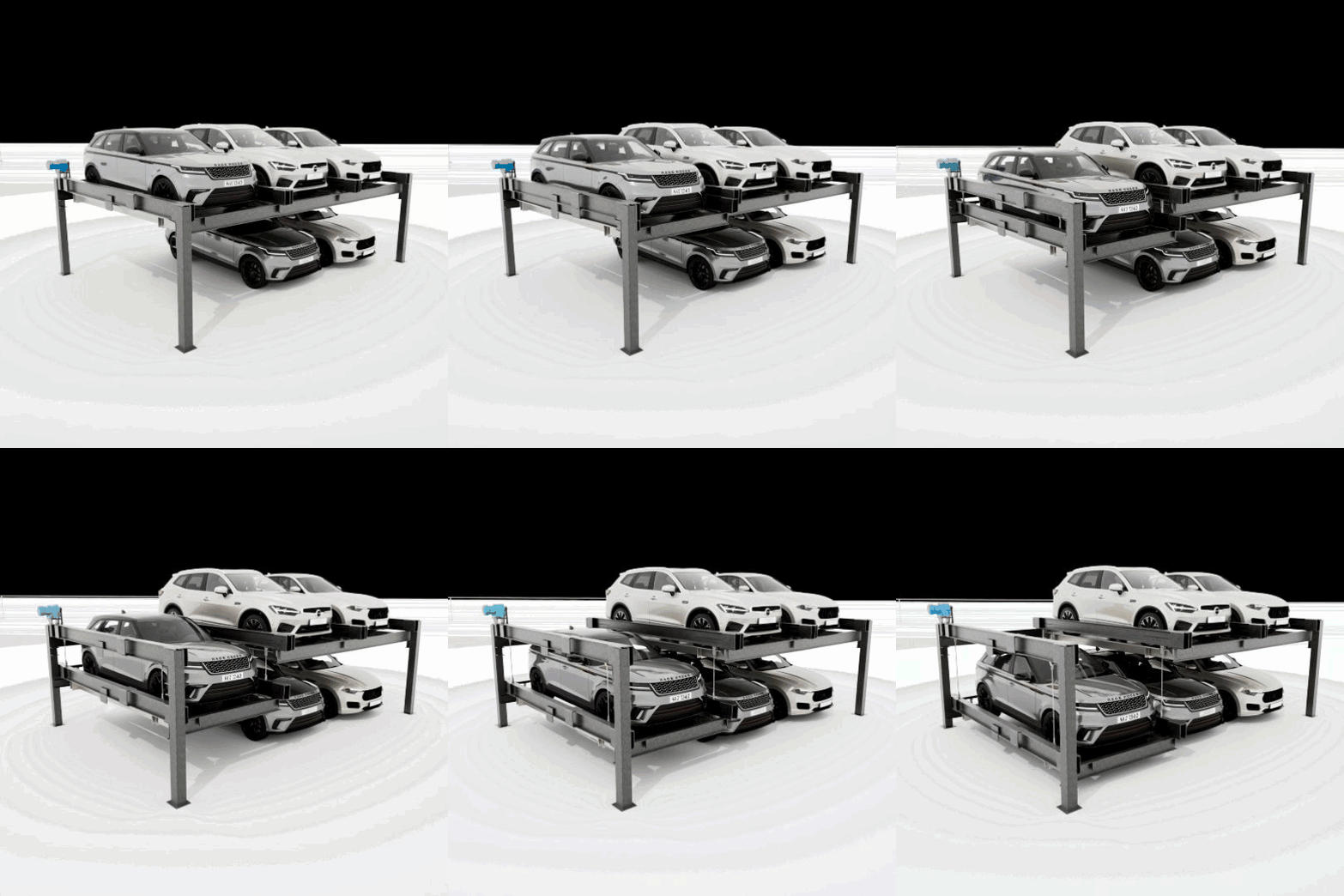
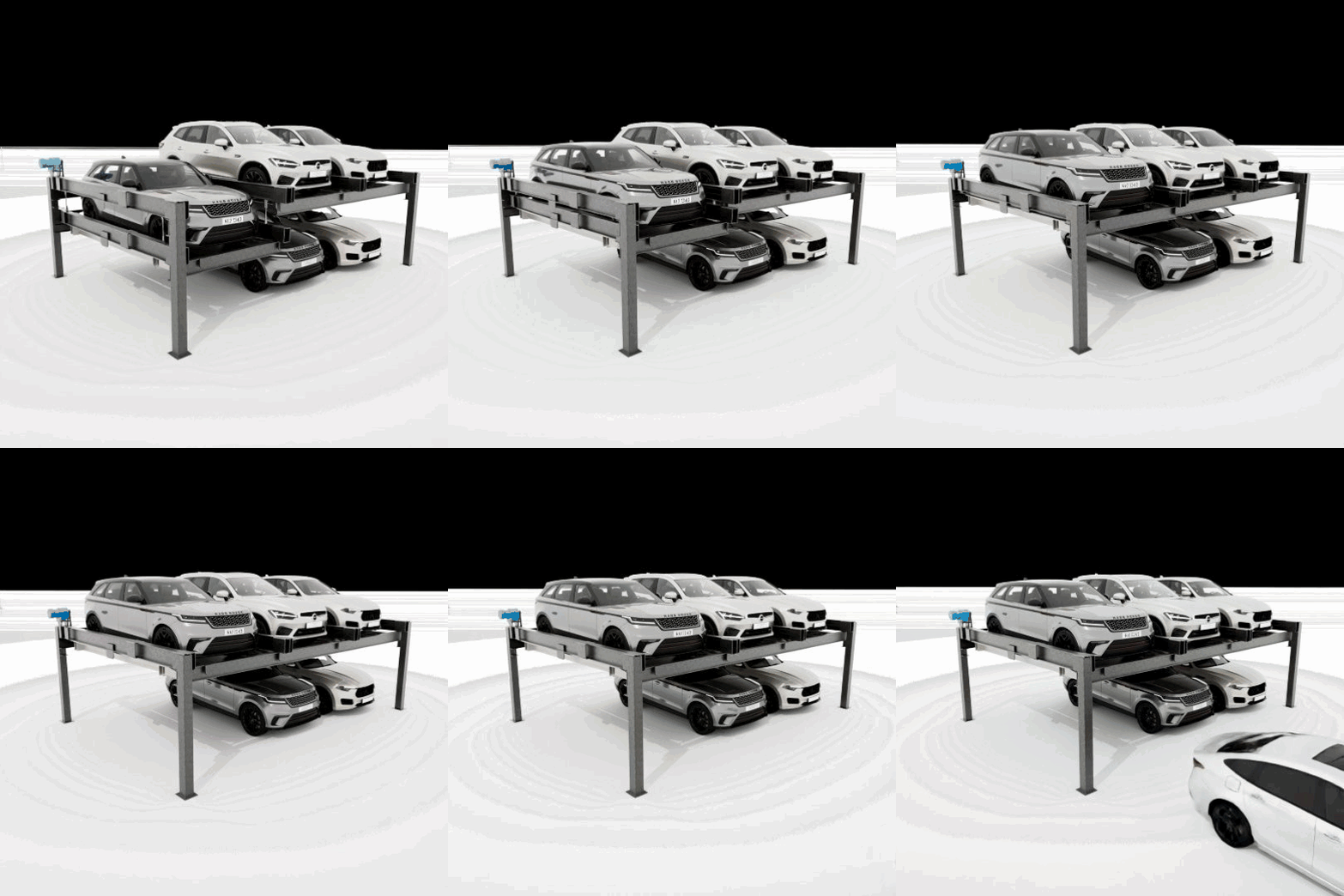
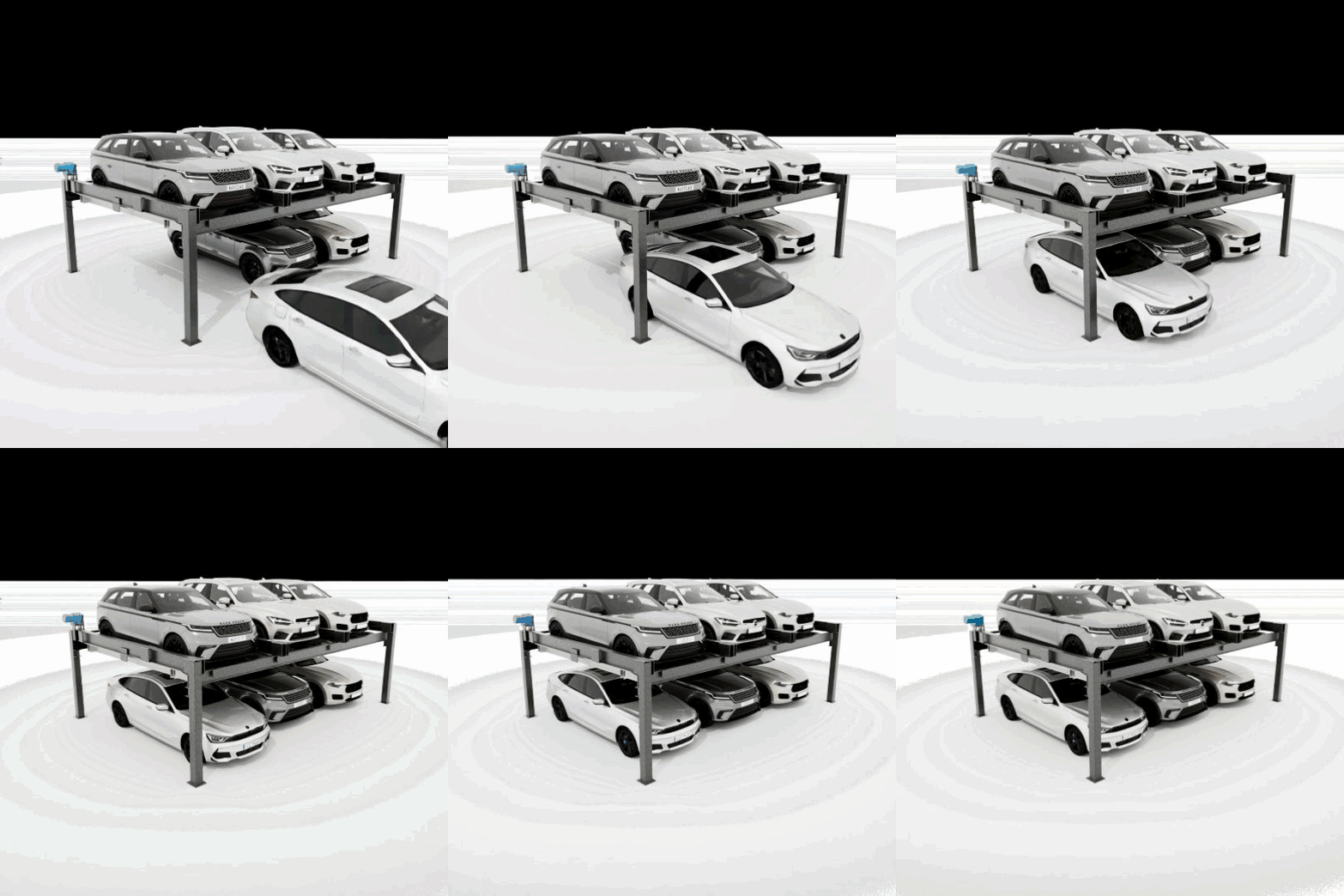
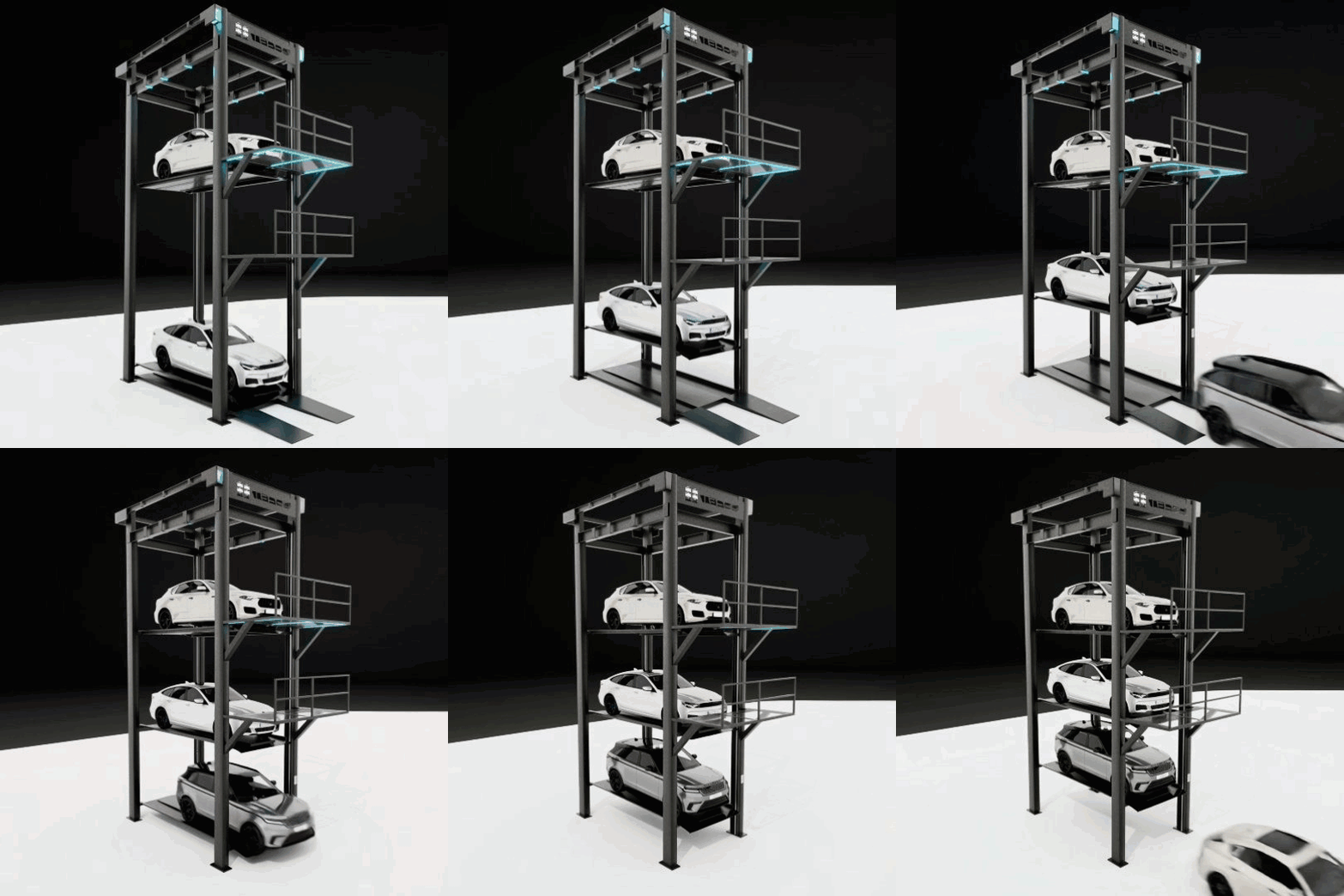
The Automated Parking Companymanufactures, installs, maintains & services Semi-Automated Puzzle Parking Solutions (SAPS) offering independent access by the user, so no attendants are required with this solution! The Puzzle parking system fits well with office and multi-family properties. The Automated Parking Company can design 2 levels to 7 levels and also incorporate one or even two subterranean levels depending on the solution needed.
De-Risk Your Parking Strategy with a FREE $5,000 Design Review Credit
If you connect with us, The Automated Parking Company, will provide a FREE in-depth design review, normally valued at $5,000; to assess feasibility, optimize layouts, and align your parking solution with project goals.
When you proceed with us, the full design review fee is credited back to the project, ensuring your early-stage diligence directly supports execution—not overhead.
A disciplined approach to smarter parking investment.
📞 Call Us for a FREE parking design review, valued at $5,000: (877) 827-2611
We value community input and address concerns for harmonious solutions.
Research & Innovation
Continuous research and innovation to improve green parking solutions.
Our Step By Step Process Towards Building Smart Yet Sustainable Parking
At TAPCO, our process ensures seamless delivery of efficient and sustainable parking tech tailored to your evolving project needs.
01
Discovery & Consultation:
Understand your needs, site constraints, and objectives.
02
Customized Design:
Create a tailored parking solution with eco-friendly integration.
03
Project Approval & Collaboration:
Obtain necessary approvals and work closely with your team.
04
Manufacturing & Quality Control:
Ensure the highest standards of quality.
05
Timely Delivery & Installation:
On-time setup with minimal disruptions.
06
Thorough Testing & Commissioning:
Rigorous performance checks and safety adherence.
07
Training & Support:
Comprehensive staff training and ongoing maintenance services.
08
Environmental Responsibility:
Implement eco-friendly practices and sustainability monitoring.
09
Client Satisfaction:
Prioritize your project with any number of our solutions.
Frequently Asked Questions
Q: Can TAPCO’s solutions be tailored to our specific needs?
A: Absolutely! At TAPCO, we understand that every project is unique. Our experienced team of designers and engineers will work closely with you to understand your specific requirements, site constraints, and objectives.
Q: How many levels can The Automated Parking Company design for the Puzzle parking system?
A: The Automated Parking Company has the capability to design systems with 2 to 7 levels, accommodating a varying number of parking spaces. Moreover, if your project calls for additional space optimization, we can even incorporate one or two subterranean levels, effectively increasing the total parking capacity.
Q: Are TAPCO’s parking systems safe and reliable?
A: Yes, safety is our top priority at TAPCO. We adhere to stringent industry safety standards and conduct rigorous testing and quality control measures at every stage of the manufacturing process.
Our car parking solutions are designed and built to ensure the safety of users, vehicles, and your property. We use high-quality materials and employ advanced technology to ensure the reliability and durability of our parking systems.
Improving Parking Convenience with Parking Stackers
When it comes to parking solutions, attended-oriented systems offer a blend of efficiency and convenience that cater to the needs and challenges of urban areas, particularly high-demand areas.
These multi-level car stacker solutions are a game-changer when it comes to parking, allowing the creation of multiple parking spaces within a single area.
TAPCO introduces a wide array of innovative attended-oriented parking systems designed to optimize space utilization as well as offer user-friendly parking practices.
These systems are intended to provide a seamless parking experience and enable attendants to efficiently manage parking procedures while ensuring the convenience and safety of the users. Here are the key benefits of using attended-oriented parking systems.
Optimal Space Utilisation
Our attended-oriented parking systems incorporate car lift storage systems make optimal use of the available space. Vertical stacking of vehicles with the vertical storage lift enables the system to increase the parking capacity within a limited area, hence coping with the increasing parking demands.
Organised vertical stacking
The attended-oriented parking allows vertical stacking of vehicles to utilize a vertical space effectively. This approach reduces the area required for parking, thereby contributing to a more organized and aesthetically pleasant-looking parking facility.
Convenience
The attended-oriented parking system offers ease of use for the attendant as well as the user. While the attendant can successfully navigate the car stacker lift and swiftly move vehicles into a nesting position with minimal effort, users need little to no guidance to park their vehicles safely.
Enhanced Security
Our attended-oriented car stacking system comes with advanced features to ensure the safety of parked vehicles. While users have peace of mind, property managers can also be content with the knowledge that the facility is secure.
Versatile stacked car parking
We offer a variety of car stacker lift solutions. From four post car storage lifts to no post solutions, our systems can be implemented indoors as well as outdoors and can be adapted for various project requirements or property layouts. TAPCO’s attended-oriented parking systems can be used in various environments, from commercial establishments to residential complexes.
Revolutionary Parking Solutions with Automated Lift Parking System
As the urban landscape continues to grow, the demand for efficient car parking solutions has become increasingly important. TAPCO introduces revolutionary semi-automated smart parking systems that are designed to optimise space utilization and streamline parking procedures for multi-family residential complexes and commercial facilities. Compared to the conventional car lift system, our multi level car parks are designed to redefine convenience and efficiency.
Here are some of the key features of our semi-automated car parking systems
Space Optimization
Optimal space utilization is a key focus of our multi-level car storing solutions. Our stack parking systems are designed to accommodate multiple levels, providing an impressive number of parking spaces within a compact footprint. We can design and integrate two to seven parking levels in a single structure and customize varying lengths, widths, and heights.
Seamless Automation
Our smart parking system incorporates advanced automation to simplify the parking process. Drivers can effortlessly park their vehicles with minimum guidance, thereby providing efficient utilization of time.
EV Capability
Given the increasing trend of electric vehicles, our parking solutions are also designed to embrace the future of mobility and Electric Vehicles. To cater to the ever-evolving automotive landscape, we also feature charging facilities for electric cars. We are the only vendor offering 7000# rated systems.
Convenience
We understand that parking can be a source of frustration for people, particularly when you cannot find a spot and have to drive around looking for space. Such layouts can be problematic for larger properties. However, with our Puzzle Parking system, this problem can be easily resolved, offering convenience to individuals and saving valuable time when parking or capturing your auto.
FAQ
Q: What is the difference between a fully automated and semi-automated smart parking system?
A: Semi-automated Puzzle solutions and fully automated AGV parking systems are considered automated parking and compress footprints giving you back valuable square footage.
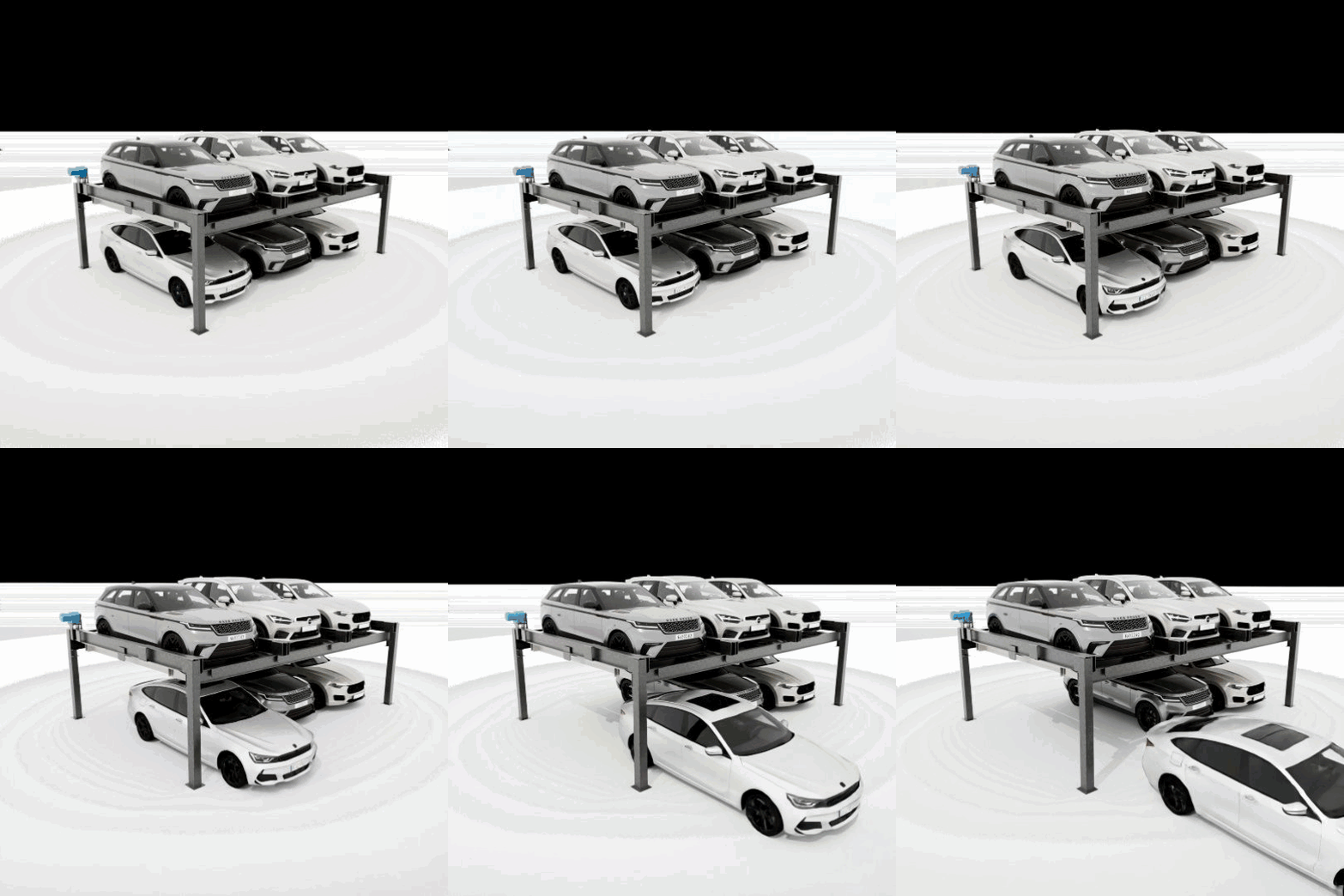
In a semi-automated parking system, drivers can park and/or retrieve their own auto, so this system rids you of any demand for parking attendants therefore lowering your OpEx. Once the users vehicle is stowed within the system, the semi-automated Puzzle system can move the car up and down or left to right to find its nesting space.
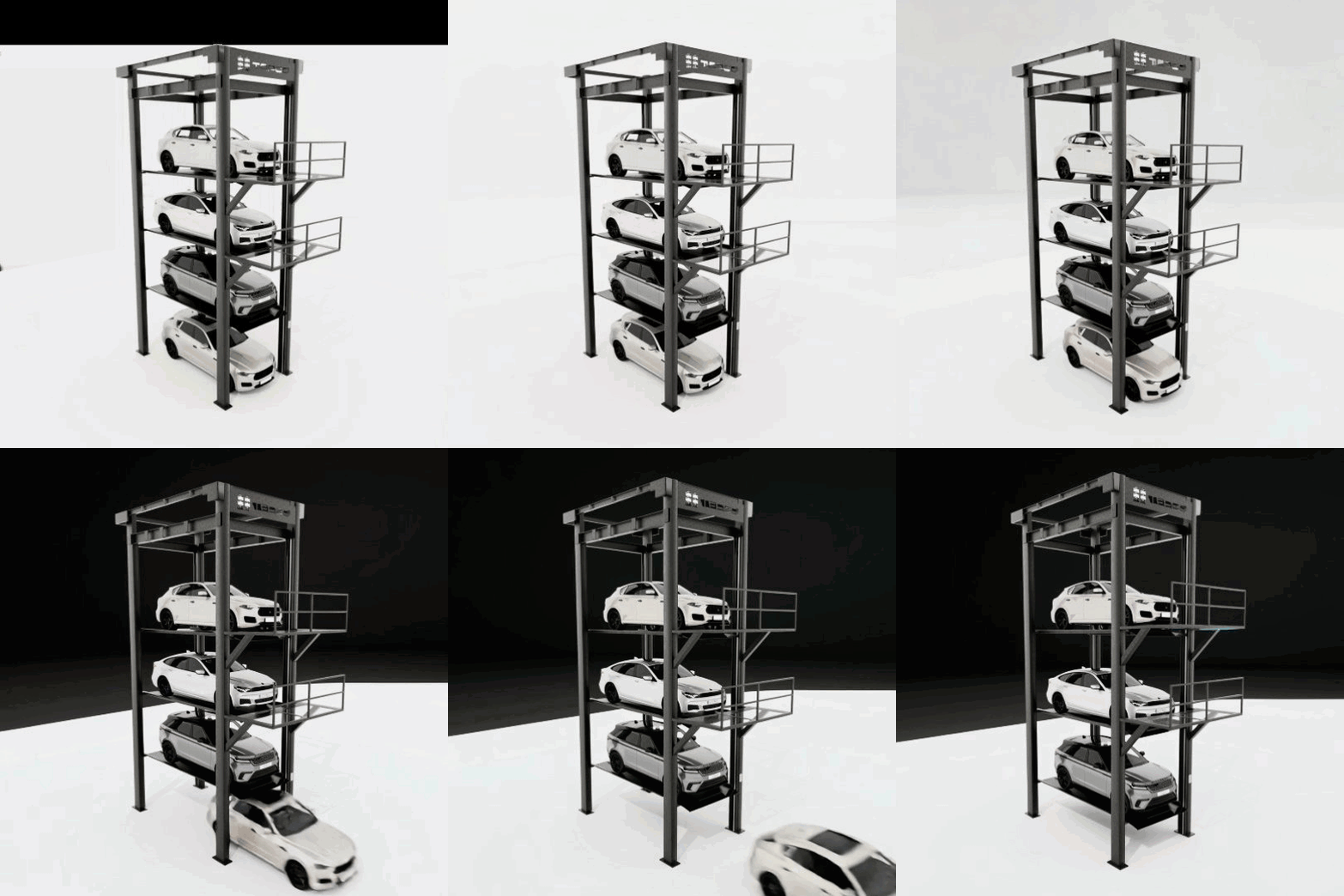
On the other hand, in a fully-automated parking system, the driver pulls into a loading bay where they remove themselves and leave their auto, the system will then maneuver the auto and autonomously stow the users auto within the parking vault.
Q: What is the difference between mechanical lift systems and semi-automated Puzzle Parking systems?
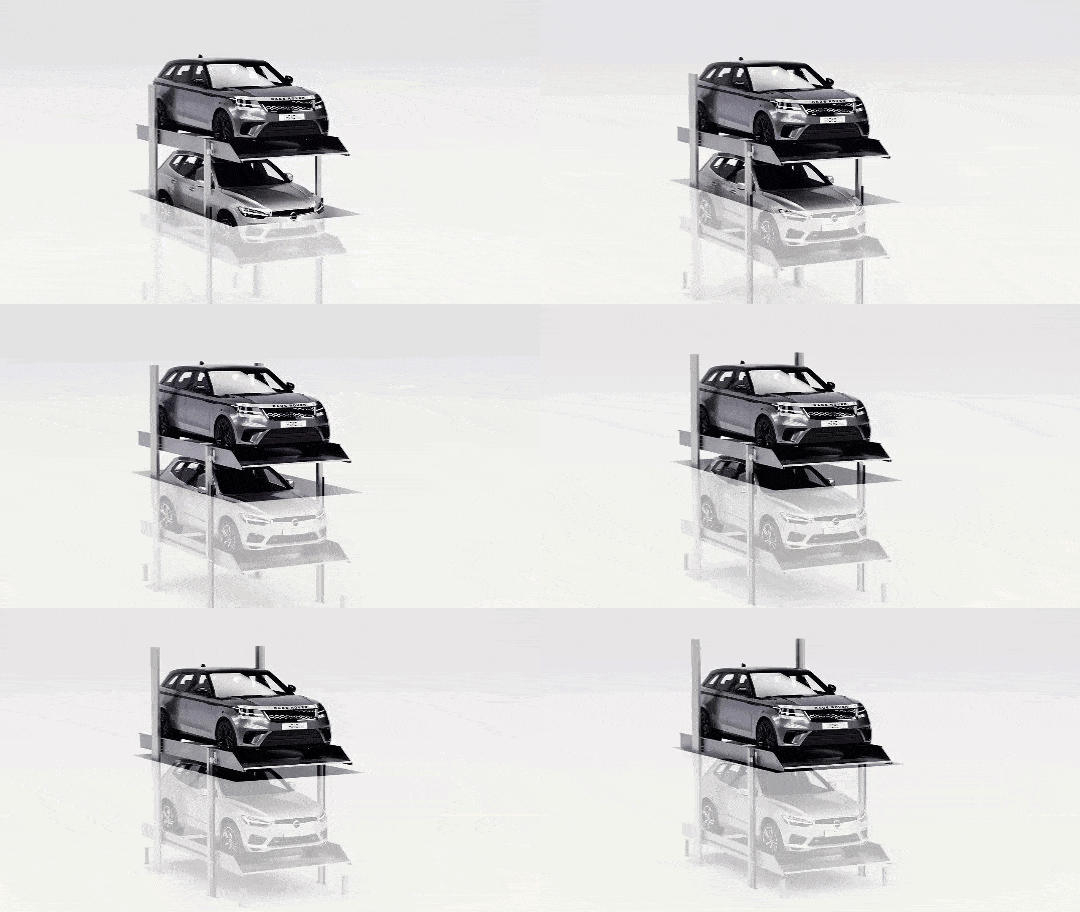
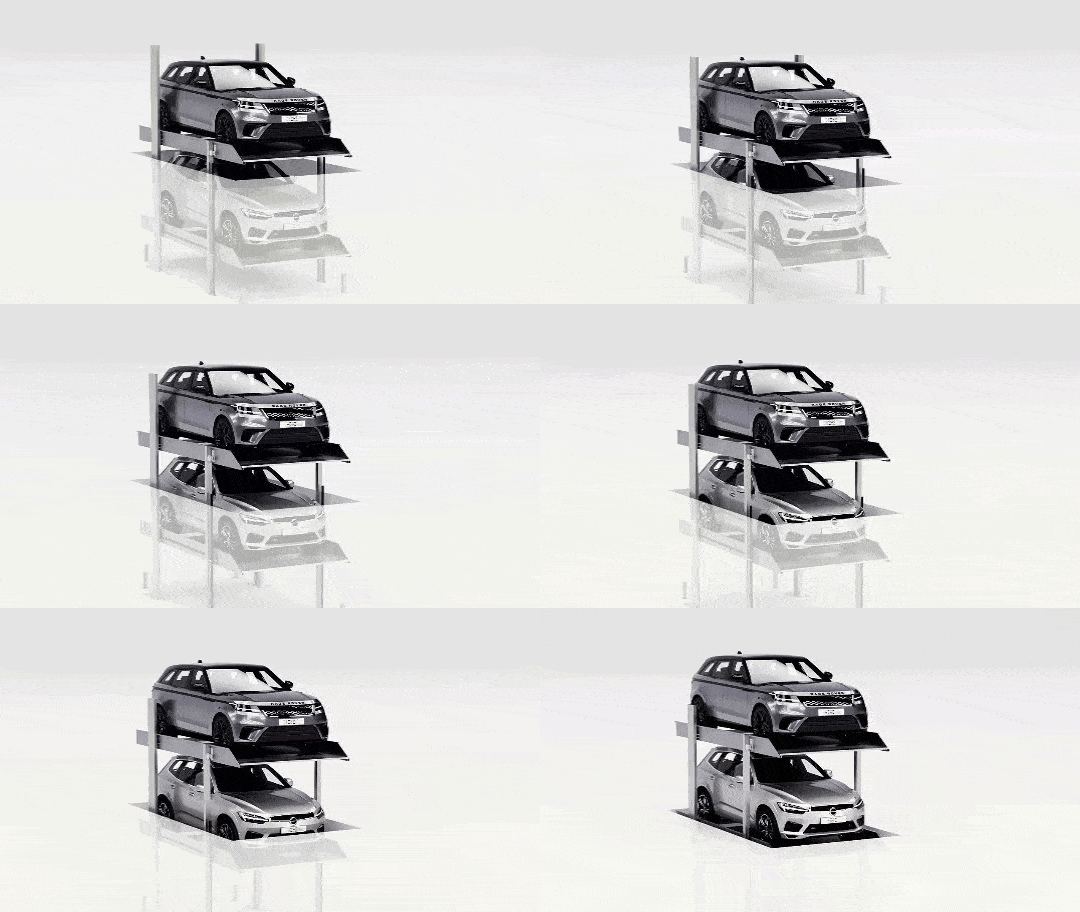
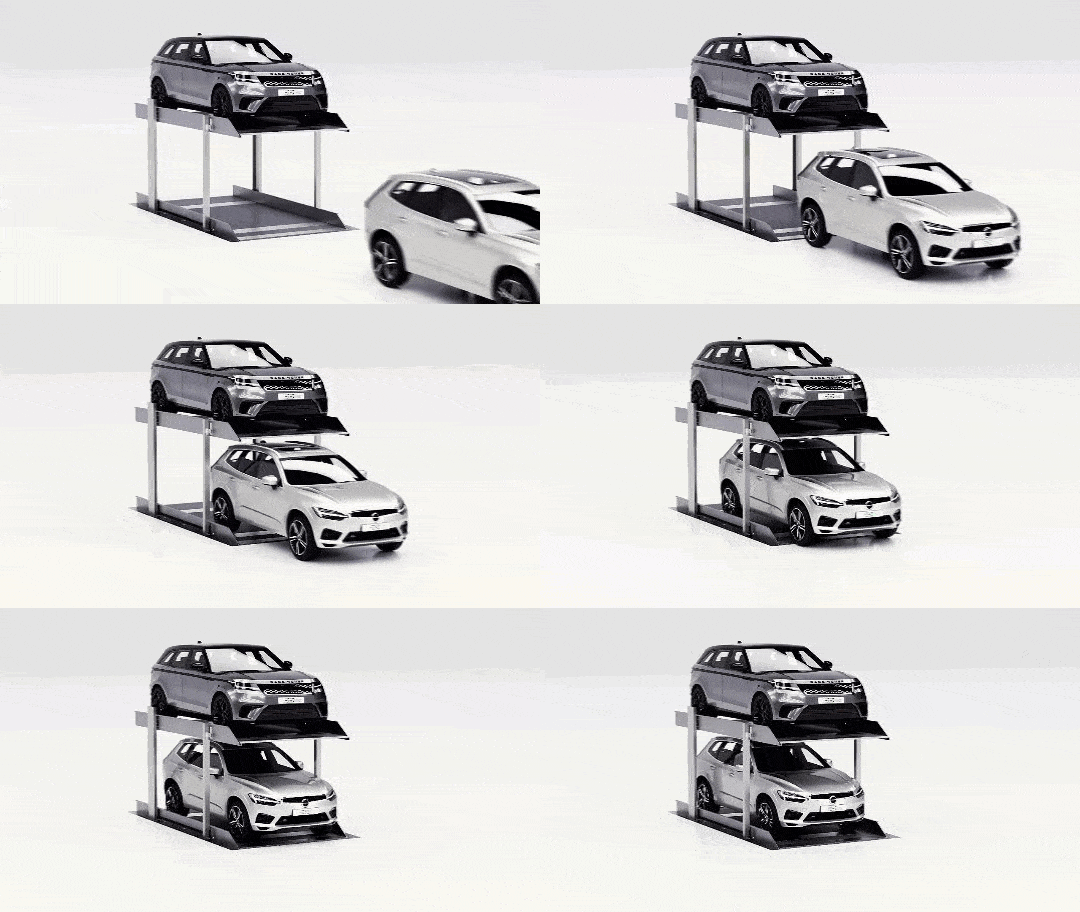
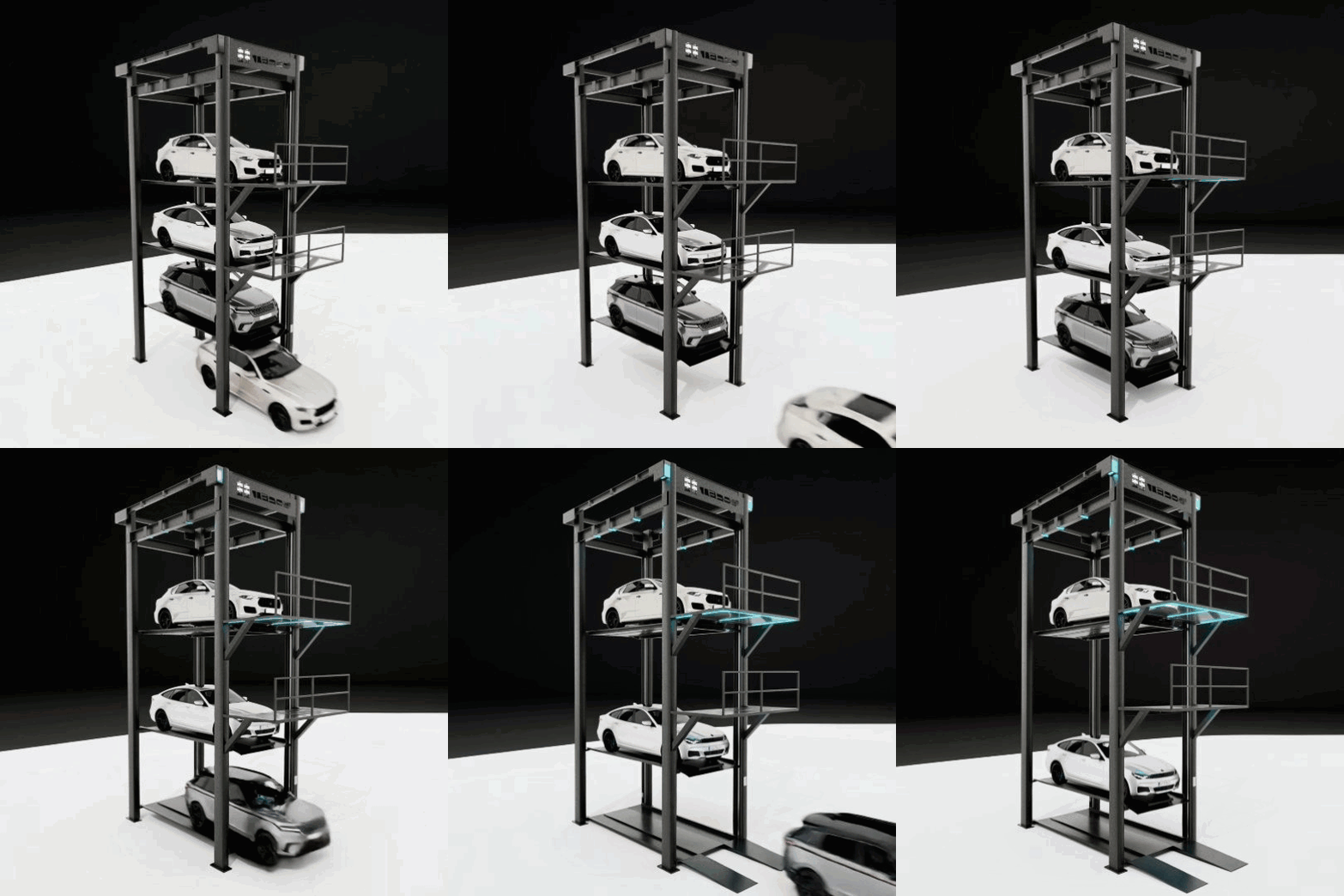
A: In a mechanical stacker system, individuals must operate for it to move, or you must incorporate attendants to manage the parking and retrieval process.. The mechanical stacker parking system is usually a Double, Triple, or Quad Stacker that can raise the vehicle directly up on the platform so that more than one vehicle can be parked in a vertical stack. We strongly encourage trained personnel to operate these systems due to the manual processes of storing or retrieving autos in a vertical arrangement.
On the other hand, in a semi-automated system, there is no demand nor need for attendants or personnel to retrieve autos. Once the driver has parked their vehicle within the system, the semi-automated Puzzle system can intelligently move the car up and down or left to right.
Q: Which properties are semi-automated parking systems suitable for?
A: Our semi-automated parking systems are mostly suitable and used for commercial office and multi-family residential complexes.
Q: Can electric cars be charged in semi-automated parking systems?
A: Absolutely, our semi-automated smart parking systems are EV capable and feature charging facilities for electric vehicles. We offer Level II smart charging capabilities that allow you to bill the user pro-rata and also reduce the number of electrical meters therefore reducing your overall build costs when compared to competitive vendors.
Q: What are the maintenance requirements of semi-automated parking systems?
A: Maintenance and upkeep of the parking systems by The Automated Parking Company are easy as they are designed for minimal maintenance and durability. However, please note that regular checks and maintenance schedules help ensure optimal performance.
EV-Chargers Form
EV Chargers
You’re almost there
Fill in the details below to get our Spec Sheet, CAD, and Revit!