Parking Minimums Are Dead in 100+ Cities: Why Puzzle Parking Systems Are Taking Over in 2026
Get More Parking, Using Less Space With Vertical Lift Parking Systems From OEM The Automated Parking Company
Executive Overview
Across North America and Europe, mandatory off‑street parking minimums are being dismantled at a pace that would have been unthinkable a decade ago. More than 100 U.S. cities have now abolished parking mandates outright, and hundreds more have sharply reduced requirements in central districts and transit‑rich areas. This shift is transforming the economics of development:
Developers are no longer forced to build large, inefficient parking structures just to satisfy code.
Cities are unlocking land for housing, retail, and civic space instead of low‑productivity asphalt.
Yet demand for safe, convenient vehicle storage remains—especially in high‑cost, car‑dependent metros.
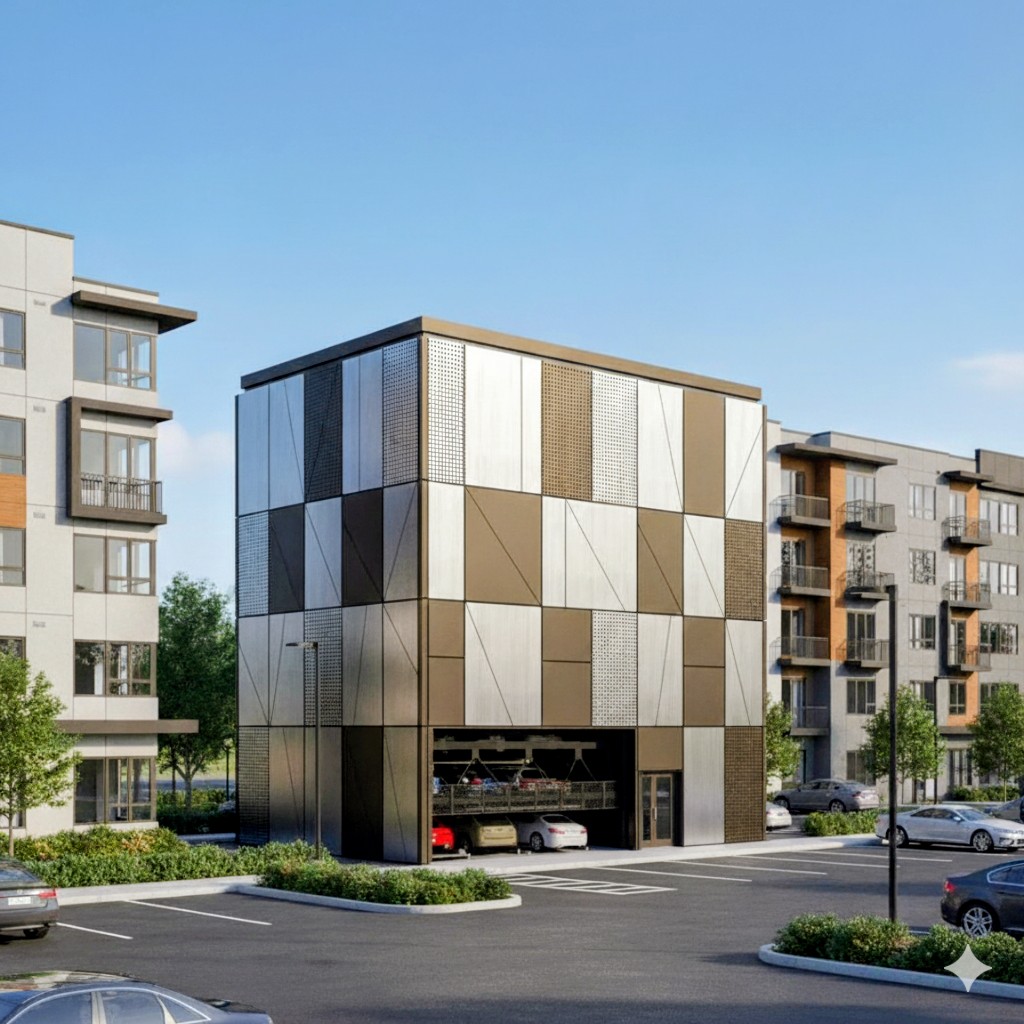
Robotic Valet Parking Garages. Get A Free $5,000 Parking Design Review Analysis Credit. A robotic parking valet garage can eliminate entire below-grade levels, solve for high water tables and difficult soil conditions, and build efficiently on atypically-shaped and limited footprint projects.
This is the context in which semi‑automated “puzzle parking” systems and fully automated robotic garages are moving from niche technology to mainstream infrastructure in 2026. They allow developers to compress parking footprints by 2–7x, fit parking into irregular or constrained sites, and convert freed square footage into higher‑value uses.
TheAutomatedParkingCompany.com (“The Automated Parking Company” or The Automated Parking Company) has emerged as a U.S. OEM and turnkey provider that aligns perfectly with this new regulatory and market landscape. The Automated Parking Company designs, manufactures, installs, and services a full suite of automated, semi‑automated, and attendant‑oriented systems—from puzzle parking to AGV robotic garages, stackers, VRCs (car elevators), turntables, and integrated EV charging. For sites where “there is no more land” or where land costs dominate the pro forma, The Automated Parking Company’s systems are precisely the kind of infrastructure that makes post‑parking‑minimum development feasible and profitable.
Parking Minimums Are Dead in 100+ Cities: Why Puzzle Parking Systems Are Taking Over in 2026 And why TheAutomatedParkingCompany.com is the go‑to solution when land is gone or prohibitively expensive
The End of Parking Minimums: What Has Changed Since 2020
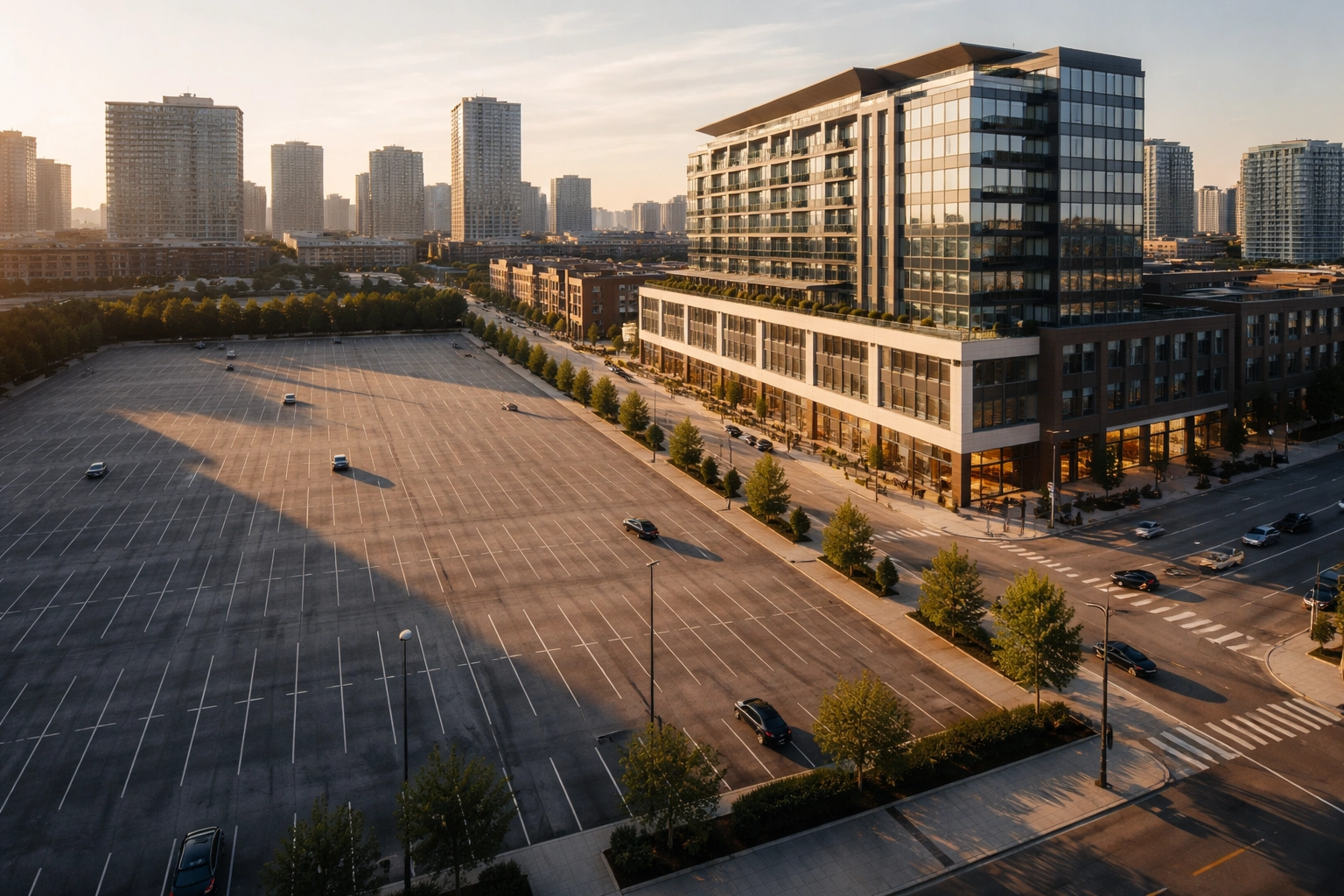
For decades, cities mandated that developers build a minimum number of parking spaces for every residential unit, retail square foot, or office desk. The logic seemed simple: more buildings mean more cars, so we need more parking. But here’s what that logic actually produced: sprawling surface lots, expensive underground garages, and construction costs that got passed directly to tenants and buyers. A 2020 Seattle study found that dropping parking minimums near transit led to 18,000 fewer parking spaces: and saved more than half a billion dollars in construction costs. That’s real money that can go toward affordable housing, better amenities, or simply more competitive pricing.
As of August 2025, more than 3,700 cities across 22 countries have enacted reforms to eliminate or reduce parking requirements. Approximately 20% of examined zoning codes have abolished or reduced parking mandates citywide. The message is clear: cities don’t want developers overbuilding parking anymore.
Here’s where things get interesting: and complicated. Just because parking minimums are gone doesn’t mean parking demand has disappeared. Residents still own cars. Retail tenants still need customer parking. Office workers still drive to work. The difference? Now it’s on developers to figure out the right amount of parking for their specific project, market, and target demographic. Build too much, and you’ve wasted valuable square footage and construction dollars. Build too little, and you’ve got unhappy tenants, lower lease-up rates, and potential zoning pushback.
This is the new reality: flexibility demands smarter solutions. And that’s exactly why puzzle parking systems have gone from niche innovation to mainstream necessity in 2026.
Get 60% More Parking Spaces Using 40%-60% Less Space At A Fraction of The Cost and Time To Build. Call The Automated Parking Company At (877) 807-2611 For A Free $5,000 Parking Design Review Credit Of Your Parking Needs!
A National Policy Pivot
Parking minimums once required one or more off‑street spaces per dwelling unit or per 1,000 sq ft of commercial floor area, regardless of actual demand. Research over the last 20 years—most prominently by Donald Shoup and others—has shown that these mandates:
Inflate development costs (each structured parking stall can cost $30,000+ to build).
Depress housing production and raise rents.
Consume valuable land that could otherwise accommodate housing or active uses.
Worsen traffic, climate emissions, and urban heat‑island effects.
In response, cities from Buffalo to Minneapolis, San Jose, Sacramento, Austin, and now portions of New York City have eliminated or dramatically scaled back minimums citywide or in major districts. The Parking Reform Network’s Mandates Map documents that, as of mid‑2020s, over 100 U.S. cities have fully abolished parking minimums, with thousands more reducing them in targeted areas.
What Elimination Actually Means for Developers
Eliminating minimums does not mean “no more parking.” Instead, it means:
Parking becomes optional and market‑driven rather than mandated by code.
Developers decide how much parking to build based on feasibility, tenant mix, and financing.
There is far greater flexibility to use compact, mechanically intensive solutions rather than sprawling decks.
For sites in high‑land‑value locations—downtowns, transit corridors, urban infill parcels—this creates a powerful incentive to:
Shrink the parking footprint to the minimum feasible area.
Replace conventional parking with automated systems that produce more stalls in less volume.
Monetize the land saved as additional residential units, retail, amenities, or landscape.
Puzzle and fully automated parking systems align exactly with this new economic logic.
Why Puzzle Parking Systems Are Taking Over in 2026
What Is a Puzzle Parking System?
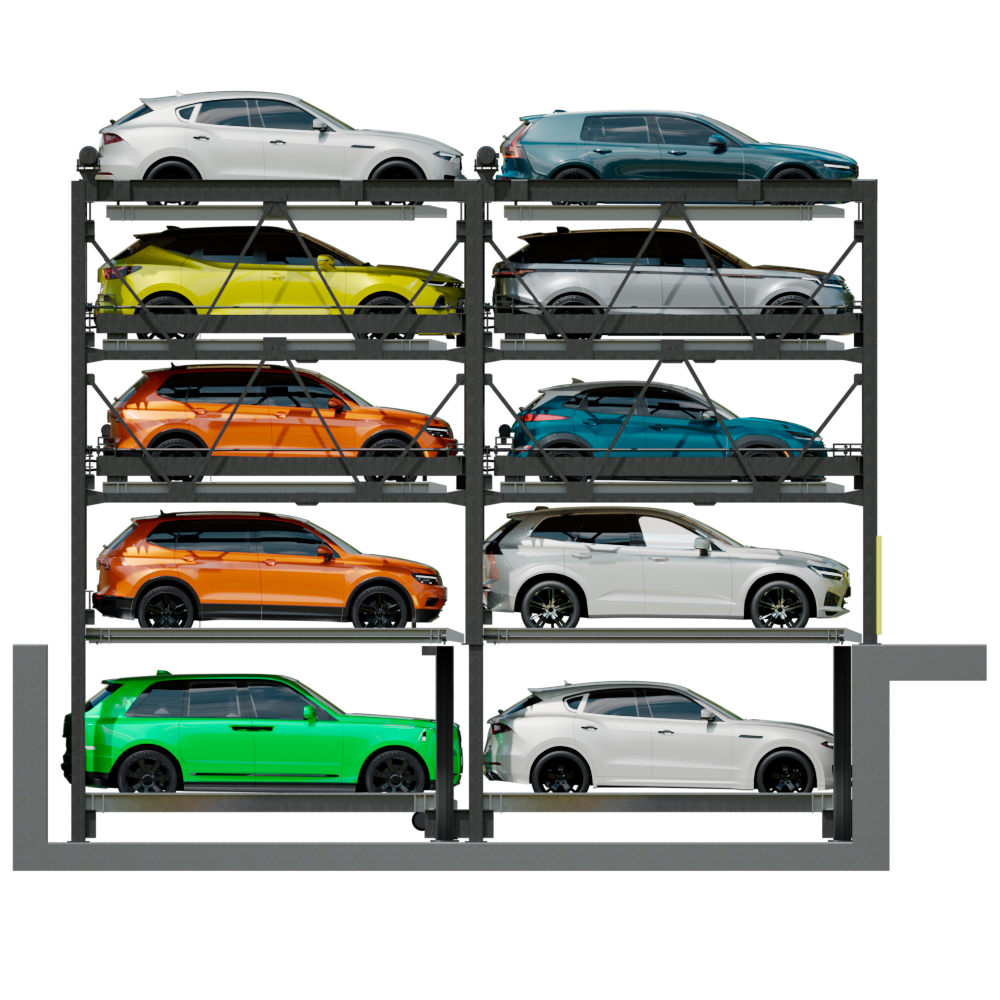
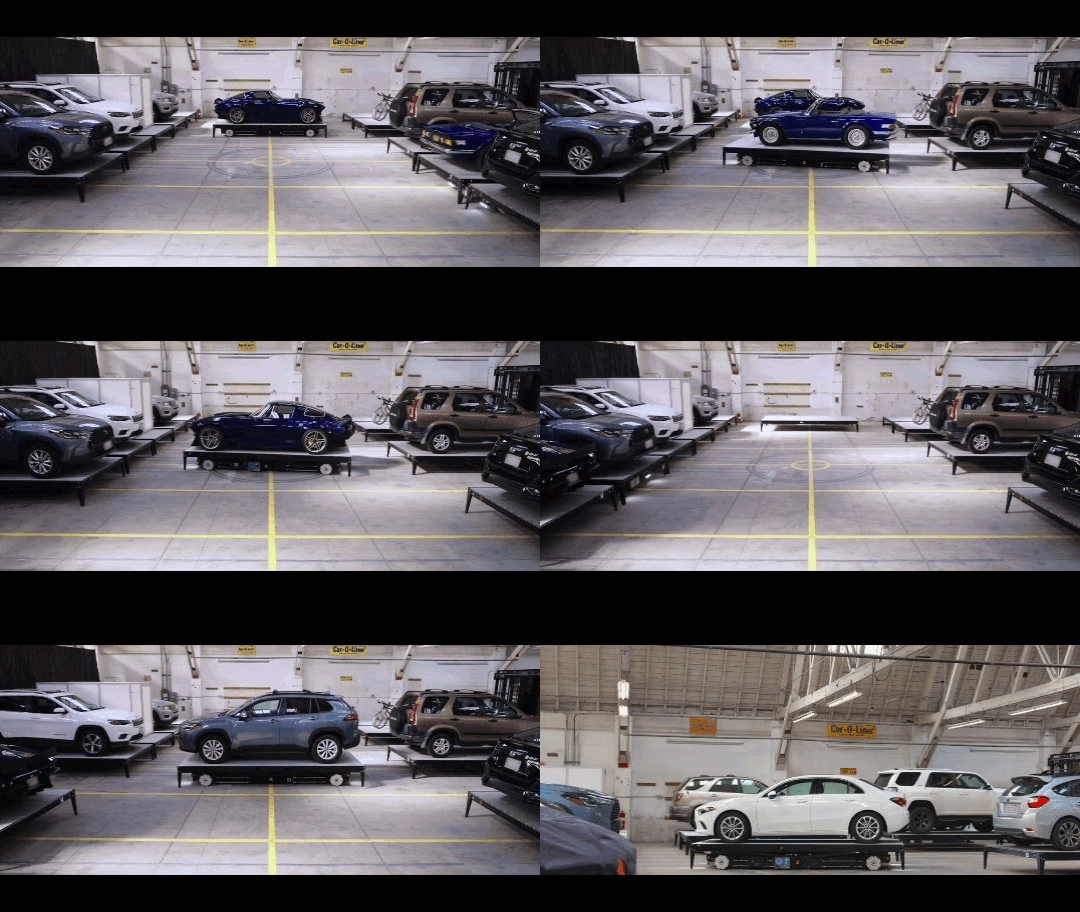
A puzzle parking system is a semi‑automated lift‑and‑slide structure in which vehicles sit on platforms arranged in a grid. Software controls move these platforms horizontally and vertically—up, down, left, and right—to “re‑arrange” cars, much like a sliding tile puzzle, always leaving at least one empty space to allow movement.
Key operational characteristics:
Drivers park directly on pallets; systems then reposition the vehicles to maximize density.
Retrieval is triggered via kiosk or access system; the system automatically brings the car to an accessible bay.
No internal drive aisles, ramps, or circulation space are required within the stored volume.
Compared to conventional garages, puzzle systems can:
Increase parking capacity by 2–4x (and in some designs 5–7x) within the same footprint.
Eliminate large portions of ramp and circulation area.
Fit into odd‑shaped parcels and tight infill conditions.
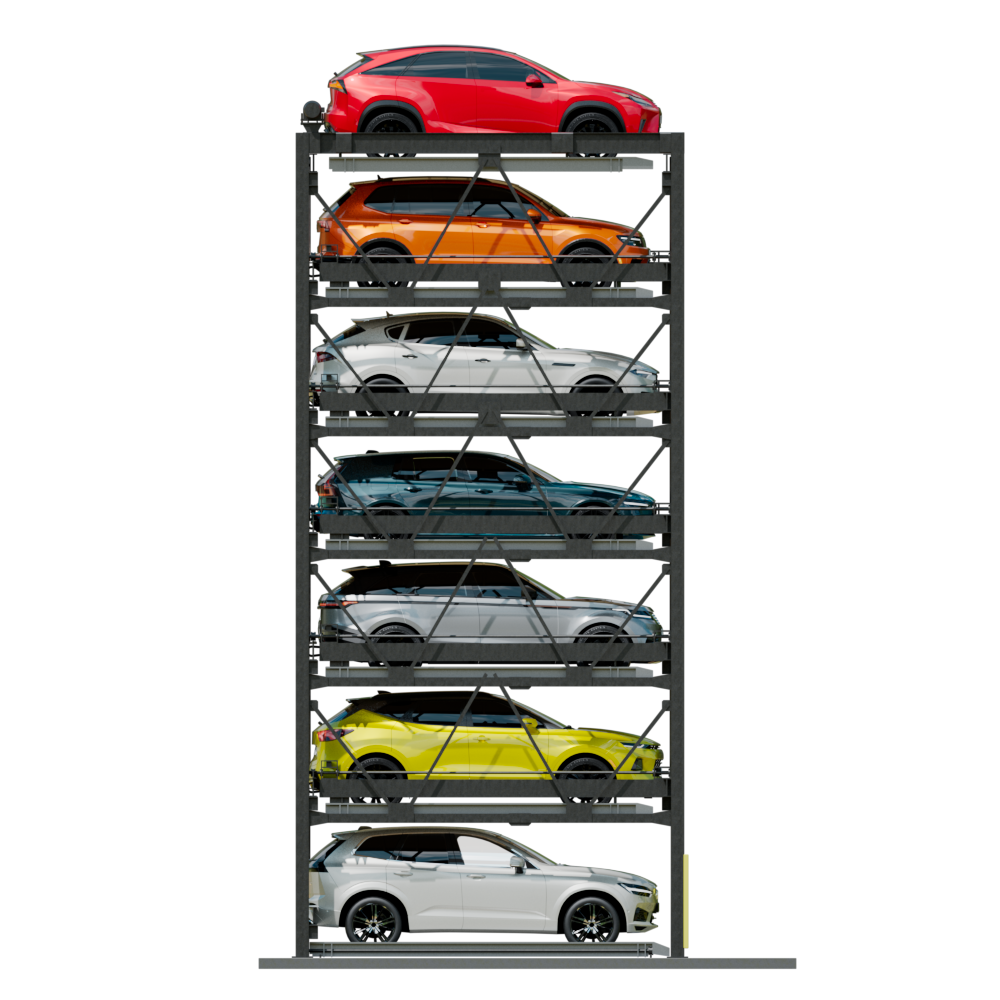
The Automated Parking Company’s puzzle solutions are specifically tailored to mid‑rise multifamily and office projects, allowing configurations from double and triple up to 7‑level systems, including below‑grade pits and above‑grade stacks.
Why 2026 Is an Inflection Point
Several simultaneous trends explain why puzzle systems are scaling rapidly now:
Regulatory tailwinds: As minimums disappear, automated parking is no longer constrained by arbitrary stall counts or curb cuts; instead, it is judged on merit, safety, and performance.
Land and construction cost escalation: In high‑cost metros, saving even a few thousand square feet of land or gross floor area can swing project feasibility. Puzzle systems create more stalls in less structure, often reducing excavation and superstructure costs versus deep podium garages.
EV adoption and fire‑life‑safety: Automated systems better support managed EV charging, cable routing, and controlled environments than open decks.
Tenant expectations: Urban renters and office users increasingly value convenience and safety over “park yourself in a maze.” Short retrieval times (often under 30–90 seconds per vehicle in well‑designed systems) meet those expectations.
These conditions make semi‑automated puzzle parking an attractive “sweet spot” between low‑tech stackers and capital‑intensive fully robotic garages—especially in the U.S. multifamily and mixed‑use market.
Get 60% More Parking Spaces Using 40%-60% Less Space At A Fraction of The Cost and Time To Build. Call The Automated Parking Company At (877) 807-2611 For A Free $5,000 Parking Design Review Credit Of Your Parking Needs!
How TheAutomatedParkingCompany.com Fits the New Urban Parking Landscape
The Automated Parking Company is positioned as a vertically integrated U.S. OEM and turnkey provider focused specifically on automated parking for dense urban environments:
125,000 sq ft manufacturing facility for mechanical and semi‑automated systems and VRCs.
In‑house UL 508 panel shop in Orange County, CA, for electrical controls.
Full delivery stack: design, engineering, manufacturing, self‑perform installation, commissioning, 24/7 monitoring, and long‑term service contracts.
This integration matters in a post‑minimum world because cities and lenders are increasingly demanding proven, code‑compliant systems with clear accountability rather than bespoke one‑off engineering experiments.
Get 60% More Parking Spaces Using 40%-60% Less Space At A Fraction of The Cost and Time To Build. Call The Automated Parking Company At (877) 807-2611 For A Free $5,000 Parking Design Review Credit Of Your Parking Needs!
The Automated Parking Company’s Semi‑Automated Puzzle Parking Systems
The Automated Parking Company’s puzzle parking offering is a semi‑automated smart vertical lift system that provides independent user access with no in‑bay attendants required.
Core characteristics:
Multi‑level vertical lift and horizontal traverse: Systems move cars up/down and side‑to‑side into nesting spaces using software‑controlled platforms.
Independent self‑parking: Drivers park and retrieve vehicles via controlled interfaces, eliminating valet labor and reducing Opex.
Density gains: The Automated Parking Company literature and case studies describe projects that 2x–4x, and in some configurations 5x–7x, the number of stalls versus conventional layouts in the same footprint.
Performance: The Automated Parking Company reports traverse speeds up to 25% faster than competing systems, enabling retrieval times under 30 seconds in optimized configurations.
Typical applications:
Multifamily and mixed‑use mid‑rises.
Urban hotel and office projects with tight floorplates.
Infill developments constrained by setbacks, easements, or odd parcel shapes.
Get 60% More Parking Spaces Using 40%-60% Less Space At A Fraction of The Cost and Time To Build. Call The Automated Parking Company At (877) 807-2611 For A Free $5,000 Parking Design Review Credit Of Your Parking Needs!
Fully Automated AGV Robotic Garages
For ultra‑high‑value sites, The Automated Parking Company integrates fully automated AGV (Automated Guided Vehicle) parking vaults through its partner Volley Automation.
Features of the AGV solution:
Omnidirectional robotic shuttles move vehicles to any nesting space within the parking vault—no drivers beyond the entry cabin.
Up to ~2x densification of conventional structured parking, depending on site specifics.
Integrated EV charging and software‑driven stall allocation for optimal power distribution.
Enhanced safety (no human access to car storage zones) and reduced claims risk.
This tier is particularly suited to:
High‑rise residential/office in CBDs with extreme land values.
Flagship mixed‑use developments seeking a “premium” parking amenity.
Sites where local design review boards prioritize reduced curb cuts and minimized volumetric massing.
Get 60% More Parking Spaces Using 40%-60% Less Space At A Fraction of The Cost and Time To Build. Call The Automated Parking Company At (877) 807-2611 For A Free $5,000 Parking Design Review Credit Of Your Parking Needs!
Valet‑Oriented Stacker Systems, VRCs, and Turntables
Where semi‑automation is not required—or where capital costs must be minimized while still expanding capacity—The Automated Parking Company offers additional layers in its product stack:
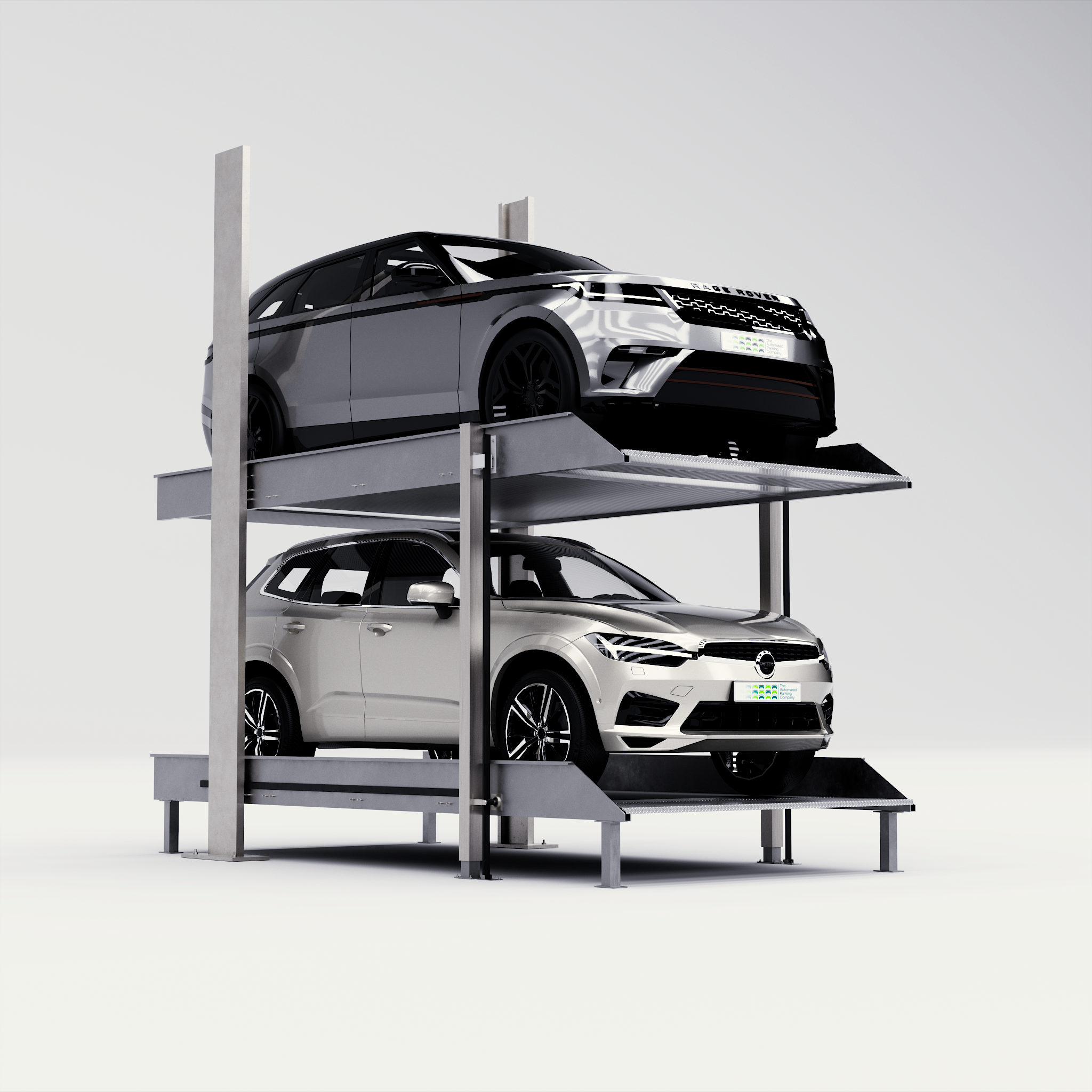
Car stacker parking lifts: Double, triple, quad, and “no‑post” stackers, typically used with attendants or valet operations. These deliver the lowest CapEx per stall but require operating staff.
Vertical Reciprocating Conveyors (VRCs): Auto elevators that move vehicles between floors, enabling hybrid solutions that combine simple ramps with automated vertical movement.
Automotive turntables: Used in tight urban sites to resolve turning radii, reduce aisle widths, and minimize curb cuts.
All systems can be configured to support EV charging, with hardware mounted on pallets or in fixed positions, as required.
Get 60% More Parking Spaces Using 40%-60% Less Space At A Fraction of The Cost and Time To Build. Call The Automated Parking Company At (877) 807-2611 For A Free $5,000 Parking Design Review Credit Of Your Parking Needs!
Comparative Framework: Conventional vs. The Automated Parking Company’s‑Style Systems
For decision‑makers operating in cities that have eliminated or reduced parking minimums, the central question is no longer “How do we hit the ratio?” but “What combination of land, CapEx, and Opex yields the best risk‑adjusted return?” The table below summarises the strategic trade‑offs.
Table 1 – Strategic Comparison of Urban Parking Typologies
Dimension
Conventional Ramp Garage
Mechanical Stackers (Valet)
Semi‑Automated Puzzle (TAPC)
Fully Automated AGV (TAPC)
Typical density vs. conventional
Baseline
~2–3x in vertical dimension, but still need aisles
~2–4x, up to 5–7x in optimized grids
Up to ~2x, depending on volume and layout
Land/volume efficiency
Low – large ramps and aisles
Moderate – less drive space but still human circulation
High – no internal ramps/aisles, pure storage volume
Very high – full robotic vault, no human circulation
User experience
Self‑park; long walks, confusing layouts
Valet controlled; retrieval time depends on staff
Self‑park into bay; automated repositioning; short retrieval times (~<30–90 sec)
Drop‑and‑go cabin; fully automated retrieval
CapEx per stall
Moderate to high (especially below grade)
Lowest CapEx but higher Opex (attendants)
Moderate – lower than fully automated, higher than simple stackers
Highest CapEx; premium product
Opex profile
High (lighting, ventilation, maintenance, security)
Higher (labor + maintenance)
Lower (no attendants; controlled environment; designed for low maintenance)
Moderate (technical maintenance, low labor)
Ideal context
Greenfield, low‑cost land, suburban
Small urban sites needing quick 2–3x boost
Urban infill, mid‑rise multifamily, office, hotels; expensive land
Prime CBD/flagship sites; trophy projects
The Automated Parking Company products
Not applicable
Car stackers, attended systems
Semi‑automated puzzle vertical lift systems
Fully automated AGV vaults with Volley Automation
In high‑land‑value markets—exactly where minimums are now being abolished—semi‑automated puzzle systems strike the most attractive balance between density, CapEx, Opex, and user experience.
Turning “No More Space” into ROI: Real‑World Use Cases
Multifamily Urban Infill
A common scenario post‑minimum reform is the constrained multifamily infill site:
Small or irregular lot.
High land cost.
Political pressure to minimize curb cuts and visible parking.
Lenders and buyers still expect some level of secure, on‑site parking.
In a documented case study, The Automated Parking Company implemented a 3‑level puzzle system accommodating ~80 vehicles on the footprint of a conventional 30‑space garage. This densification freed more than 6,000 sq ft for ground‑floor retail, increased unit count by 12%, and reduced excavation and foundation costs by 35%. The resulting NOI uplift and reduced structural cost can materially improve the project’s internal rate of return.
This is precisely the type of project that becomes feasible once local minimums are removed: the developer is no longer forced to build an oversized conventional garage but can right‑size parking capacity using puzzle technology.
Urban Hotels and Mixed‑Use
Hotels and mixed‑use projects near transit nodes increasingly operate with reduced parking norms, but still require flexible capacity for events, visitors, and staff. For such assets:
The Automated Parking Company’s puzzle systems accommodate variable demand, enabling independent self‑parking but with the option to overlay valet operations if desired.
Integrated turntables and VRCs allow entry from narrow alleys or curb‑constrained frontages, improving site plan options.
The Automated Parking Company’s portfolio includes puzzle installations at hotels and multifamily projects in dense urban markets, including wine‑country and West Coast infill locations—demonstrating code compliance under seismic and wind‑load regimes specific to U.S. conditions.
Office and Adaptive Reuse
As office owners reposition buildings for mixed‑use or residential conversion, existing structured parking is often:
Oversupplied relative to new use.
Inefficiently configured for modern EV and access‑control needs.
A constraint on adding new units or amenities.
The Automated Parking Company’s semi‑automated systems can retrofit into existing volumes, replacing some conventional stalls with higher‑density puzzle arrays, and unlocking floor area for conversion, coworking, or amenity space.
Operational Reliability, Code Compliance, and Risk
In the early days of automated parking, some systems failed in practice due to poor design integration, vendor exits, and maintenance shortcomings. In 2026, cities and developers are rightly focused on institutional‑grade reliability.
The Automated Parking Company’s model addresses these concerns in several ways:
Vertical integration & domestic manufacturing: In‑house engineering and 125,000 sq ft of manufacturing capacity provide control over quality, lead times, and spare parts.
UL‑certified controls: The Automated Parking Company’s own UL 508 panel shop ensures that control systems meet U.S. electrical safety standards, easing approval with building and fire departments.
Design for seismic and wind loads: Systems are engineered for U.S. seismic conditions and lateral load requirements, which is critical for West Coast cities such as Los Angeles.
24/7 monitoring and service: Remote monitoring, commissioning, and a‑la‑carte or comprehensive maintenance agreements reduce downtime risk and align with lender expectations.
For jurisdictions eliminating parking minimums, these attributes are important politically: the city can support more compact parking without risking public backlash around malfunctioning technology.
Implementation Roadmap for Developers and Cities in 2026
For Developers
In a post‑minimum environment, a disciplined process is essential:
Program the true parking demand, not the historical mandate. Use market studies and lender expectations rather than old ratios.
Engage an automated parking OEM early—firms such as The Automated Parking Company that provide discovery, customized design, and pre‑construction coordination.
Model the pro forma with and without automated parking: compare
Land consumed
Stalls provided
CapEx and Opex
Additional rentable or sellable area enabled
Coordinate with planning staff to demonstrate how a compact system supports the city’s housing, climate, and mobility goals—often improving chances of entitlement.
Lock in service arrangements to ensure long‑term reliability and address any lender concerns.
In many cases, the incremental cost of semi‑automated puzzle parking is more than offset by the extra residential units or retail GLA, particularly in high‑rent markets.
For Cities and Public Agencies
Cities eliminating parking minimums should actively promote, but not mandate, compact parking technologies as one of several tools to:
Support higher densities on constrained parcels.
Reduce land consumed by parking while making remaining parking safer and more efficient.
Enable EV infrastructure and better air quality.
Planning departments can:
Provide “automated parking guidelines” specifying performance, redundancy, and user safety requirements rather than minimum stall counts.
Recognize proven OEMs with domestic manufacturing, UL‑listed controls, and a track record of permitted, operating installations (such as The Automated Parking Company) as preferred partners in RFPs or development agreements.
Offer incentives (e.g., density bonuses, expedited permitting) for developments that combine reduced parking footprints with increased housing units, leveraging the political benefits of parking reform.
Who’s Already Making the Switch?
Puzzle parking adoption is accelerating fastest in the markets where parking minimums have been eliminated:
Los Angeles: Developers are using puzzle systems to maximize density on tight infill lots while meeting market parking demand
Seattle: The city’s parking reforms have driven a wave of mechanical parking installations in multifamily projects
Austin: Post-2023 parking reform, puzzle systems are becoming standard spec for urban mixed-use developments
San Francisco: High land costs make the space savings from puzzle parking almost mandatory for feasibility
The pattern is clear: where parking flexibility exists, puzzle parking thrives.
Is Puzzle Parking Right for Your Project?
Not every project needs a puzzle parking system. If you’re building suburban garden-style apartments with plenty of surface lot space, traditional parking might still make sense.
But if you’re working on:
Urban infill sites with constrained footprints
Mixed-use developments where every square foot counts
Markets with eliminated or reduced parking minimums
Projects targeting demographics with lower car ownership rates
Buildings requiring EV charging infrastructure
Then puzzle parking deserves a serious look.
The developers who are winning in 2026 aren’t the ones clinging to old parking paradigms. They’re the ones recognizing that parking is no longer a fixed requirement: it’s a design variable that can be optimized for maximum project value.
Conclusion: In the Post‑Minimum Era, Puzzle Parking Is the Missing Link
Eliminating parking minimums in 100+ cities does not eliminate cars; it removes a blunt and costly regulatory tool that has constrained housing, distorted land use, and over‑built parking for decades. As cities and developers adapt, the challenge is no longer to hit a mandated stall ratio, but to deliver just enough high‑quality parking in the smallest, smartest possible footprint.
Semi‑automated puzzle parking and fully automated AGV garages are the logical infrastructure response:
They compress vehicle storage into a fraction of the volume of traditional garages.
They unlock buildable area for housing, retail, and amenities.
They integrate EV charging and smart controls, aligning with decarbonization goals.
They improve user safety and experience, reducing conflict between pedestrians and vehicles.
TheAutomatedParkingCompany.com stands out as an example of how this shift is being operationalized in the U.S. market—through vertically integrated design, domestic manufacturing, and a product stack that ranges from valet‑oriented stackers to high‑throughput puzzle systems and fully robotic AGV vaults.
In 2026, as more cities abolish parking minimums and land values continue to climb, developers who embrace puzzle and automated parking will be able to make projects pencil on sites once deemed “unbuildable” from a parking standpoint. For constrained, high‑value urban parcels, The Automated Parking Company‑style systems are no longer exotic extras; they are rapidly becoming the default way to reconcile the reality of cars with the imperative to build more and better city.
De-Risk Your Parking Strategy with a FREE $5,000 Design Review Credit
If you connect with us, The Automated Parking Company, will provide a FREE in-depth design review, normally valued at $5,000; to assess feasibility, optimize layouts, and align your parking solution with project goals.
When you proceed with us, the full design review fee is credited back to the project, ensuring your early-stage diligence directly supports execution—not overhead.
A disciplined approach to smarter parking investment.
📞 Call Us for a FREE parking design review, valued at $5,000: (877) 827-2611
We value community input and address concerns for harmonious solutions.
Research & Innovation
Continuous research and innovation to improve green parking solutions.
Our Step By Step Process Towards Building Smart Yet Sustainable Parking
At TAPCO, our process ensures seamless delivery of efficient and sustainable parking tech tailored to your evolving project needs.
01
Discovery & Consultation:
Understand your needs, site constraints, and objectives.
02
Customized Design:
Create a tailored parking solution with eco-friendly integration.
03
Project Approval & Collaboration:
Obtain necessary approvals and work closely with your team.
04
Manufacturing & Quality Control:
Ensure the highest standards of quality.
05
Timely Delivery & Installation:
On-time setup with minimal disruptions.
06
Thorough Testing & Commissioning:
Rigorous performance checks and safety adherence.
07
Training & Support:
Comprehensive staff training and ongoing maintenance services.
08
Environmental Responsibility:
Implement eco-friendly practices and sustainability monitoring.
09
Client Satisfaction:
Prioritize your project with any number of our solutions.
Frequently Asked Questions
Q: Can TAPCO’s solutions be tailored to our specific needs?
A: Absolutely! At TAPCO, we understand that every project is unique. Our experienced team of designers and engineers will work closely with you to understand your specific requirements, site constraints, and objectives.
Q: How many levels can The Automated Parking Company design for the Puzzle parking system?
A: The Automated Parking Company has the capability to design systems with 2 to 7 levels, accommodating a varying number of parking spaces. Moreover, if your project calls for additional space optimization, we can even incorporate one or two subterranean levels, effectively increasing the total parking capacity.
Q: Are TAPCO’s parking systems safe and reliable?
A: Yes, safety is our top priority at TAPCO. We adhere to stringent industry safety standards and conduct rigorous testing and quality control measures at every stage of the manufacturing process.
Our car parking solutions are designed and built to ensure the safety of users, vehicles, and your property. We use high-quality materials and employ advanced technology to ensure the reliability and durability of our parking systems.
Improving Parking Convenience with Parking Stackers
When it comes to parking solutions, attended-oriented systems offer a blend of efficiency and convenience that cater to the needs and challenges of urban areas, particularly high-demand areas.
These multi-level car stacker solutions are a game-changer when it comes to parking, allowing the creation of multiple parking spaces within a single area.
TAPCO introduces a wide array of innovative attended-oriented parking systems designed to optimize space utilization as well as offer user-friendly parking practices.
These systems are intended to provide a seamless parking experience and enable attendants to efficiently manage parking procedures while ensuring the convenience and safety of the users. Here are the key benefits of using attended-oriented parking systems.
Optimal Space Utilisation
Our attended-oriented parking systems incorporate car lift storage systems make optimal use of the available space. Vertical stacking of vehicles with the vertical storage lift enables the system to increase the parking capacity within a limited area, hence coping with the increasing parking demands.
Organised vertical stacking
The attended-oriented parking allows vertical stacking of vehicles to utilize a vertical space effectively. This approach reduces the area required for parking, thereby contributing to a more organized and aesthetically pleasant-looking parking facility.
Convenience
The attended-oriented parking system offers ease of use for the attendant as well as the user. While the attendant can successfully navigate the car stacker lift and swiftly move vehicles into a nesting position with minimal effort, users need little to no guidance to park their vehicles safely.
Enhanced Security
Our attended-oriented car stacking system comes with advanced features to ensure the safety of parked vehicles. While users have peace of mind, property managers can also be content with the knowledge that the facility is secure.
Versatile stacked car parking
We offer a variety of car stacker lift solutions. From four post car storage lifts to no post solutions, our systems can be implemented indoors as well as outdoors and can be adapted for various project requirements or property layouts. TAPCO’s attended-oriented parking systems can be used in various environments, from commercial establishments to residential complexes.
Revolutionary Parking Solutions with Automated Lift Parking System
As the urban landscape continues to grow, the demand for efficient car parking solutions has become increasingly important. TAPCO introduces revolutionary semi-automated smart parking systems that are designed to optimise space utilization and streamline parking procedures for multi-family residential complexes and commercial facilities. Compared to the conventional car lift system, our multi level car parks are designed to redefine convenience and efficiency.
Here are some of the key features of our semi-automated car parking systems
Space Optimization
Optimal space utilization is a key focus of our multi-level car storing solutions. Our stack parking systems are designed to accommodate multiple levels, providing an impressive number of parking spaces within a compact footprint. We can design and integrate two to seven parking levels in a single structure and customize varying lengths, widths, and heights.
Seamless Automation
Our smart parking system incorporates advanced automation to simplify the parking process. Drivers can effortlessly park their vehicles with minimum guidance, thereby providing efficient utilization of time.
EV Capability
Given the increasing trend of electric vehicles, our parking solutions are also designed to embrace the future of mobility and Electric Vehicles. To cater to the ever-evolving automotive landscape, we also feature charging facilities for electric cars. We are the only vendor offering 7000# rated systems.
Convenience
We understand that parking can be a source of frustration for people, particularly when you cannot find a spot and have to drive around looking for space. Such layouts can be problematic for larger properties. However, with our Puzzle Parking system, this problem can be easily resolved, offering convenience to individuals and saving valuable time when parking or capturing your auto.
FAQ
Q: What is the difference between a fully automated and semi-automated smart parking system?
A: Semi-automated Puzzle solutions and fully automated AGV parking systems are considered automated parking and compress footprints giving you back valuable square footage.
In a semi-automated parking system, drivers can park and/or retrieve their own auto, so this system rids you of any demand for parking attendants therefore lowering your OpEx. Once the users vehicle is stowed within the system, the semi-automated Puzzle system can move the car up and down or left to right to find its nesting space.
On the other hand, in a fully-automated parking system, the driver pulls into a loading bay where they remove themselves and leave their auto, the system will then maneuver the auto and autonomously stow the users auto within the parking vault.
Q: What is the difference between mechanical lift systems and semi-automated Puzzle Parking systems?
A: In a mechanical stacker system, individuals must operate for it to move, or you must incorporate attendants to manage the parking and retrieval process.. The mechanical stacker parking system is usually a Double, Triple, or Quad Stacker that can raise the vehicle directly up on the platform so that more than one vehicle can be parked in a vertical stack. We strongly encourage trained personnel to operate these systems due to the manual processes of storing or retrieving autos in a vertical arrangement.
On the other hand, in a semi-automated system, there is no demand nor need for attendants or personnel to retrieve autos. Once the driver has parked their vehicle within the system, the semi-automated Puzzle system can intelligently move the car up and down or left to right.
Q: Which properties are semi-automated parking systems suitable for?
A: Our semi-automated parking systems are mostly suitable and used for commercial office and multi-family residential complexes.
Q: Can electric cars be charged in semi-automated parking systems?
A: Absolutely, our semi-automated smart parking systems are EV capable and feature charging facilities for electric vehicles. We offer Level II smart charging capabilities that allow you to bill the user pro-rata and also reduce the number of electrical meters therefore reducing your overall build costs when compared to competitive vendors.
Q: What are the maintenance requirements of semi-automated parking systems?
A: Maintenance and upkeep of the parking systems by The Automated Parking Company are easy as they are designed for minimal maintenance and durability. However, please note that regular checks and maintenance schedules help ensure optimal performance.