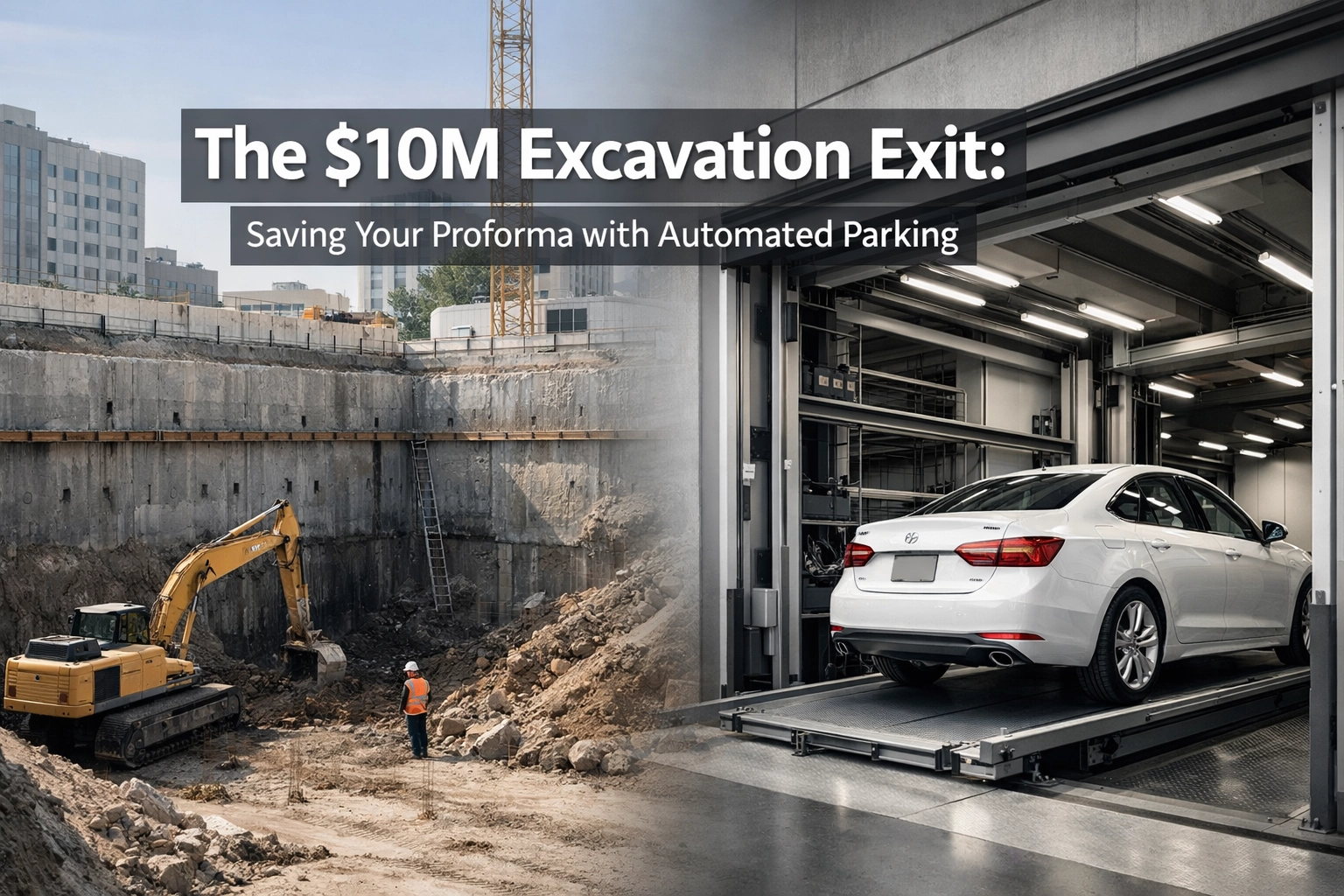
The $10M Excavation Exit: Saving Your Proforma with Automated Parking
In the high-stakes world of urban real estate development, the difference between a project that pencils and one that stalls often lies beneath the surface. For years, the industry standard for meeting parking mandates has been simple: if you can’t build up, you dig down. But as density increases and prime urban sites become more constrained, that traditional “dig deeper” mentality is hitting a financial breaking point.
We call it the $10M Excavation Exit. It is the moment a developer realizes that adding a second or third subterranean parking level won’t just increase the budget: it will effectively kill the project’s Internal Rate of Return (IRR).
At The Automated Parking Company, we are seeing more developers walk away from traditional concrete-heavy designs in favor of something more efficient. By utilizing “Height Compression” and automated parking systems, developers are finding they can exit the excavation trap and keep their proformas intact.
The Proforma Killer: Why the Second Level is a Liability
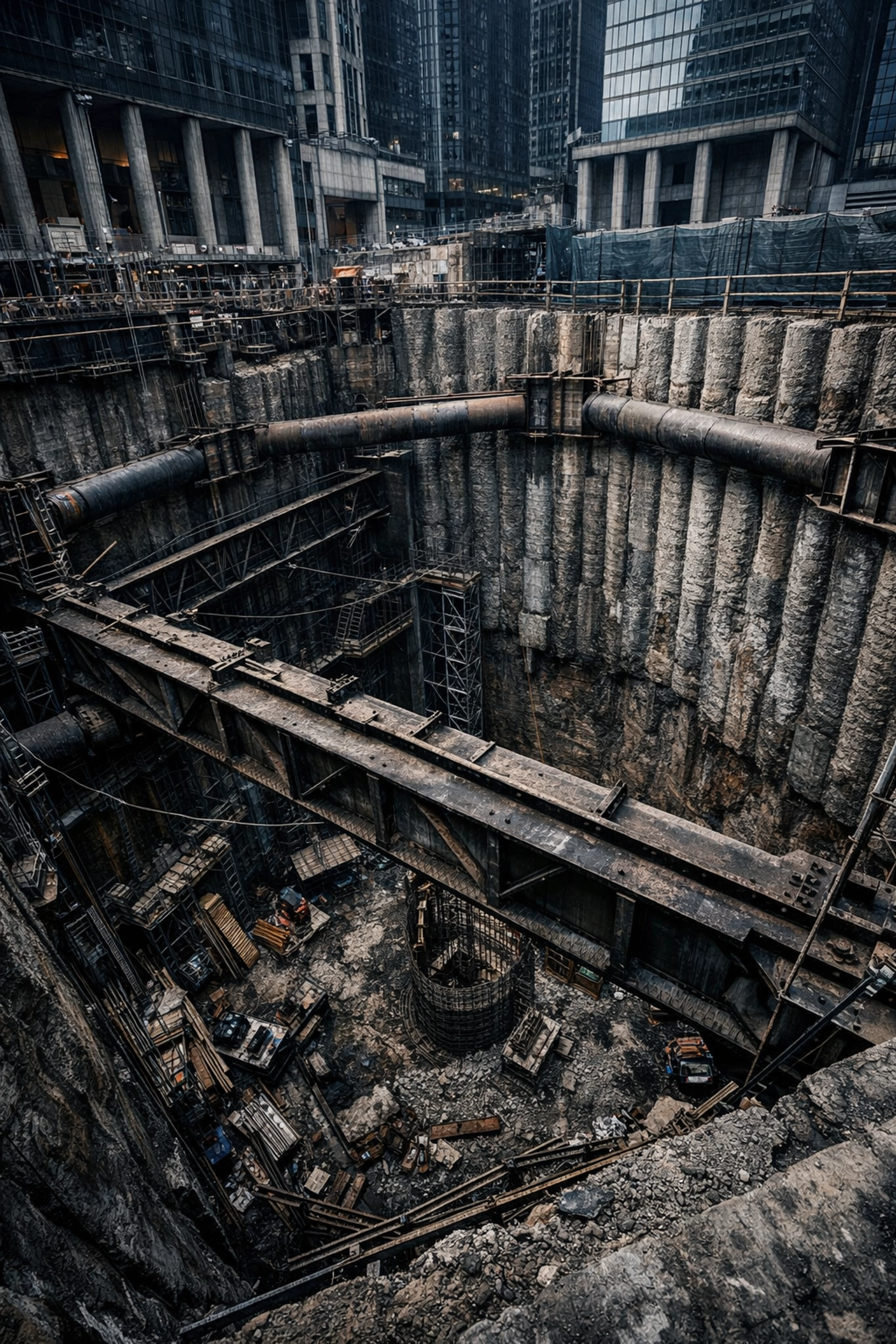
Digging a single subterranean level is a standard line item. Digging a second is a gamble. Digging a third is often a disaster. The costs associated with subterranean construction are not linear; they are exponential. When you move from a single-level basement to a multi-level underground garage, you aren’t just paying for more dirt removal. You are entering a high-risk environment where structural and environmental variables can spin out of control.
1. Shoring and Structural Support
As you go deeper, the lateral pressure from the surrounding soil increases. This requires more robust: and significantly more expensive: shoring systems. Whether it is secant piles, soldier piles, or soil nailing, the engineering requirements for a 30-foot hole are vastly more complex than those for a 12-bit hole. In tight urban corridors, you are also managing the risk of settling for adjacent buildings, which adds layers of insurance and monitoring costs.
2. The Water Table Risk
In many Tier-1 cities, particularly in coastal regions like Los Angeles or Miami, the water table is a constant threat. Once your excavation breaches the water table, you are no longer just building a garage; you are building a boat. The costs of continuous dewatering during construction, combined with the long-term necessity of high-grade waterproofing and bathtubbing, can easily add seven figures to a budget.
3. Material Hauling and Logistics
In a dense urban environment, moving thousands of cubic yards of soil is a logistical nightmare. Every truckload of dirt that leaves the site represents a cost for labor, fuel, and disposal fees. When you factor in the “ramp tax”: the massive amount of concrete and space required just to move cars between levels: you realize that a significant portion of your excavation budget is being spent on space that doesn’t even hold a car.
Traditional Concrete Ramps: The Enemy of Density
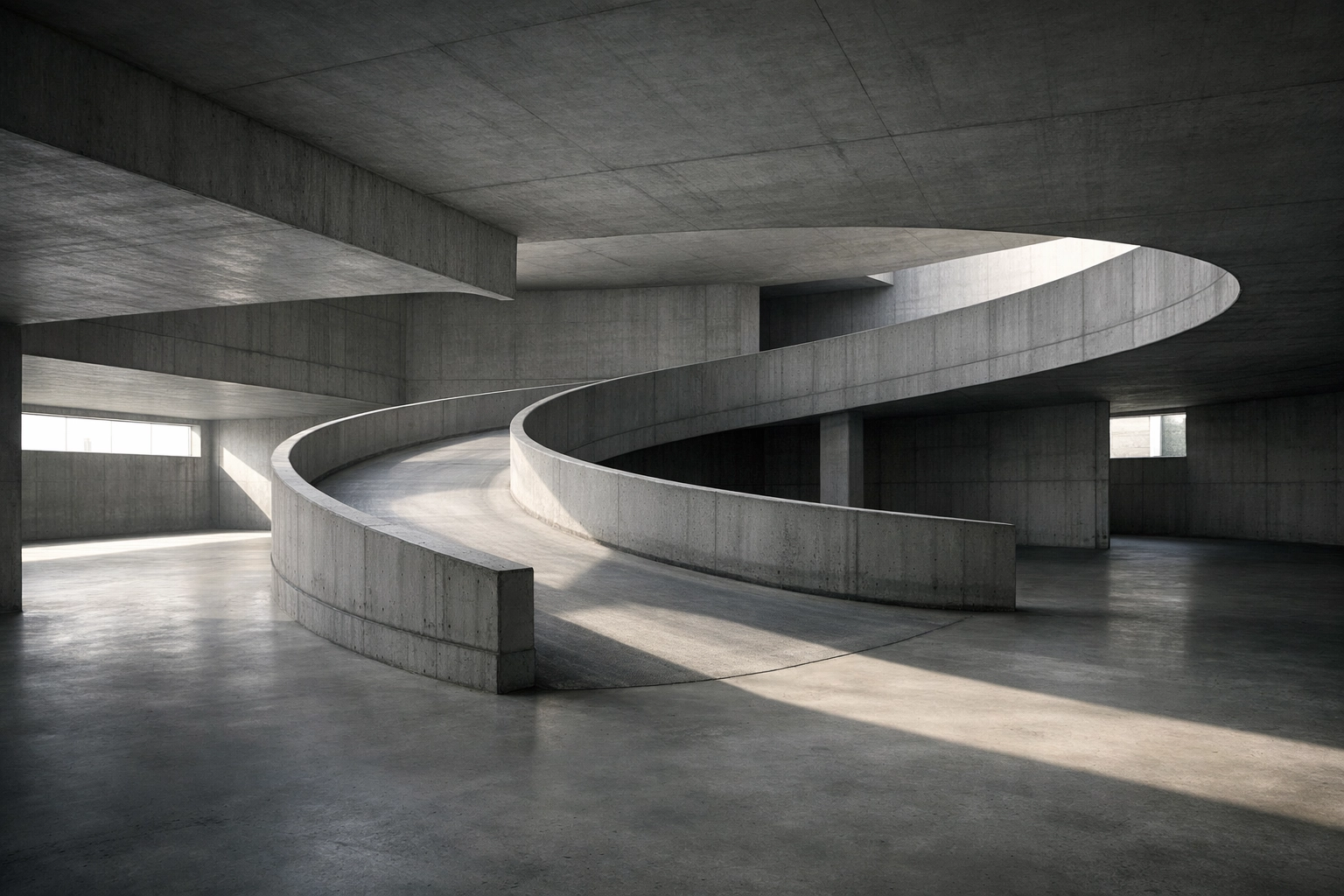
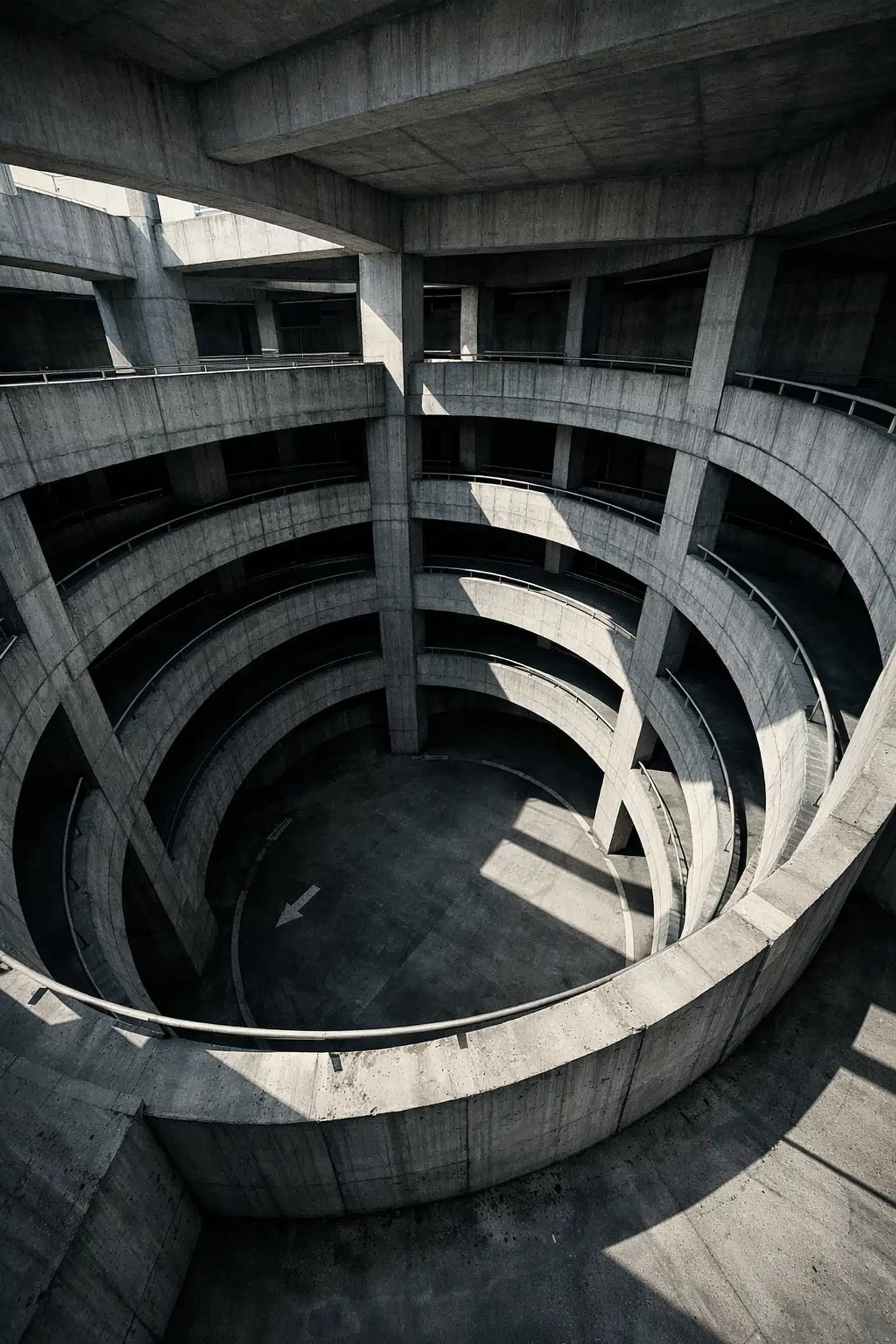
To understand why the $10M liability exists, we have to look at the geometry of a traditional garage. A standard concrete parking structure is incredibly inefficient. Between the drive aisles, the turning radii, and the massive concrete ramps, a traditional garage often dedicates 60% or more of its square footage to the movement of vehicles rather than the storage of them.
These ramps are the primary reason developers are forced to dig deeper. If you need to hit a 100-stall count to meet local zoning requirements, a conventional design might require two full levels of excavation because so much of the first level is “dead space” taken up by the entrance ramp and the transition to the lower level.
This inefficiency forces your project deeper into the ground, requiring the expensive waterproofing and structural support mentioned earlier. It also adds months to your construction schedule. Every day your team spends hauling dirt and pouring subterranean concrete is a day you aren’t vertical, and a day you aren’t move-in ready.
The Solution: Height Compression
The most effective way to save a proforma is to stop digging. This is where Height Compression comes into play.
Our automated parking systems deliver up to 4X the density of a traditional garage within a significantly smaller footprint. Because we eliminate the need for internal ramps, drive aisles on every level, and the 7-foot-plus clear heights required for human-driven cars, we can fit the same number of stalls in half the vertical space.
How it Works
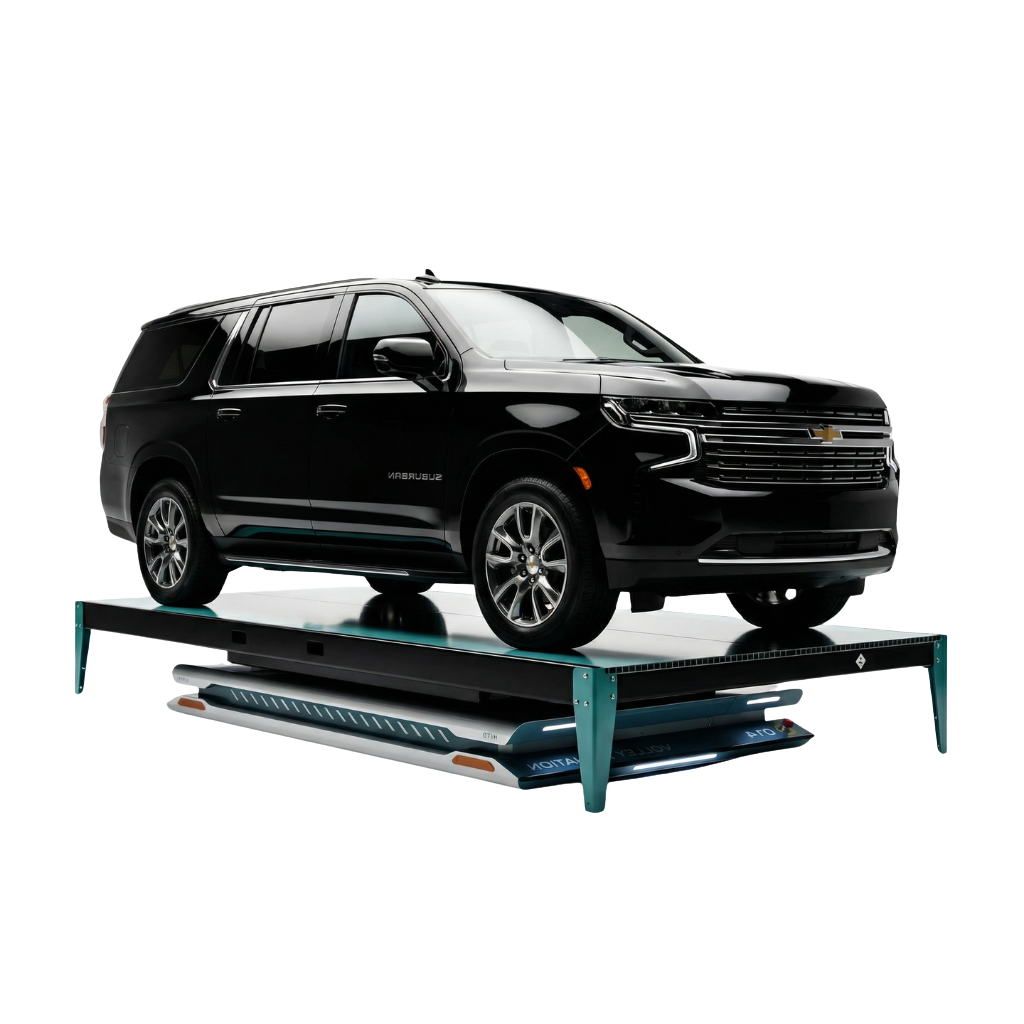
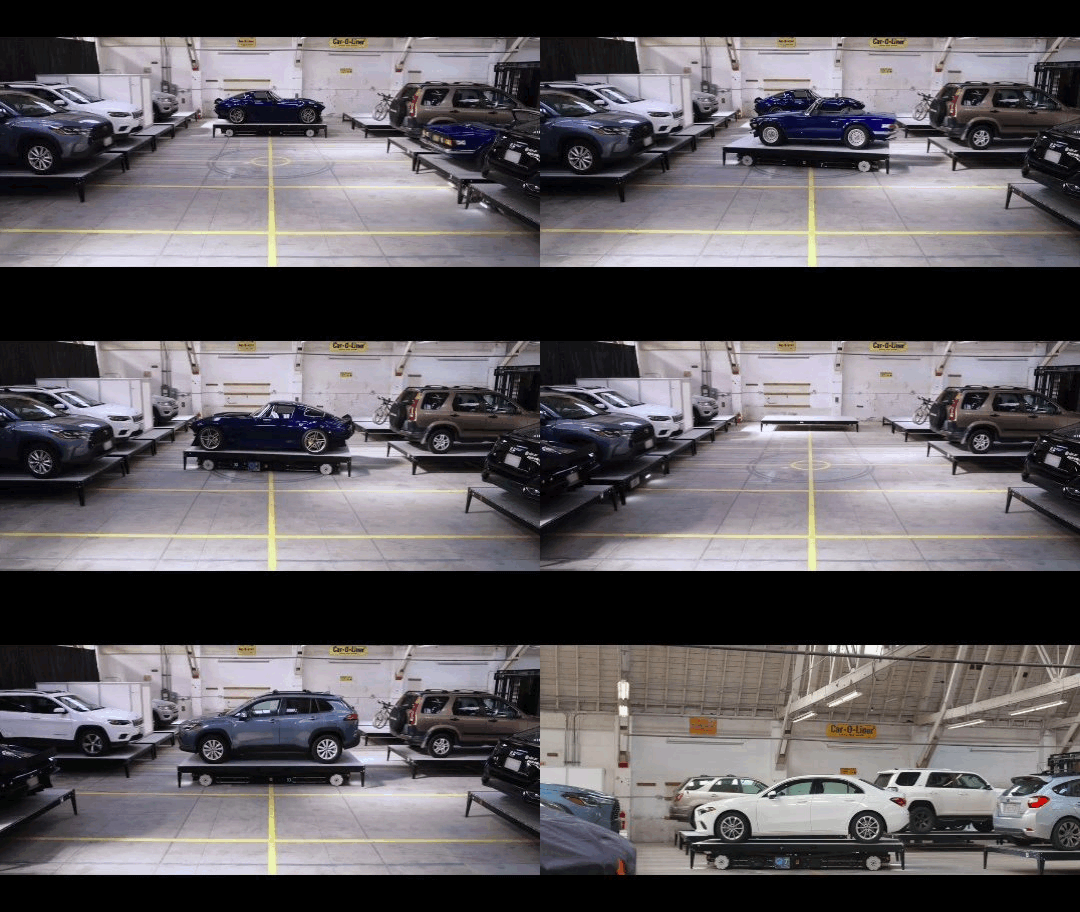
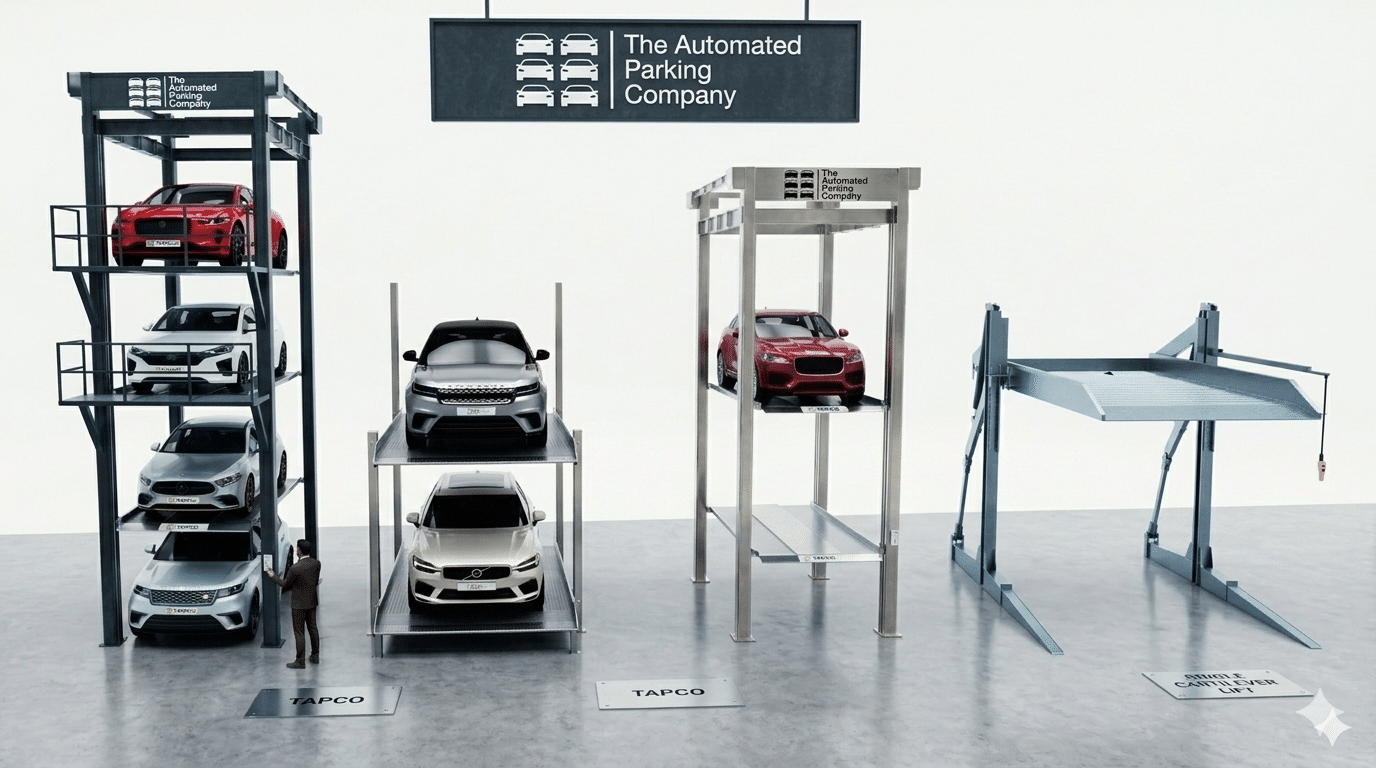
By utilizing parking stackers or semi-automated puzzle parking systems, we can store cars in a “valet-style” density without the overhead of valet staff. In an automated system, the ceiling heights can be as low as the cars themselves.
Instead of a 10-foot floor-to-floor height required for a traditional concrete garage, we can often stack two or three cars in a space only slightly larger. This allows a developer to turn a risky, two-story subterranean dig into a single, shallow level.
The result? You hit your required parking counts, you stay above the water table, and you slash your excavation and shoring costs by millions.
Turnkey Reliability: The US-Based Advantage
One of the biggest hesitations developers have with automated parking is the perceived risk of the technology. They worry about long-term maintenance, part availability, and whether the system will actually work on opening day.
At The Automated Parking Company, we’ve addressed these concerns by positioning ourselves as a US-based turnkey firm. We don’t just broker equipment from overseas and leave you to figure out the installation. We design, manufacture, and support our systems right here.
Quality Components and 24/7 Support
Our systems are built with high-quality, industrial-grade components designed for the rigors of daily use in high-occupancy residential and commercial buildings. We provide 24/7 factory-backed support, ensuring that if an issue arises, it is handled by the same team that engineered the system.
For a developer, this means the parking solution is no longer a variable or a risk: it is a predictable, reliable component of the building’s infrastructure. You can learn more about our specific technical specifications here.
Calculating the ROI: When Does it Pencil?
Deciding between a traditional garage and an automated system isn’t just about the “price per stall.” It’s about the all-in cost of the project.
When you compare the two, you must look at:
Total Excavation Volume: How many cubic yards of soil are you saving?
Shoring Costs: Can you move to a less expensive shoring method by staying shallower?
Time Savings: How many weeks or months does a shallower dig shave off the schedule? (Every month saved is a month of interest carry removed from the budget.)
Rentable Square Footage: Can the space saved by the automated system be converted into more apartments, retail space, or amenities?
Beyond the initial construction savings, automated systems offer long-term risk mitigation that concrete garages cannot.
Lower Operational Costs: Traditional underground garages require massive ventilation systems to clear exhaust fumes and high-intensity lighting for safety. Automated garages, where engines are turned off before the car is stored, require significantly less ventilation and lighting, leading to lower utility bills and a better sustainability profile.
Safety and Liability: Traditional garages are often magnets for crime and accidents. By removing humans from the parking area, you eliminate the risk of fender-benders, car thefts, and personal safety issues within the garage.
Adaptability: As the “future of mobility” shifts toward shared and electric vehicles, automated systems are easier to retrofit with charging stations or repurpose than a massive, sloped concrete floor.
Conclusion: Build Smarter, Not Deeper
The era of the “dumb” concrete garage is coming to an end. In a market where every dollar of the proforma is scrutinized, developers can no longer afford to throw away $10M on excessive excavation just to house cars in a 20th-century fashion.
Height compression isn’t just a design choice; it’s a financial strategy. By integrating automated parking solutions early in the design phase, you can protect your IRR, stay on schedule, and deliver a project that is more efficient and more profitable.
Don’t let excavation costs kill your next deal. It’s time to exit the excavation trap.
Ready to see how the math works on your site?Contact our team today to request a site-specific parking analysis and see how much you can save by building smarter.
De-Risk Your Parking Strategy with a FREE $5,000 Design Review Credit
If you connect with us, The Automated Parking Company, will provide a FREE in-depth design review, normally valued at $5,000; to assess feasibility, optimize layouts, and align your parking solution with project goals.
When you proceed with us, the full design review fee is credited back to the project, ensuring your early-stage diligence directly supports execution—not overhead.
A disciplined approach to smarter parking investment.
📞 Call Us for a FREE parking design review, valued at $5,000: (877) 827-2611
We value community input and address concerns for harmonious solutions.
Research & Innovation
Continuous research and innovation to improve green parking solutions.
Our Step By Step Process Towards Building Smart Yet Sustainable Parking
At TAPCO, our process ensures seamless delivery of efficient and sustainable parking tech tailored to your evolving project needs.
01
Discovery & Consultation:
Understand your needs, site constraints, and objectives.
02
Customized Design:
Create a tailored parking solution with eco-friendly integration.
03
Project Approval & Collaboration:
Obtain necessary approvals and work closely with your team.
04
Manufacturing & Quality Control:
Ensure the highest standards of quality.
05
Timely Delivery & Installation:
On-time setup with minimal disruptions.
06
Thorough Testing & Commissioning:
Rigorous performance checks and safety adherence.
07
Training & Support:
Comprehensive staff training and ongoing maintenance services.
08
Environmental Responsibility:
Implement eco-friendly practices and sustainability monitoring.
09
Client Satisfaction:
Prioritize your project with any number of our solutions.
Frequently Asked Questions
Q: Can TAPCO’s solutions be tailored to our specific needs?
A: Absolutely! At TAPCO, we understand that every project is unique. Our experienced team of designers and engineers will work closely with you to understand your specific requirements, site constraints, and objectives.
Q: How many levels can The Automated Parking Company design for the Puzzle parking system?
A: The Automated Parking Company has the capability to design systems with 2 to 7 levels, accommodating a varying number of parking spaces. Moreover, if your project calls for additional space optimization, we can even incorporate one or two subterranean levels, effectively increasing the total parking capacity.
Q: Are TAPCO’s parking systems safe and reliable?
A: Yes, safety is our top priority at TAPCO. We adhere to stringent industry safety standards and conduct rigorous testing and quality control measures at every stage of the manufacturing process.
Our car parking solutions are designed and built to ensure the safety of users, vehicles, and your property. We use high-quality materials and employ advanced technology to ensure the reliability and durability of our parking systems.
Improving Parking Convenience with Parking Stackers
When it comes to parking solutions, attended-oriented systems offer a blend of efficiency and convenience that cater to the needs and challenges of urban areas, particularly high-demand areas.
These multi-level car stacker solutions are a game-changer when it comes to parking, allowing the creation of multiple parking spaces within a single area.
TAPCO introduces a wide array of innovative attended-oriented parking systems designed to optimize space utilization as well as offer user-friendly parking practices.
These systems are intended to provide a seamless parking experience and enable attendants to efficiently manage parking procedures while ensuring the convenience and safety of the users. Here are the key benefits of using attended-oriented parking systems.
Optimal Space Utilisation
Our attended-oriented parking systems incorporate car lift storage systems make optimal use of the available space. Vertical stacking of vehicles with the vertical storage lift enables the system to increase the parking capacity within a limited area, hence coping with the increasing parking demands.
Organised vertical stacking
The attended-oriented parking allows vertical stacking of vehicles to utilize a vertical space effectively. This approach reduces the area required for parking, thereby contributing to a more organized and aesthetically pleasant-looking parking facility.
Convenience
The attended-oriented parking system offers ease of use for the attendant as well as the user. While the attendant can successfully navigate the car stacker lift and swiftly move vehicles into a nesting position with minimal effort, users need little to no guidance to park their vehicles safely.
Enhanced Security
Our attended-oriented car stacking system comes with advanced features to ensure the safety of parked vehicles. While users have peace of mind, property managers can also be content with the knowledge that the facility is secure.
Versatile stacked car parking
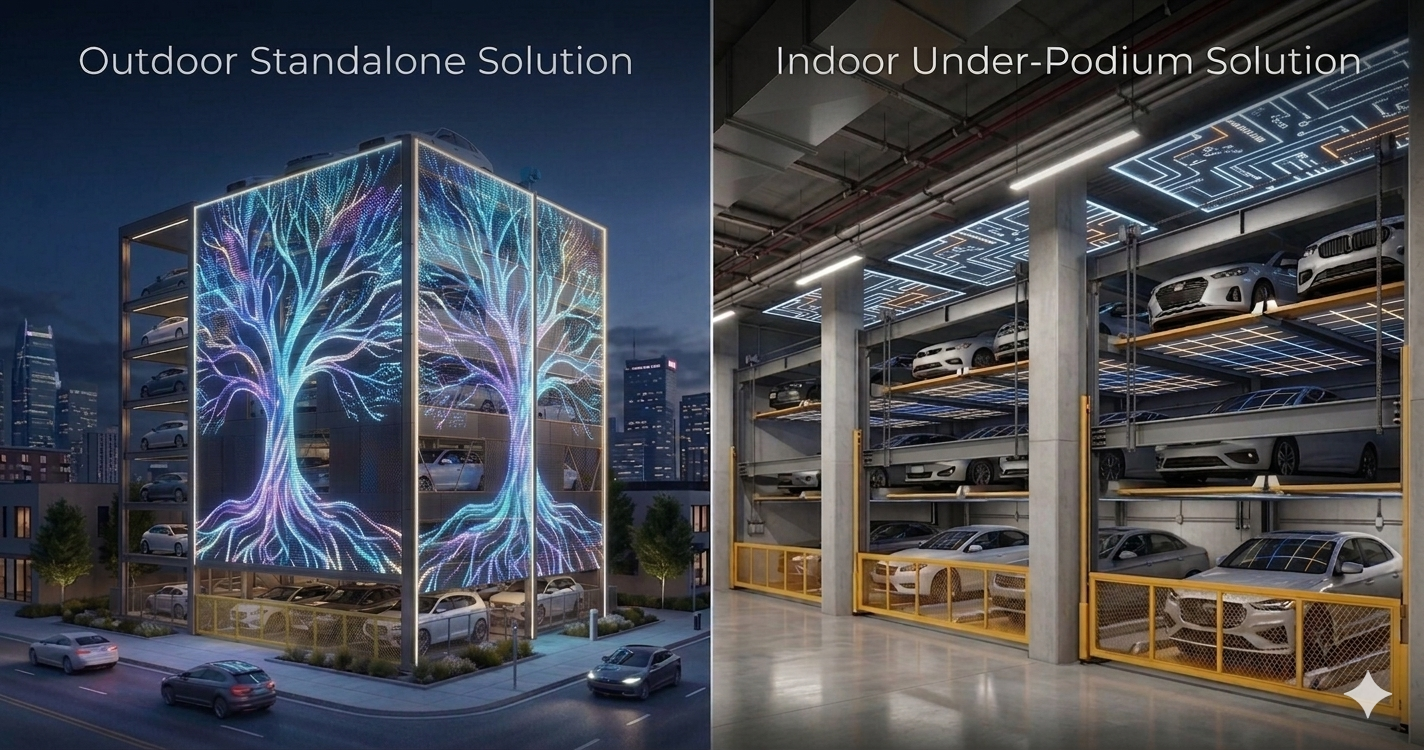
We offer a variety of car stacker lift solutions. From four post car storage lifts to no post solutions, our systems can be implemented indoors as well as outdoors and can be adapted for various project requirements or property layouts. TAPCO’s attended-oriented parking systems can be used in various environments, from commercial establishments to residential complexes.
Revolutionary Parking Solutions with Automated Lift Parking System
As the urban landscape continues to grow, the demand for efficient car parking solutions has become increasingly important. TAPCO introduces revolutionary semi-automated smart parking systems that are designed to optimise space utilization and streamline parking procedures for multi-family residential complexes and commercial facilities. Compared to the conventional car lift system, our multi level car parks are designed to redefine convenience and efficiency.
Here are some of the key features of our semi-automated car parking systems
Space Optimization
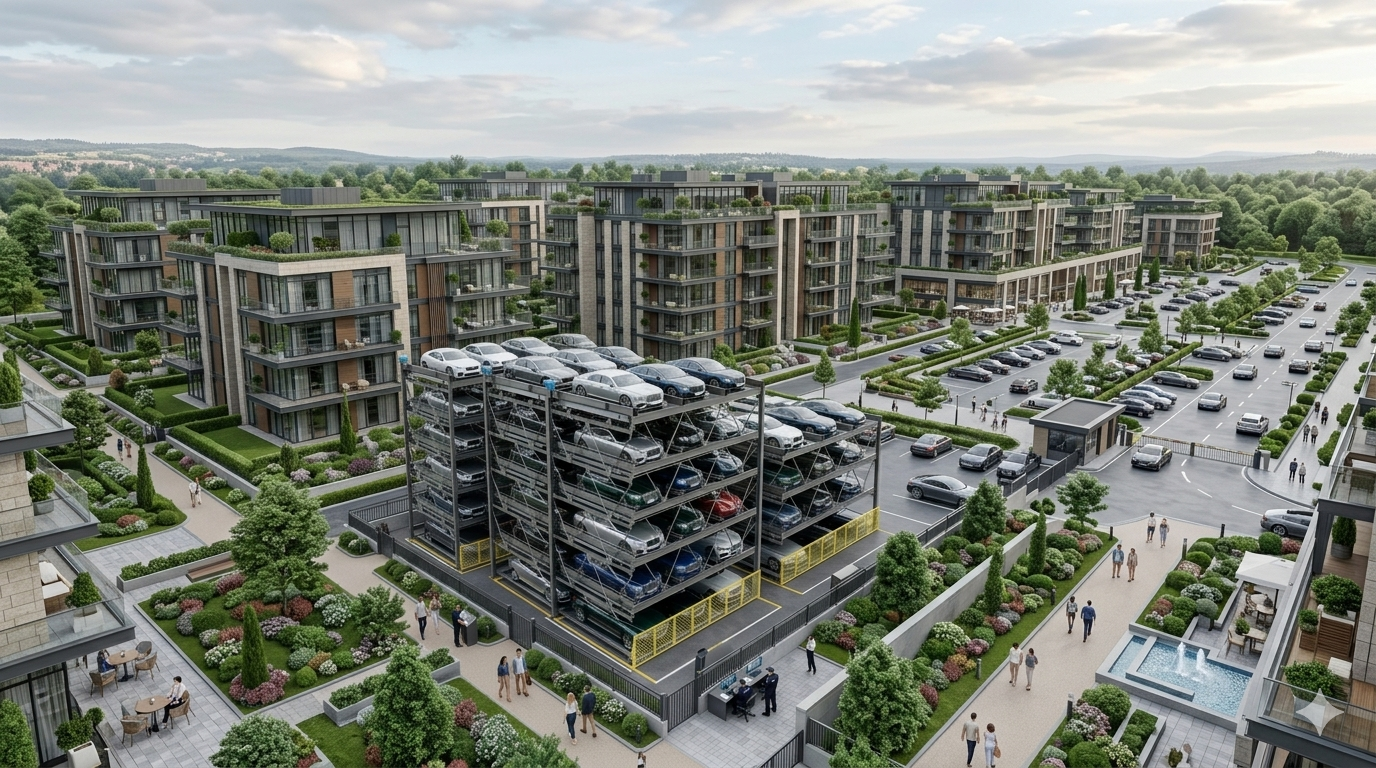
Optimal space utilization is a key focus of our multi-level car storing solutions. Our stack parking systems are designed to accommodate multiple levels, providing an impressive number of parking spaces within a compact footprint. We can design and integrate two to seven parking levels in a single structure and customize varying lengths, widths, and heights.
Seamless Automation
Our smart parking system incorporates advanced automation to simplify the parking process. Drivers can effortlessly park their vehicles with minimum guidance, thereby providing efficient utilization of time.
EV Capability
Given the increasing trend of electric vehicles, our parking solutions are also designed to embrace the future of mobility and Electric Vehicles. To cater to the ever-evolving automotive landscape, we also feature charging facilities for electric cars. We are the only vendor offering 7000# rated systems.
Convenience
We understand that parking can be a source of frustration for people, particularly when you cannot find a spot and have to drive around looking for space. Such layouts can be problematic for larger properties. However, with our Puzzle Parking system, this problem can be easily resolved, offering convenience to individuals and saving valuable time when parking or capturing your auto.
FAQ
Q: What is the difference between a fully automated and semi-automated smart parking system?
A: Semi-automated Puzzle solutions and fully automated AGV parking systems are considered automated parking and compress footprints giving you back valuable square footage.
In a semi-automated parking system, drivers can park and/or retrieve their own auto, so this system rids you of any demand for parking attendants therefore lowering your OpEx. Once the users vehicle is stowed within the system, the semi-automated Puzzle system can move the car up and down or left to right to find its nesting space.
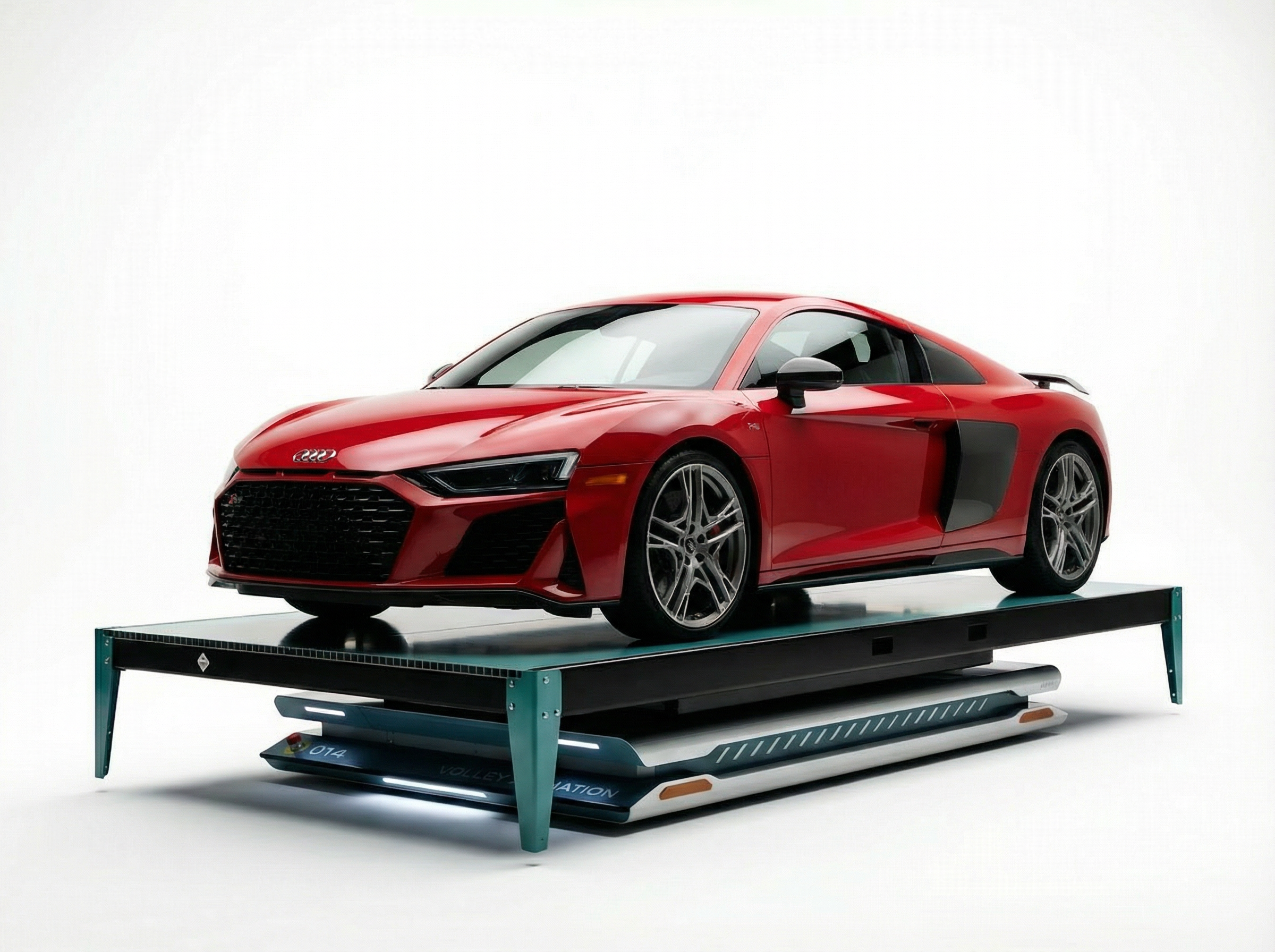
On the other hand, in a fully-automated parking system, the driver pulls into a loading bay where they remove themselves and leave their auto, the system will then maneuver the auto and autonomously stow the users auto within the parking vault.
Q: What is the difference between mechanical lift systems and semi-automated Puzzle Parking systems?
A: In a mechanical stacker system, individuals must operate for it to move, or you must incorporate attendants to manage the parking and retrieval process.. The mechanical stacker parking system is usually a Double, Triple, or Quad Stacker that can raise the vehicle directly up on the platform so that more than one vehicle can be parked in a vertical stack. We strongly encourage trained personnel to operate these systems due to the manual processes of storing or retrieving autos in a vertical arrangement.
On the other hand, in a semi-automated system, there is no demand nor need for attendants or personnel to retrieve autos. Once the driver has parked their vehicle within the system, the semi-automated Puzzle system can intelligently move the car up and down or left to right.
Q: Which properties are semi-automated parking systems suitable for?
A: Our semi-automated parking systems are mostly suitable and used for commercial office and multi-family residential complexes.
Q: Can electric cars be charged in semi-automated parking systems?
A: Absolutely, our semi-automated smart parking systems are EV capable and feature charging facilities for electric vehicles. We offer Level II smart charging capabilities that allow you to bill the user pro-rata and also reduce the number of electrical meters therefore reducing your overall build costs when compared to competitive vendors.
Q: What are the maintenance requirements of semi-automated parking systems?
A: Maintenance and upkeep of the parking systems by The Automated Parking Company are easy as they are designed for minimal maintenance and durability. However, please note that regular checks and maintenance schedules help ensure optimal performance.
EV-Chargers Form
EV Chargers
You’re almost there
Fill in the details below to get our Spec Sheet, CAD, and Revit!