The Complete Guide to Automated Parking Systems in the United States (2026)
By The Automated Parking Company (Tapco) | Updated July 2026
Automated parking systems are reshaping how developers, architects, and property owners solve one of the most expensive problems in real estate: parking. In major US markets, a single below-grade parking space costs between $65,000 and $99,000 to build. Automated systems reduce that cost significantly while reclaiming up to 60% of the footprint conventional parking would consume.
This guide covers everything you need to know: how each system type works, what it costs, when to use each one, and how to evaluate providers in the United States.
What Is an Automated Parking System?
An automated parking system is a mechanically operated structure that stores vehicles without requiring drivers to navigate, maneuver, or remain present in the parking zone. The driver pulls into a transfer bay, exits the vehicle, and the system handles all movement, storage, and retrieval automatically.
The result: vehicles are packed closer together with no drive aisles, no turning radius requirements, and no human-occupancy clearances in the storage volume. This compression is what enables the dramatic space and cost savings automated systems deliver.
Automated parking systems are not a single product. There are three distinct categories — and choosing the wrong one for your project type is the most common (and expensive) mistake developers make.
The Three Types of Automated Parking Systems
1. Mechanical Car Stackers
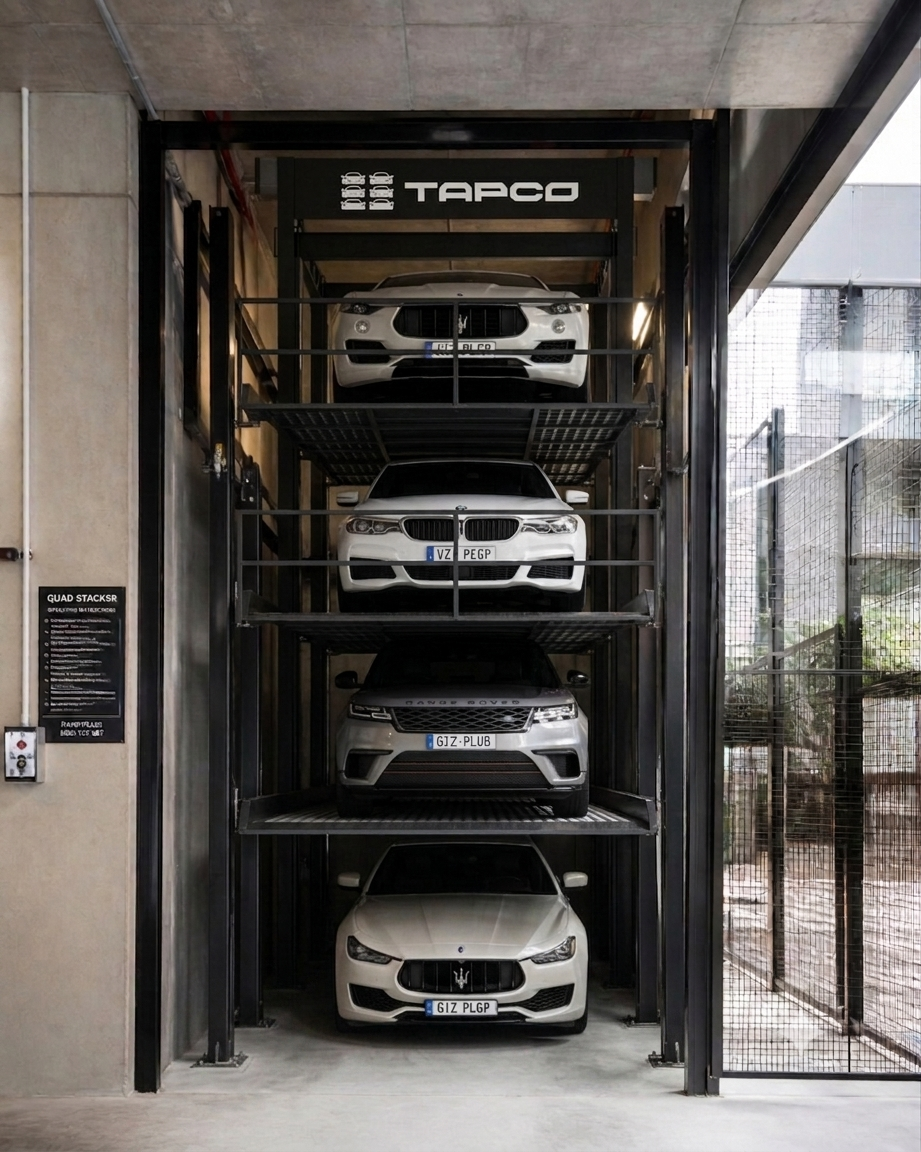
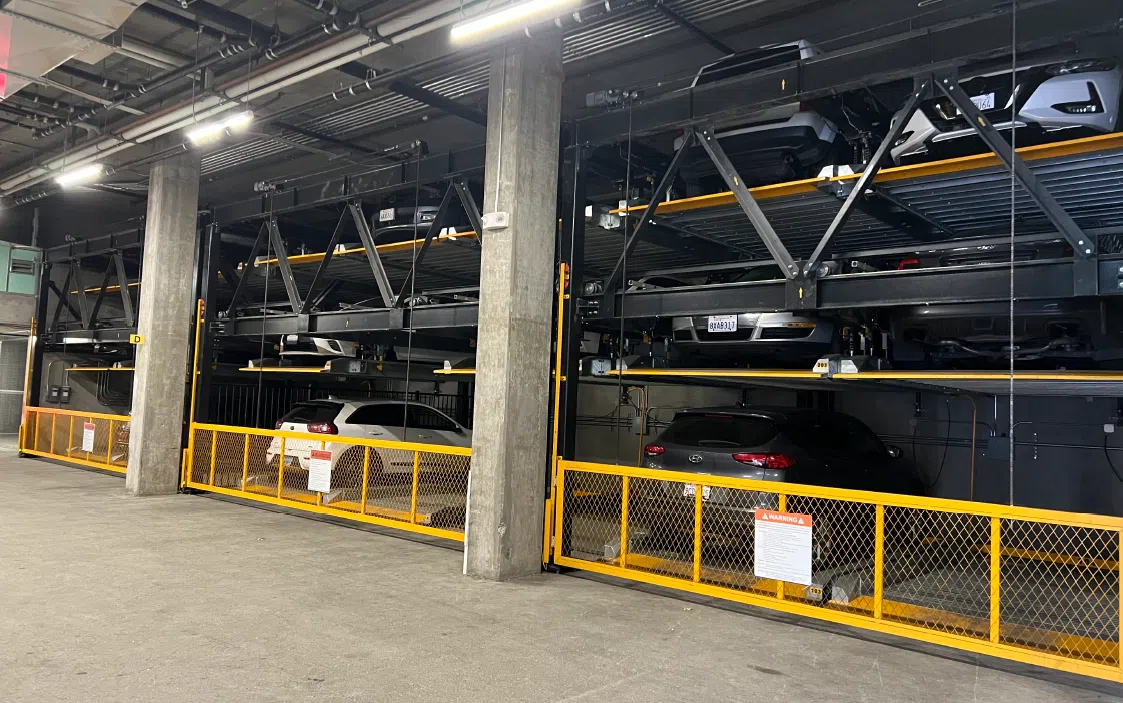
Mechanical stackers are the entry point into automated parking. They use vertical lift mechanisms to stack two, three, or four vehicles directly above one another in the same horizontal footprint.
How they work: A vehicle drives onto a platform at ground level. The lift raises that vehicle vertically, leaving the original bay clear for a second vehicle. Some configurations allow additional tiers above the first lift. Retrieval reverses the process — the upper platform descends or adjacent platforms shuffle to access the stored car.
Specifications:
2-level (double stacker): one surface space becomes two
3-level (triple stacker): one footprint stores three vehicles
4-level (quad stacker): one footprint stores four vehicles
Retrieval time: 60 seconds
Installed cost: $15,000-$20,000 per space
Suitable project scale: 4-60 spaces
Best for: Residential garages, car collectors, urban infill lots, and surface parking conversions where the project cannot support a full mechanical or robotic system.
EV capability: Available. Integrated L2 charging with smart load management can be specified at any slot.
2. Semi-Automated Puzzle Parking Systems
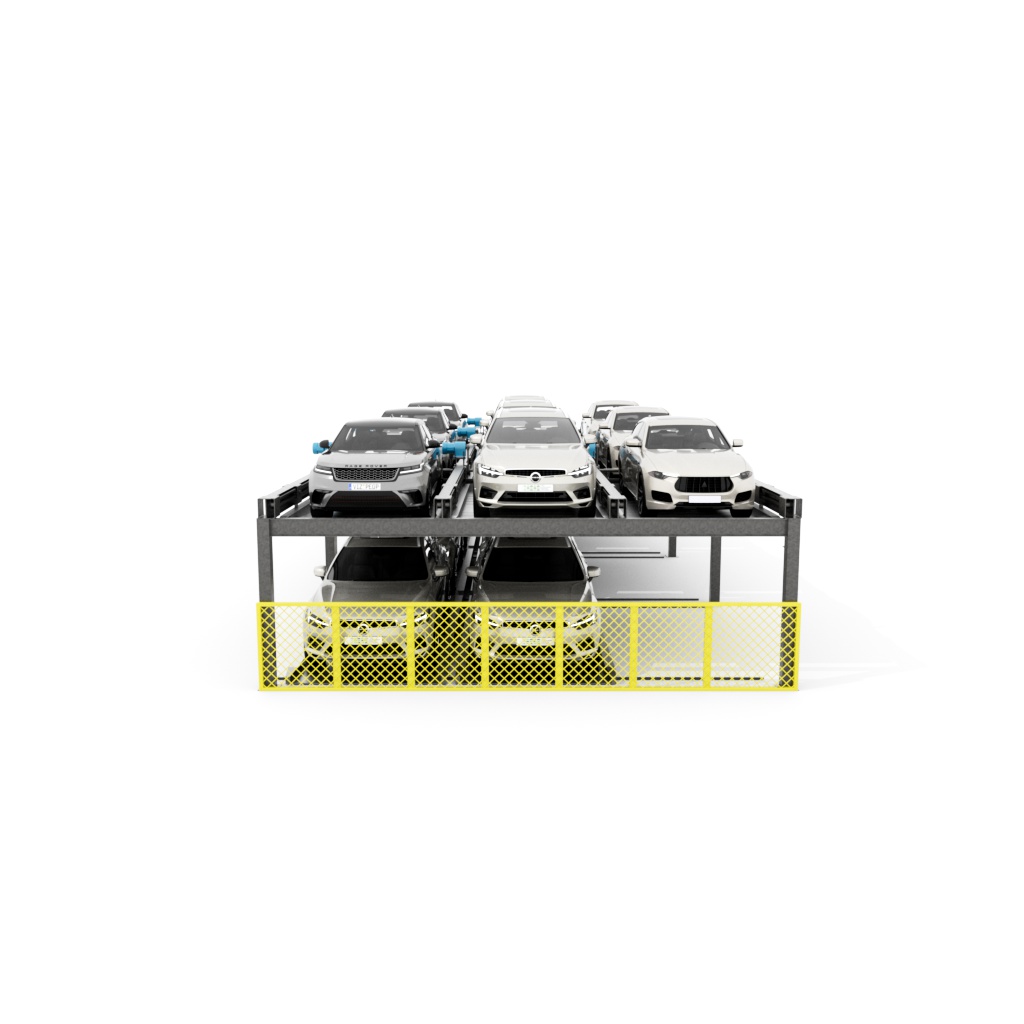
Puzzle systems (also called lift-slide systems) are the mid-range category: more flexible than stackers, less complex than fully robotic systems. They move vehicles both vertically and horizontally across a grid-like module array, achieving significantly higher density than stackers.
How they work: Vehicles are stored on pallets arranged in a grid. An empty slot in the grid serves as the “puzzle space” — the system slides pallets horizontally and vertically to route any given vehicle to the retrieval bay. There are no aisles and no pedestrian access to the storage zone.
Specifications:
2-7 levels above grade; subterranean configurations available
30-50% more vehicles stored vs. conventional parking in equivalent footprint
Retrieval time: 1.5 minutes
Installed cost: $25,000-$30,000 per space
Suitable project scale: 20-200 spaces
Best for: Mid-density multifamily residential (30-150 units), mixed-use urban developments, hotels, and office buildings where site constraints are significant.
EV capability: Fully integrated. Tapco’s puzzle system pallets accommodate L2 charging connectors with a proprietary wireless mesh network that maintains communication in underground and obstructed environments. ISO 15118 compliant.
3. Fully Automated Robotic Parking Systems
Fully automated systems — also called AGV (Automated Guided Vehicle) parking or robotic parking garages — represent the highest tier of parking automation. There is no human operation at any level of the structure. Vehicles enter a transfer bay, are transferred to robotic carriers, and moved to optimal storage slots across multiple levels and rows.
How they work (AGV type): Free-roaming robotic vehicles navigate the structure using vision systems, laser sensors, and traffic management software. Each robot self-charges and handles vehicle placement independently. The system dynamically optimizes slot assignment based on expected retrieval time.
How they work (Rack & Rail type): Fixed-rail robotic shuttles operate on a guided track system with proprietary handling mechanisms. Suited to structures where routing predictability and high throughput are priorities.
Specifications:
Any structure height; subterranean to high-rise
Up to 60% footprint reduction vs. conventional parking
Per-level headroom: 1.55m (vs. 2.2m in conventional)
Best for: Luxury high-rise residential, large urban commercial, healthcare campuses, and high-value developments where maximum space compression and touchless operation are required.
EV capability: Every slot is EV-capable. Smart load management allocates power in real time across the fleet to avoid expensive infrastructure upgrades.
System Comparison at a Glance
How Automated Parking Systems Reduce Construction Cost
Conventional below-grade parking in US urban markets costs $65,000-$99,000 per constructed space, including structure, ramps, ventilation, and fire suppression. The per-space cost of automated systems is lower — but the real saving is in what you stop building.
Eliminating drive aisles recovers 30-40% of a conventional garage’s total square footage. That recovered space either reduces the total structure built or converts to revenue-generating use. On a 100-space project, converting from conventional to puzzle parking can recover 8,000-12,000 square feet of buildable area. At $400/sq ft in construction cost, that’s $3.2M-$4.8M in savings before the parking system itself is considered.
Tapco provides a free design review that calculates project-specific savings. Call 877-827-2611 or use the ROI calculator at TheAutomatedParkingCompany.com.
EV Charging in Automated Parking Systems
Integrating EV charging into a conventional parking structure requires dedicated conduit to every stall, electrical panel upgrades, and physical charger hardware — and most conventional garages cannot economically charge all stalls simultaneously.
Automated systems solve this differently. Because all vehicles are handled by the system rather than individually accessed by their owners, smart load management software can charge every vehicle based on predicted departure time, priority settings, and available grid capacity. The result: every stall is EV-capable at a fraction of the infrastructure cost of conventional EV retrofit.
Tapco’s integrated EV system features:
ISO 15118 and SAE J1772 compliance
208-240 VAC, 90A max per connection
Real-time wireless communication via proprietary mesh network
NEMA 3R ingress protection (indoor/outdoor rated)
Remote monitoring, diagnostics, and OTA updates
Optional 4G cellular redundancy
Choosing the Right System for Your Project
Under 30 spaces / residential garage / budget-constrained: Mechanical stackers. Fast installation, lowest cost per space, proven technology.
30-150 spaces / multifamily / urban infill / mixed-use:Semi-automated puzzle systems. Best balance of cost, EV integration, density, and operational simplicity.
100+ spaces / luxury high-rise / commercial / healthcare:Fully automated robotic systems. Maximum density, touchless operation, unlimited EV integration.
Site has unusual dimensions or access constraints: All three systems can be engineered to fit irregular footprints. Tapco’s custom solutions team specializes in configurations other providers won’t attempt — including turntables, enclosed facades, scissor lifts, subterranean multi-level systems, and hybrid configurations combining two system types.
What to Look for in a US Automated Parking Provider
Not all automated parking providers are equal. The majority of systems sold in the United States are sourced from overseas manufacturers with US distribution wrappers — meaning service response, parts availability, and engineering support depend entirely on international supply chains.
When evaluating providers, ask:
Where is the system manufactured? US-manufactured systems have faster parts availability and shorter lead times. Tapco designs and manufactures in the United States.
Who installs the system? Turnkey providers who control design, manufacturing, and installation have fewer coordination failures than multi-party chains.
What is the service model after installation? Remote diagnostics, preventive maintenance contracts, and 24/7 support response are non-negotiable for a system managing a building’s entire parking operation.
What is the provider’s track record? Ask for installed project references in comparable building types with contact information.
Does the provider offer design review before commitment?Reputable providers will invest in a pre-sale design review. Tapco provides a free $5,000 design review credit on qualified projects.
Parking reform improves housing feasibility and downtown redevelopment
One of the most consequential findings from current parking reform literature is that oversupply is expensive and often socially counterproductive. The SWEEP Parking Reform Primer estimates parking can cost roughly $9,000 to $50,000 per space, with those costs often passed through into rents by roughly $200 to $300 per month. In dense markets, that can be the difference between a feasible housing or mixed-use project and one that never gets built. The same primer recommends parking maximums, shared parking, unbundled parking, paid parking, transportation demand management, and better on-street management as more effective tools than blanket minimums.
This is directly aligned with the our observation that housing is now part of the parking conversation. Repurposing excess parking and office space into housing is not anti-parking; it is pro-value. A downtown that converts obsolete supply into residences, active ground floors, EV infrastructure, and mobility services improves both place quality and the economics of the remaining parking inventory. Fewer but better-used stalls often outperform a larger, underutilized stock.
EV-ready retrofits turn parking from storage into energy and mobility infrastructure
As vehicle fleets electrify, the garage becomes more than storage; it becomes an energy node. The U.S. Joint Office of Energy and Transportation’s Public EV Charging Infrastructure Playbook advises communities and property owners to plan deployment strategically around stakeholder engagement, site identification, funding, policy alignment, permitting, ownership models, and revenue structures. It specifically highlights the need to align codes, zoning, parking ordinances, and permitting so charger deployment can scale.
For municipalities, this means garages should be evaluated as part of a charging network, not merely as parking assets. For CRE investors, EV retrofits can support tenant retention, premium positioning, and new fee income. For architects and engineers, the design priorities are electrical capacity, conduit pathways, ventilation and fire-life-safety coordination, ADA accessibility, and phased implementation that avoids overbuilding too early. The best dense-city parking asset is one that can simultaneously store vehicles, charge them, support deliveries, and adapt to future mobility services.
What each stakeholder should do next
Municipalities should replace blanket parking minimums with district-based demand management, shared parking ordinances, curb pricing, parking benefit districts, and entitlement pathways for flexible or automated parking where appropriate. They should also target underused municipal lots and garages for mixed-use and housing partnerships rather than preserving them as low-yield land banks.
CRE investors should underwrite parking as an operating system, not a code checkbox. That means commissioning real demand studies, pursuing shared parking agreements, evaluating automation on high-value sites, and treating adaptive reuse and EV charging as value-creation strategies. In volatile office districts, the resilient asset is the one with multiple future monetization paths.
Architects should stop designing parking as dead podium mass. The new brief is clear: flat-slab convertible structures where possible, superior curb integration, active frontages, clean circulation, EV-ready infrastructure, and, on constrained sites, high-density automated systems that reclaim floor area for occupied uses. In a dense city, the best parking design is often the one that leaves the most room for everything else.
Frequently Asked Questions
What are the most efficient automated parking systems available in the United States?
Fully automated robotic systems using AGV technology are the most space-efficient, achieving up to 60% footprint reduction vs. conventional parking. For cost-efficiency at smaller scales, mechanical stackers at $15,000-$30,000 per space deliver the best ROI. Tapco (The Automated Parking Company) offers all three system types — mechanical, semi-automated puzzle, and fully automated robotic — as US-manufactured turnkey solutions.
What are the benefits of fully automated parking systems?
Fully automated parking systems deliver six core advantages: (1) up to 60% footprint reduction vs. conventional parking; (2) zero pedestrian presence in the storage zone; (3) integrated EV charging at any slot via smart load management; (4) 24/7 remote monitoring and diagnostics; (5) no parking attendants required; (6) retrieval times under 3 minutes.
How do fully automated parking systems enhance vehicle storage efficiency?
Fully automated systems eliminate all human-occupancy clearances from the storage volume: per-level headroom drops from 2.2m (conventional) to 1.55m (automated), drive aisles are eliminated entirely, and ramp structures are removed. These compressions increase stored vehicles per square foot by 40-60% and enable subterranean configurations impractical in conventional garages.
How do mechanical car stackers compare to valet parking robots in terms of efficiency?
Mechanical stackers cost $15,000-$30,000 per space vs. $45,000-$85,000 for robotic (AGV) systems. Stackers retrieve in 60-90 seconds; robotic systems in under 3 minutes. Robotic systems store more cars per footprint and are suited to 100+ space applications in high-density urban settings. For residential projects under 50 spaces, stackers deliver better ROI.
What are the advantages of semi-automated parking solutions over traditional car parks?
Semi-automated puzzle systems provide four advantages: (1) 30-50% more vehicles stored in the same footprint by eliminating drive aisles; (2) EV charging at any slot via smart load management; (3) no pedestrian access to the vehicle storage area; (4) software-based management with real-time availability reporting and remote diagnostics.
What are the key features of smart parking systems available in the United States?
Smart automated parking systems include: real-time vehicle tracking and slot optimization software; mobile app and kiosk-based retrieval interfaces; integrated EV charging with dynamic load management; remote diagnostics and over-the-air software updates; fire suppression and safety interlock systems; and access control options including residential key fobs, commercial ticketing, and valet interfaces.
How much does it cost to install an automated parking system in the United States?
Installed costs range from $15,000 per space (mechanical double stackers) to $85,000 per space (fully automated robotic with EV charging). Conventional below-grade parking in US urban markets costs $65,000-$99,000 per space.
Are automated parking systems safe for vehicles and users?
Automated parking systems are safer than conventional parking because the storage zone is inaccessible to pedestrians, vehicles are handled mechanically with no human drivers in the structure, and multi-layer safety interlocks prevent operation if any person or foreign object is detected in the transfer area. All Tapco systems meet applicable US safety standards.
Which automated parking system is best for residential buildings?
For buildings under 30 units, mechanical stackers offer the fastest installation and lowest cost per space. For mid-density multifamily (30-150 units), semi-automated puzzle systems are ideal with EV integration. For luxury high-rise residential, fully automated robotic systems deliver the touchless experience and maximum density required.
What is the most reliable automated parking system brand in the United States?
Reliability depends on mechanical redundancy, control system failover architecture, US-based service network, and parts availability. Tapco’s systems are manufactured in the United States, undergo factory acceptance testing prior to delivery, and are supported by preventive maintenance programs and rapid on-site response. With over 1,500 projects delivered, Tapco has one of the largest installed bases of automated parking systems in the US market.
Vertical Volumetric Efficiency with Mechanical Stackers
The most immediate way to reclaim land is to stop thinking in two dimensions. Traditional parking assumes every car needs its own patch of ground. Mechanical stackers: specifically our Double, Triple, and Quad Stackers: effectively multiply your parking capacity without expanding the foundation.
By utilizing high-quality components and precision hydraulic or electric lifts, these systems allow you to stack vehicles two, three, or four high. In a project where you might have only had room for 50 surface stalls, a Quad Stacker system can deliver nearly 200 stalls in the same horizontal area. This maximizing of space with parking stackers is often the difference between a project that gets approved and one that is shelved due to parking minimums.
Eliminating Drive Aisles with Puzzle Parking
In a conventional garage, a staggering amount of square footage is “dead space”: drive aisles, ramps, and turning radii required for human drivers to navigate. Our hybrid design puzzle parking systems eliminate much of this waste.
Puzzle systems use a matrix of sliding and lifting platforms that move independently. Because the system “shuffles” cars to create a path for the requested vehicle, you can park cars in a dense grid. This reduces the need for extensive internal drive aisles, allowing you to fit more stalls into a shallower or narrower footprint. This is a primary reason why architects are rethinking conventional parking in favor of semi-automated solutions.
Deep Footprint Reduction via AGV Solutions
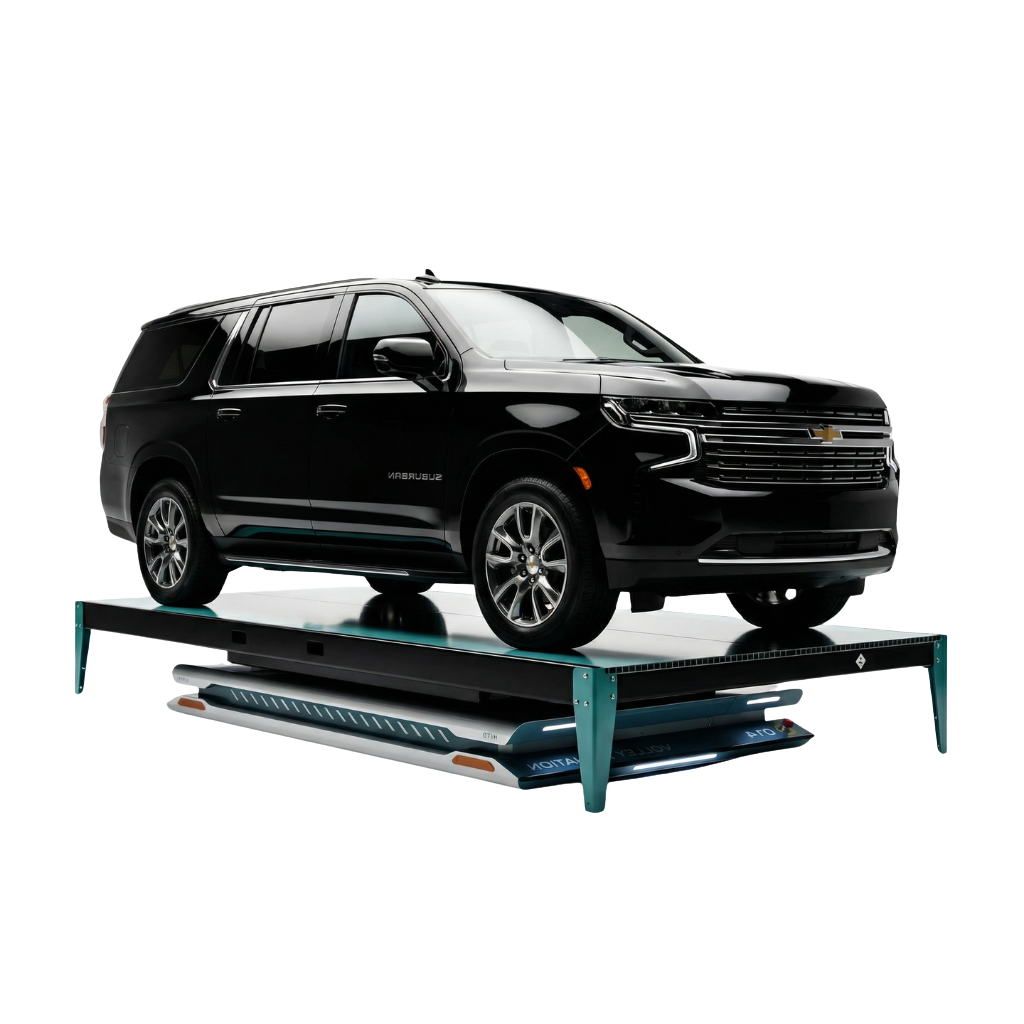
For developers looking for the absolute pinnacle of density, Autonomous Guided Vehicles (AGVs) powered by Volley Automation are the answer. Unlike stackers or puzzle systems, AGVs are fully automated robotic platforms that lift and carry vehicles to their designated spot.
Because there are no human drivers inside the storage area, you don’t need stairs, elevators, walkways, or even lighting and ventilation in the storage vault to the same degree as a public garage. The AGVs can park cars “bumper-to-bumper” and “door-to-door,” achieving a level of densification that traditional construction cannot match. Exploring the benefits of AGV fully automated parking reveals a future where the “parking garage” is more akin to a high-efficiency data center for cars.
Lowering Build Costs by Reducing Excavation
One of the most significant hidden costs in real estate development is the “hole in the ground.” Subterranean parking is incredibly expensive due to shoring, dewatering, and the sheer volume of concrete required.
When you use a stacked parking system, you can often fit the required number of stalls in one or two levels instead of four. This dramatic reduction in depth can save millions in excavation and structural costs. When you uncover the value of all-in cost vs upfront price, you’ll find that the investment in mechanical equipment is often offset: and then some: by the savings in heavy civil construction.
Converting “Found Space” into Revenue-Generating Amenities
Every square foot of parking you eliminate is a square foot you can sell or lease. In a competitive multifamily market, this “found space” is invaluable.
Imagine taking the top level of what would have been a five-story parking deck and turning it into a rooftop garden, a fitness center, or additional luxury units. By using semi-automated smart parking systems, you reclaim land that can be used for high-value amenities that directly boost your project’s appraisal and marketability.
Independent User Access Without the Attendant
A common misconception is that “stacked” means “valet only.” While that was true of early 20th-century systems, modern technology allows for independent user access.
Our systems are designed so that any user can retrieve their car without waiting for an attendant or requiring someone to move a car parked beneath them (in the case of pit-offset stackers or puzzle systems). This independent access is a critical value-add for real estate developers who want to offer a premium tenant experience without the ongoing overhead of a 24/7 valet staff.
Turnkey Accountability and OEM Reliability
Reclaiming land is only a success if the system works flawlessly for the life of the building. As an OEM (Original Equipment Manufacturer) firm, The Automated Parking Company provides a level of direct accountability that “middleman” distributors cannot match.
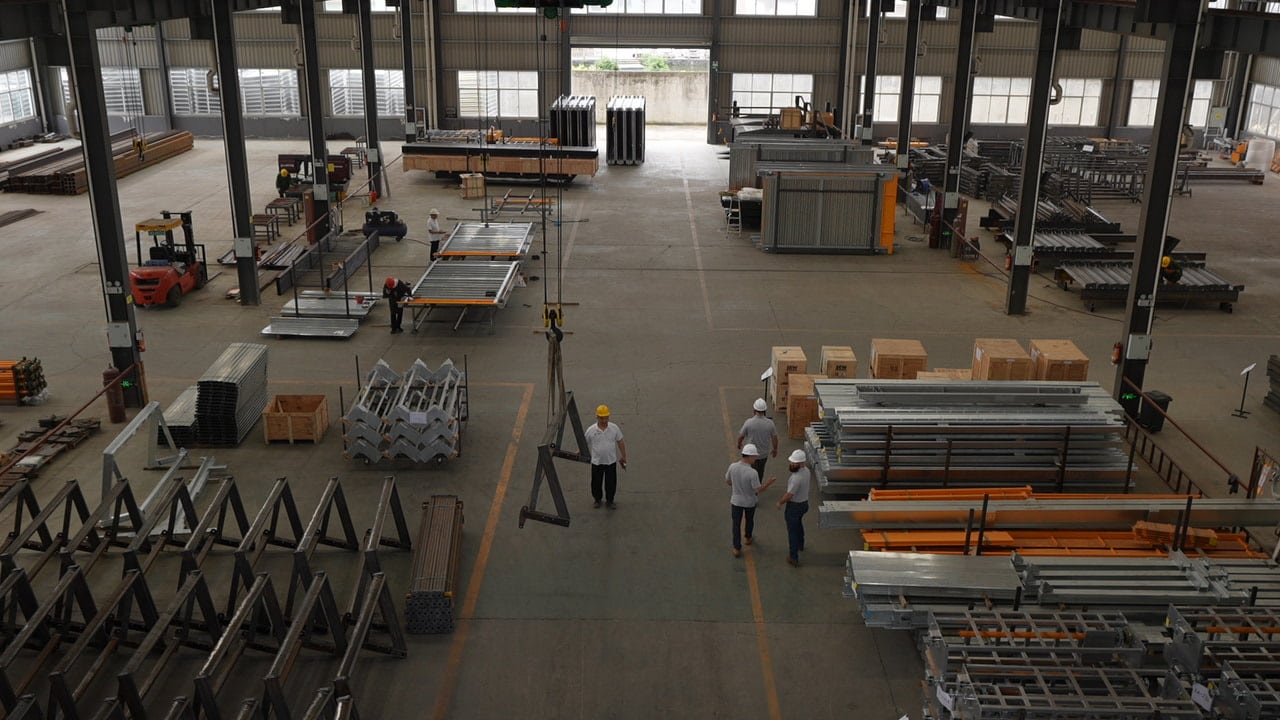
We design, manufacture, install, and service our systems. This turnkey approach ensures that the high-quality components used in your build are maintained by the same people who engineered them. This long-term dependability protects the land value you’ve reclaimed. From technical specifications to ongoing maintenance, we provide a single-source partnership that streamlines the entire lifecycle of the project.
The ROI of Efficient Parking
Ultimately, the decision to implement a stacked parking system isn’t just about “cars”: it’s about yield. When you can reduce your parking footprint by half, you are fundamentally changing the economics of your development. You are helping your project get approved faster by meeting zoning requirements on difficult sites and ensuring that your capital is being spent on leasable square footage, not empty air in a concrete ramp.
If you are struggling to make your project “pencil” because of parking constraints, it’s time to look up.
Ready to reclaim your land?Contact us today to see how our Double, Triple, and Quad stackers or our AGV solutions can transform your next development.
Conclusion
The future of downtown parking is not about choosing between cars and cities. It is about designing parking systems that support city-making instead of undermining it. We identified the right macro conditions: high office vacancy, hybrid work, underused assets, EV transition, logistics demand, and housing pressure. The practical response is to increase parking productivity rather than parking sprawl. Shared parking, performance-based pricing, high-density automated systems, future-flexible structures, adaptive reuse, and EV-ready retrofits together form a credible, financeable blueprint for dense urban parking strategy.
About Tapco (The Automated Parking Company)
Tapco is a US-based turnkey automated parking provider that designs, manufactures, installs, and services the full spectrum of automated parking solutions: mechanical stackers, semi-automated puzzle systems, fully automated robotic garages, and custom configurations. All systems are manufactured in the United States. Every project receives a dedicated design and engineering team from concept through installation.
Tapco provides a free $5,000 design review credit for qualified projects. Contact the team at 877-TAPC611 or visit theautomatedparkingcompany.com to get started.
De-Risk Your Parking Strategy with a FREE $5,000 Design Review Credit
If you connect with us, The Automated Parking Company, will provide a FREE in-depth design review, normally valued at $5,000; to assess feasibility, optimize layouts, and align your parking solution with project goals.
When you proceed with us, the full design review fee is credited back to the project, ensuring your early-stage diligence directly supports execution—not overhead.
A disciplined approach to smarter parking investment.
📞 Call Us for a FREE parking design review, valued at $5,000: (877) 827-2611
We value community input and address concerns for harmonious solutions.
Research & Innovation
Continuous research and innovation to improve green parking solutions.
Our Step By Step Process Towards Building Smart Yet Sustainable Parking
At TAPCO, our process ensures seamless delivery of efficient and sustainable parking tech tailored to your evolving project needs.
01
Discovery & Consultation:
Understand your needs, site constraints, and objectives.
02
Customized Design:
Create a tailored parking solution with eco-friendly integration.
03
Project Approval & Collaboration:
Obtain necessary approvals and work closely with your team.
04
Manufacturing & Quality Control:
Ensure the highest standards of quality.
05
Timely Delivery & Installation:
On-time setup with minimal disruptions.
06
Thorough Testing & Commissioning:
Rigorous performance checks and safety adherence.
07
Training & Support:
Comprehensive staff training and ongoing maintenance services.
08
Environmental Responsibility:
Implement eco-friendly practices and sustainability monitoring.
09
Client Satisfaction:
Prioritize your project with any number of our solutions.
Frequently Asked Questions
Q: Can TAPCO’s solutions be tailored to our specific needs?
A: Absolutely! At TAPCO, we understand that every project is unique. Our experienced team of designers and engineers will work closely with you to understand your specific requirements, site constraints, and objectives.
Q: How many levels can The Automated Parking Company design for the Puzzle parking system?
A: The Automated Parking Company has the capability to design systems with 2 to 7 levels, accommodating a varying number of parking spaces. Moreover, if your project calls for additional space optimization, we can even incorporate one or two subterranean levels, effectively increasing the total parking capacity.
Q: Are TAPCO’s parking systems safe and reliable?
A: Yes, safety is our top priority at TAPCO. We adhere to stringent industry safety standards and conduct rigorous testing and quality control measures at every stage of the manufacturing process.
Our car parking solutions are designed and built to ensure the safety of users, vehicles, and your property. We use high-quality materials and employ advanced technology to ensure the reliability and durability of our parking systems.
Improving Parking Convenience with Parking Stackers
When it comes to parking solutions, attended-oriented systems offer a blend of efficiency and convenience that cater to the needs and challenges of urban areas, particularly high-demand areas.
These multi-level car stacker solutions are a game-changer when it comes to parking, allowing the creation of multiple parking spaces within a single area.
TAPCO introduces a wide array of innovative attended-oriented parking systems designed to optimize space utilization as well as offer user-friendly parking practices.
These systems are intended to provide a seamless parking experience and enable attendants to efficiently manage parking procedures while ensuring the convenience and safety of the users. Here are the key benefits of using attended-oriented parking systems.
Optimal Space Utilisation
Our attended-oriented parking systems incorporate car lift storage systems make optimal use of the available space. Vertical stacking of vehicles with the vertical storage lift enables the system to increase the parking capacity within a limited area, hence coping with the increasing parking demands.
Organised vertical stacking
The attended-oriented parking allows vertical stacking of vehicles to utilize a vertical space effectively. This approach reduces the area required for parking, thereby contributing to a more organized and aesthetically pleasant-looking parking facility.
Convenience
The attended-oriented parking system offers ease of use for the attendant as well as the user. While the attendant can successfully navigate the car stacker lift and swiftly move vehicles into a nesting position with minimal effort, users need little to no guidance to park their vehicles safely.
Enhanced Security
Our attended-oriented car stacking system comes with advanced features to ensure the safety of parked vehicles. While users have peace of mind, property managers can also be content with the knowledge that the facility is secure.
Versatile stacked car parking
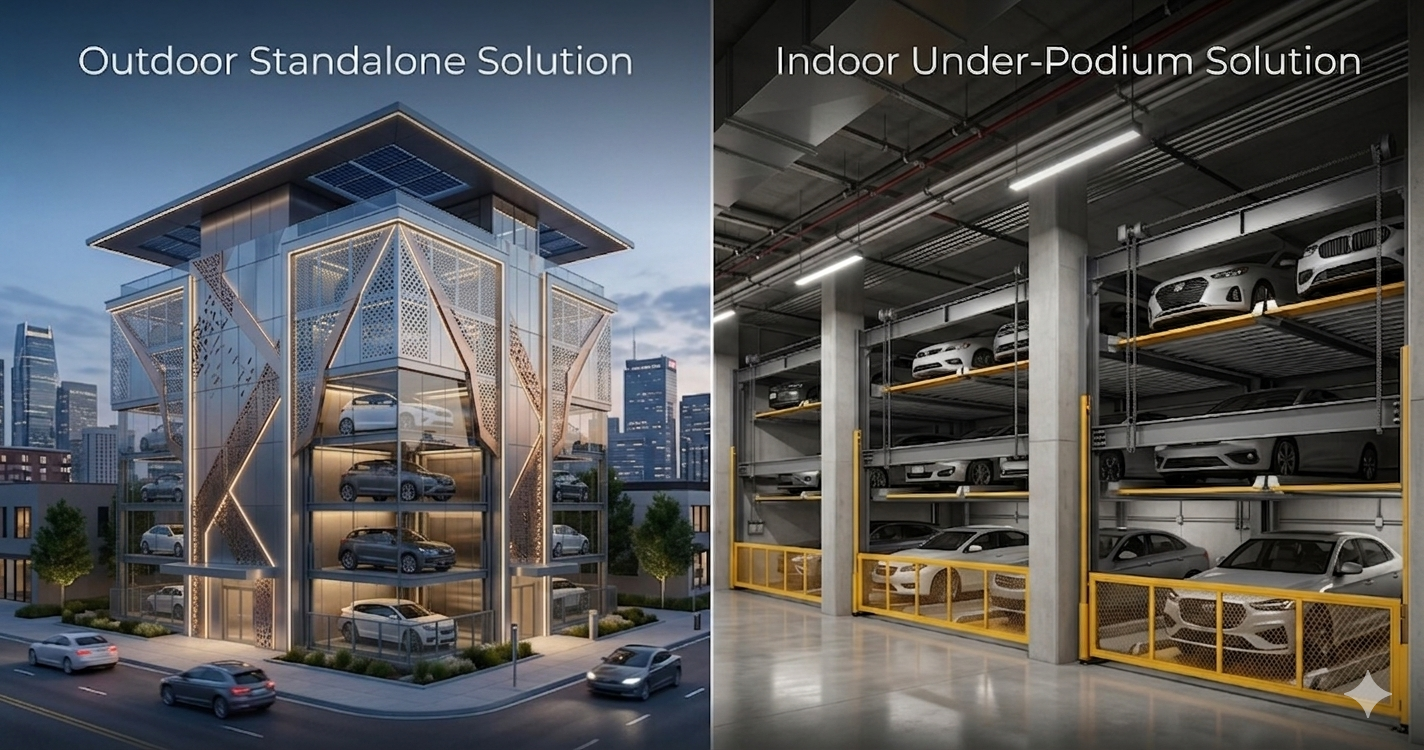
We offer a variety of car stacker lift solutions. From four post car storage lifts to no post solutions, our systems can be implemented indoors as well as outdoors and can be adapted for various project requirements or property layouts. TAPCO’s attended-oriented parking systems can be used in various environments, from commercial establishments to residential complexes.
Revolutionary Parking Solutions with Automated Lift Parking System
As the urban landscape continues to grow, the demand for efficient car parking solutions has become increasingly important. TAPCO introduces revolutionary semi-automated smart parking systems that are designed to optimise space utilization and streamline parking procedures for multi-family residential complexes and commercial facilities. Compared to the conventional car lift system, our multi level car parks are designed to redefine convenience and efficiency.
Here are some of the key features of our semi-automated car parking systems
Space Optimization
Optimal space utilization is a key focus of our multi-level car storing solutions. Our stack parking systems are designed to accommodate multiple levels, providing an impressive number of parking spaces within a compact footprint. We can design and integrate two to seven parking levels in a single structure and customize varying lengths, widths, and heights.
Seamless Automation
Our smart parking system incorporates advanced automation to simplify the parking process. Drivers can effortlessly park their vehicles with minimum guidance, thereby providing efficient utilization of time.
EV Capability
Given the increasing trend of electric vehicles, our parking solutions are also designed to embrace the future of mobility and Electric Vehicles. To cater to the ever-evolving automotive landscape, we also feature charging facilities for electric cars. We are the only vendor offering 7000# rated systems.
Convenience
We understand that parking can be a source of frustration for people, particularly when you cannot find a spot and have to drive around looking for space. Such layouts can be problematic for larger properties. However, with our Puzzle Parking system, this problem can be easily resolved, offering convenience to individuals and saving valuable time when parking or capturing your auto.
FAQ
Q: What is the difference between a fully automated and semi-automated smart parking system?
A: Semi-automated Puzzle solutions and fully automated AGV parking systems are considered automated parking and compress footprints giving you back valuable square footage.
In a semi-automated parking system, drivers can park and/or retrieve their own auto, so this system rids you of any demand for parking attendants therefore lowering your OpEx. Once the users vehicle is stowed within the system, the semi-automated Puzzle system can move the car up and down or left to right to find its nesting space.
On the other hand, in a fully-automated parking system, the driver pulls into a loading bay where they remove themselves and leave their auto, the system will then maneuver the auto and autonomously stow the users auto within the parking vault.
Q: What is the difference between mechanical lift systems and semi-automated Puzzle Parking systems?
A: In a mechanical stacker system, individuals must operate for it to move, or you must incorporate attendants to manage the parking and retrieval process.. The mechanical stacker parking system is usually a Double, Triple, or Quad Stacker that can raise the vehicle directly up on the platform so that more than one vehicle can be parked in a vertical stack. We strongly encourage trained personnel to operate these systems due to the manual processes of storing or retrieving autos in a vertical arrangement.
On the other hand, in a semi-automated system, there is no demand nor need for attendants or personnel to retrieve autos. Once the driver has parked their vehicle within the system, the semi-automated Puzzle system can intelligently move the car up and down or left to right.
Q: Which properties are semi-automated parking systems suitable for?
A: Our semi-automated parking systems are mostly suitable and used for commercial office and multi-family residential complexes.
Q: Can electric cars be charged in semi-automated parking systems?
A: Absolutely, our semi-automated smart parking systems are EV capable and feature charging facilities for electric vehicles. We offer Level II smart charging capabilities that allow you to bill the user pro-rata and also reduce the number of electrical meters therefore reducing your overall build costs when compared to competitive vendors.
Q: What are the maintenance requirements of semi-automated parking systems?
A: Maintenance and upkeep of the parking systems by The Automated Parking Company are easy as they are designed for minimal maintenance and durability. However, please note that regular checks and maintenance schedules help ensure optimal performance.
EV-Chargers Form
EV Chargers
You’re almost there
Fill in the details below to get our Spec Sheet, CAD, and Revit!






![First In The USA Installation Update Of The 8,000 LBS Rated Puzzle Parking Lifts By TheAutomatedParkingCompany.com (877) 827-2611 { "@context": "https://schema.org", "@graph": [ { "@type": "Article", "@id": "https://theautomatedparkingcompany.com/complete-guide-automated-parking-systems/#article", "headline": "The Complete Guide to Automated Parking Systems in the United States (2026)", "description": "A complete guide to automated parking systems in the United States: how they work, the three main types (mechanical stackers, puzzle systems, robotic AGV), costs, EV integration, and how to choose the right system for your project.", "author": { "@type": "Person", "name": "Jorge Silva", "url": "https://theautomatedparkingcompany.com/about/" }, "publisher": { "@type": "Organization", "name": "The Automated Parking Company", "alternateName": "Tapco", "url": "https://theautomatedparkingcompany.com", "logo": { "@type": "ImageObject", "url": "https://theautomatedparkingcompany.com/wp-content/uploads/tapco-logo.png" } }, "datePublished": "2026-07-22", "dateModified": "2026-07-22", "mainEntityOfPage": { "@type": "WebPage", "@id": "https://theautomatedparkingcompany.com/complete-guide-automated-parking-systems/" } }, { "@type": "FAQPage", "@id": "https://theautomatedparkingcompany.com/complete-guide-automated-parking-systems/#faq", "mainEntity": [ { "@type": "Question", "name": "What are the most efficient automated parking systems available in the United States?", "acceptedAnswer": { "@type": "Answer", "text": "Fully automated robotic systems using AGV technology are the most space-efficient, achieving up to 60% footprint reduction vs. conventional parking. For cost-efficiency at smaller scales, mechanical stackers at ,000-,000 per space deliver the best ROI. Tapco (The Automated Parking Company) offers all three system types -- mechanical, semi-automated puzzle, and fully automated robotic -- as US-manufactured turnkey solutions." } }, { "@type": "Question", "name": "What are the benefits of fully automated parking systems?", "acceptedAnswer": { "@type": "Answer", "text": "Fully automated parking systems deliver six core advantages: (1) up to 60% footprint reduction vs. conventional parking; (2) zero pedestrian presence in the storage zone; (3) integrated EV charging at any slot via smart load management; (4) 24/7 remote monitoring and diagnostics; (5) no parking attendants required; (6) retrieval times under 3 minutes." } }, { "@type": "Question", "name": "How do fully automated parking systems enhance vehicle storage efficiency?", "acceptedAnswer": { "@type": "Answer", "text": "Fully automated systems eliminate all human-occupancy clearances from the storage volume: per-level headroom drops from 2.2m (conventional) to 1.55m (automated), drive aisles are eliminated entirely, and ramp structures are removed. These compressions increase stored vehicles per square foot by 40-60% and enable subterranean configurations impractical in conventional garages." } }, { "@type": "Question", "name": "How do mechanical car stackers compare to valet parking robots in terms of efficiency?", "acceptedAnswer": { "@type": "Answer", "text": "Mechanical stackers cost ,000-,000 per space vs. ,000-,000 for robotic (AGV) systems, with retrieval times under 90 seconds. Robotic systems offer higher storage density suited to 100+ space applications in high-density urban settings. For residential projects under 50 spaces, stackers deliver better ROI. For luxury high-rise or large commercial urban applications, robotic systems win on space efficiency." } }, { "@type": "Question", "name": "What are the advantages of semi-automated parking solutions over traditional car parks?", "acceptedAnswer": { "@type": "Answer", "text": "Semi-automated puzzle systems provide four advantages over traditional parking: (1) 30-50% more vehicles stored in the same footprint by eliminating drive aisles; (2) EV charging at any slot via smart load management; (3) no pedestrian access to the vehicle storage area; (4) software-based management with real-time availability reporting and remote diagnostics." } }, { "@type": "Question", "name": "What are the key features of smart parking systems available in the United States?", "acceptedAnswer": { "@type": "Answer", "text": "Smart automated parking systems include: real-time vehicle tracking and slot optimization software; mobile app and kiosk-based retrieval interfaces; integrated EV charging with dynamic load management; remote diagnostics and over-the-air software updates; fire suppression and safety interlock systems; and access control options including residential key fobs, commercial ticketing, and valet interfaces." } }, { "@type": "Question", "name": "What are the most reliable fully automated parking systems available?", "acceptedAnswer": { "@type": "Answer", "text": "Reliability depends on mechanical redundancy, control system failover architecture, US-based service network, and parts inventory availability. Tapco's fully automated systems are manufactured in the United States, undergo rigorous factory acceptance testing prior to delivery, and are supported by preventive maintenance programs and rapid on-site response." } }, { "@type": "Question", "name": "How much does it cost to install an automated parking system in the United States?", "acceptedAnswer": { "@type": "Answer", "text": "Installed costs range from ,000 per space (mechanical double stackers) to ,000 per space (fully automated robotic with EV charging). Conventional below-grade parking in US urban markets costs ,000-,000 per space. Tapco offers a free design review and preliminary cost estimate for qualified projects." } }, { "@type": "Question", "name": "Which automated parking system is best for residential buildings?", "acceptedAnswer": { "@type": "Answer", "text": "For buildings under 30 units, mechanical stackers offer the fastest installation and lowest cost per space. For mid-density multifamily (30-150 units), semi-automated puzzle systems are ideal with EV integration. For luxury high-rise residential, fully automated robotic systems deliver the touchless experience and maximum density required." } }, { "@type": "Question", "name": "Are automated parking systems safe for vehicles and users?", "acceptedAnswer": { "@type": "Answer", "text": "Automated parking systems are safer than conventional parking because the storage zone is inaccessible to pedestrians, vehicles are handled mechanically with no human drivers in the structure, and multi-layer safety interlocks prevent operation if any person or foreign object is detected in the transfer area. All Tapco systems meet applicable US safety standards." } } ] }, { "@type": "BreadcrumbList", "itemListElement": [ { "@type": "ListItem", "position": 1, "name": "Home", "item": "https://theautomatedparkingcompany.com/" }, { "@type": "ListItem", "position": 2, "name": "Blog", "item": "https://theautomatedparkingcompany.com/blog/" }, { "@type": "ListItem", "position": 3, "name": "Complete Guide to Automated Parking Systems", "item": "https://theautomatedparkingcompany.com/complete-guide-automated-parking-systems/" } ] } ] }](https://theautomatedparkingcompany.com/wp-content/uploads/2026/07/FB_IMG_1784169380597.jpg)