Automated Parking Solutions in Dense Urban Development: A Strategy for Maximizing Land Value, Density, and Municipal Revenue
Executive Summary
Urban density presents a paradox. As cities grow vertically and become increasingly walkable, traditional parking infrastructure continues to consume vast tracts of prime real estate—land that could serve housing, retail, offices, or public amenities. The Automated Parking Company (TheAutomatedParkingCompany.com) represents a paradigm shift in how municipalities, developers, architects, and real estate investors can reconcile vehicle storage with progressive urban development goals. This white paper demonstrates that automated parking systems (APS) are not merely technological novelties but essential infrastructure for 21st-century dense urbanism, capable of freeing valuable land for productive mixed-use development while generating substantial revenue streams for all stakeholders.
Key Findings:
Automated parking systems require up to 60% less land than traditional parking structures while maintaining or increasing capacity
A single mid-rise development utilizing APS can free 6,000+ square feet of ground-floor space for retail, increasing leasable property by 12% or more
Smart parking integration generates $72,000–$586,000+ in annual revenue for mixed-use properties through dynamic pricing and occupancy optimization
Converting underutilized parking lots into residential units addresses affordable housing shortages while leveraging municipal incentive programs
Automated systems reduce environmental impact through decreased circulating traffic and preserved green space`
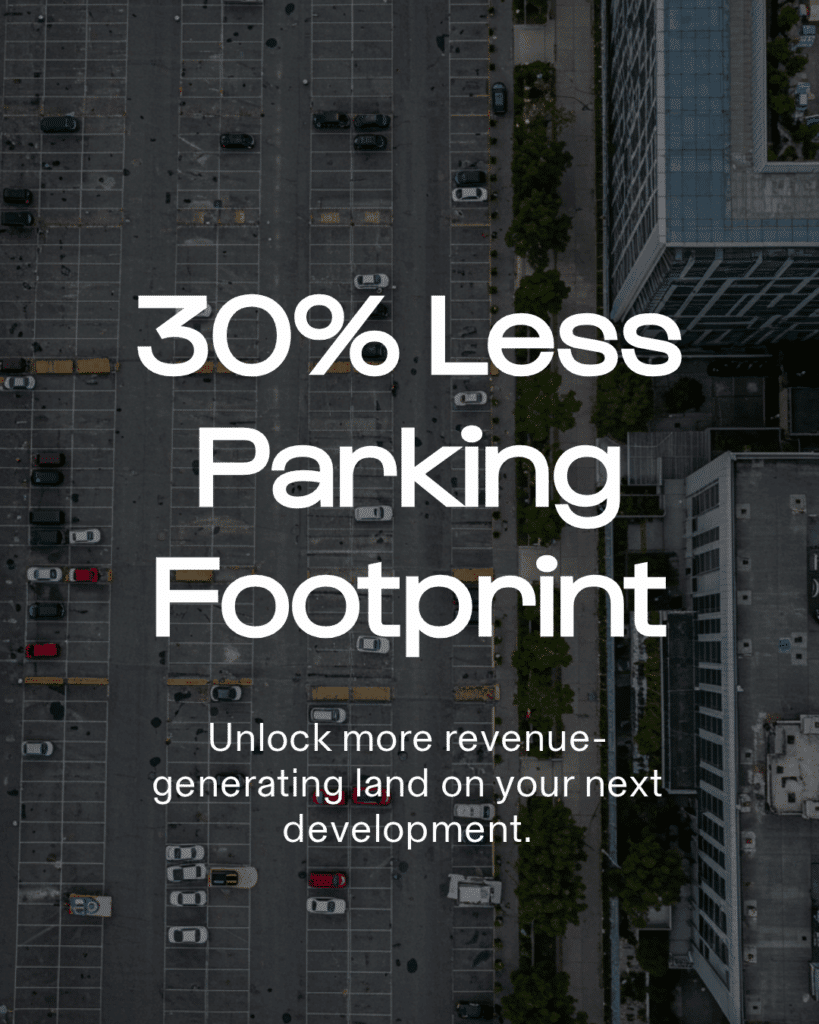
Unlock more revenue-generating land on your next or current construction project with The Automated Parking Company by 30%
The Urban Parking Crisis: A Problem of Density and Land Value
Historical Context
For the latter half of the 20th century, American urban planning was predicated on abundant surface parking. Zoning codes mandated parking minimums—often 3 to 5 spaces per residential unit—in the belief that plentiful, cheap parking would solve congestion and drive commerce. This assumption proved fundamentally flawed in dense urban contexts. Instead, expansive surface lots and multi-level garages fragmented neighborhoods, reduced walkability, elevated development costs, and created deadened streetscapes antithetical to vibrant urbanism.
The Land Value Problem in High-Density Markets
In high-density urban cores—Manhattan, downtown Los Angeles, Chicago’s Loop, San Francisco’s Financial District—real estate values have reached levels where parking consumption becomes economically irrational. Consider a typical downtown block:
Surface parking lot: 50,000 sq ft of prime real estate
Market value: $500–$2,000 per sq ft annually (commercial rent equivalent)
Annual opportunity cost: $25–$100 million
Parking revenue: $2–$5 million annually
The rent gap—the difference between what land generates under current use versus its potential value under optimal use—has never been wider. Developers and investors increasingly view parking as an albatross rather than an asset. Traditional multi-level parking garages compound this problem: they require 20–30% of a structure’s footprint for circulation and maneuvering, yield low revenue per square foot, and occupy precious urban land.
Current Regulatory Environment
Progressive municipalities are recognizing this dynamic. Portland eliminated parking requirements for all new developments in 2023, a bold move followed by similar policy shifts in other cities. However, most municipalities still maintain some parking requirements, and market expectations remain high. This creates a bind: how can developers meet demand or expectation while maximizing land productivity?
The Automated Parking Solution: Technology and Application
How Automated Parking Systems Work
Automated parking systems utilize mechanical lifts, robotic platforms, conveyor systems, and computerized storage and retrieval mechanisms to stack and retrieve vehicles with minimal manual input. Two primary configurations exist:
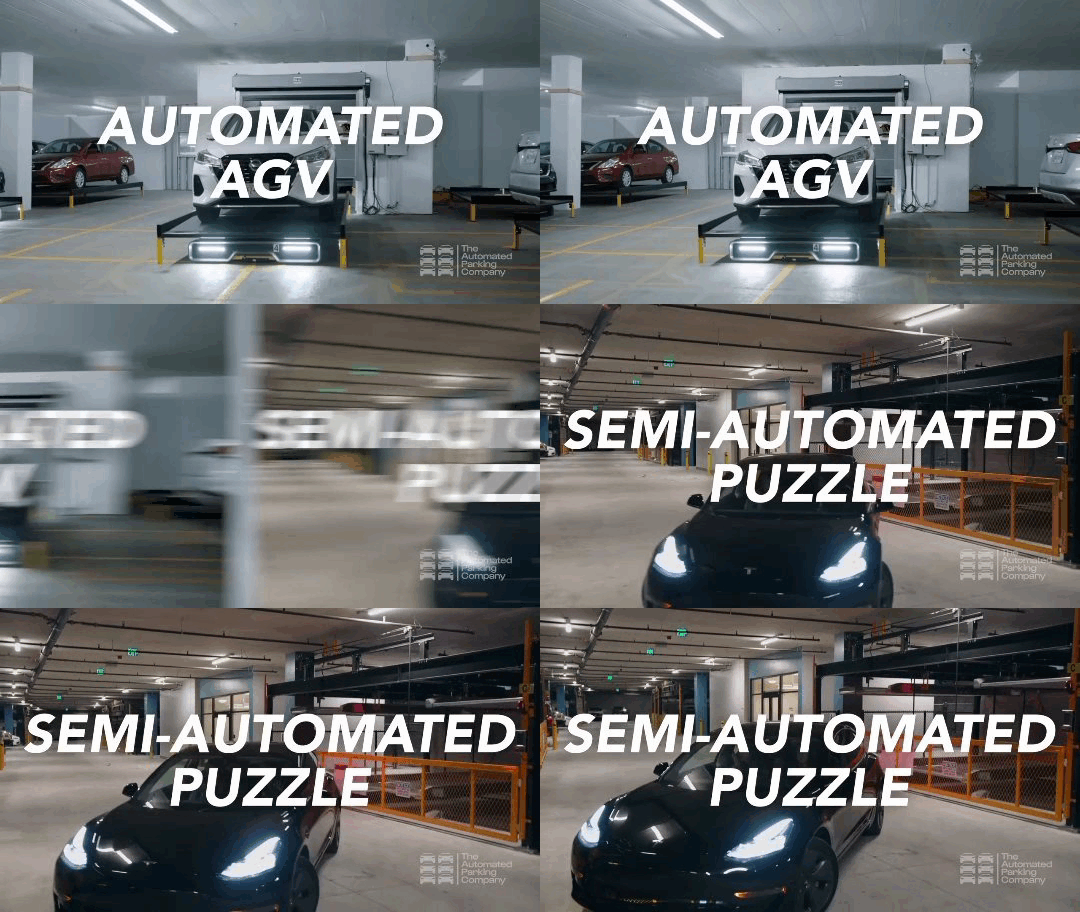
Fully Automated Parking Systems AGV Autonomous Guided Vehicles or Valet Robots is a fully automated robotic parking & EV charging system using advanced software and AGVs to densify a garage by up to 2x, operate with zero emissions, and provide a safer and more convenient patron experience.
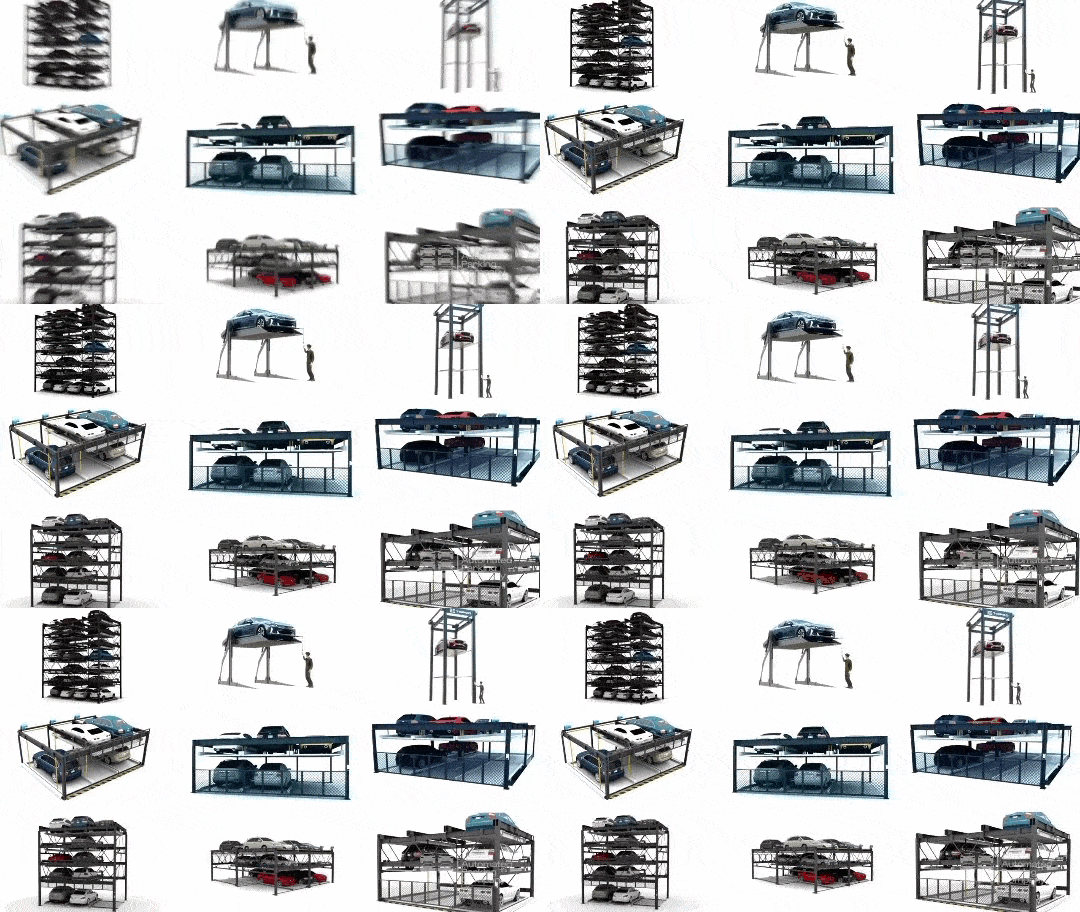
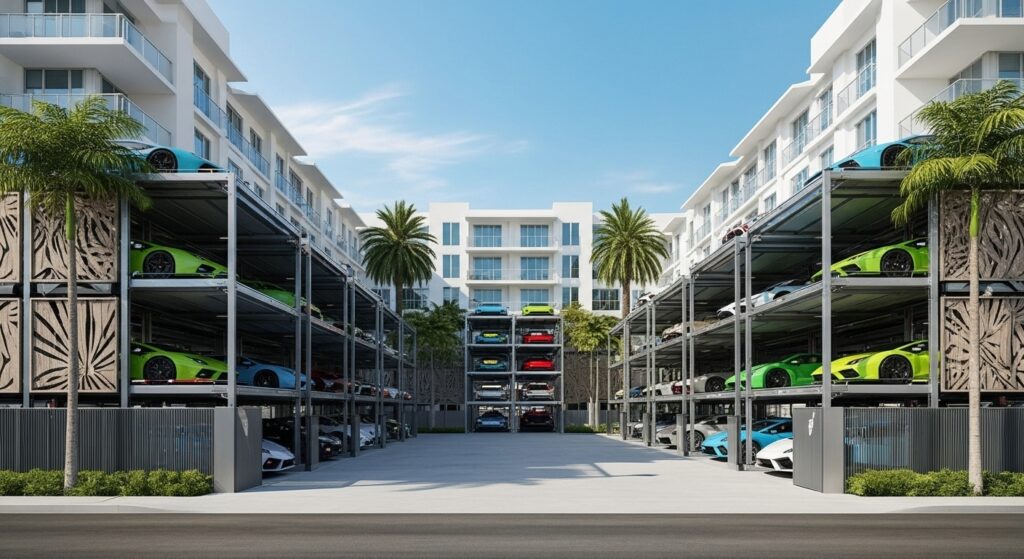
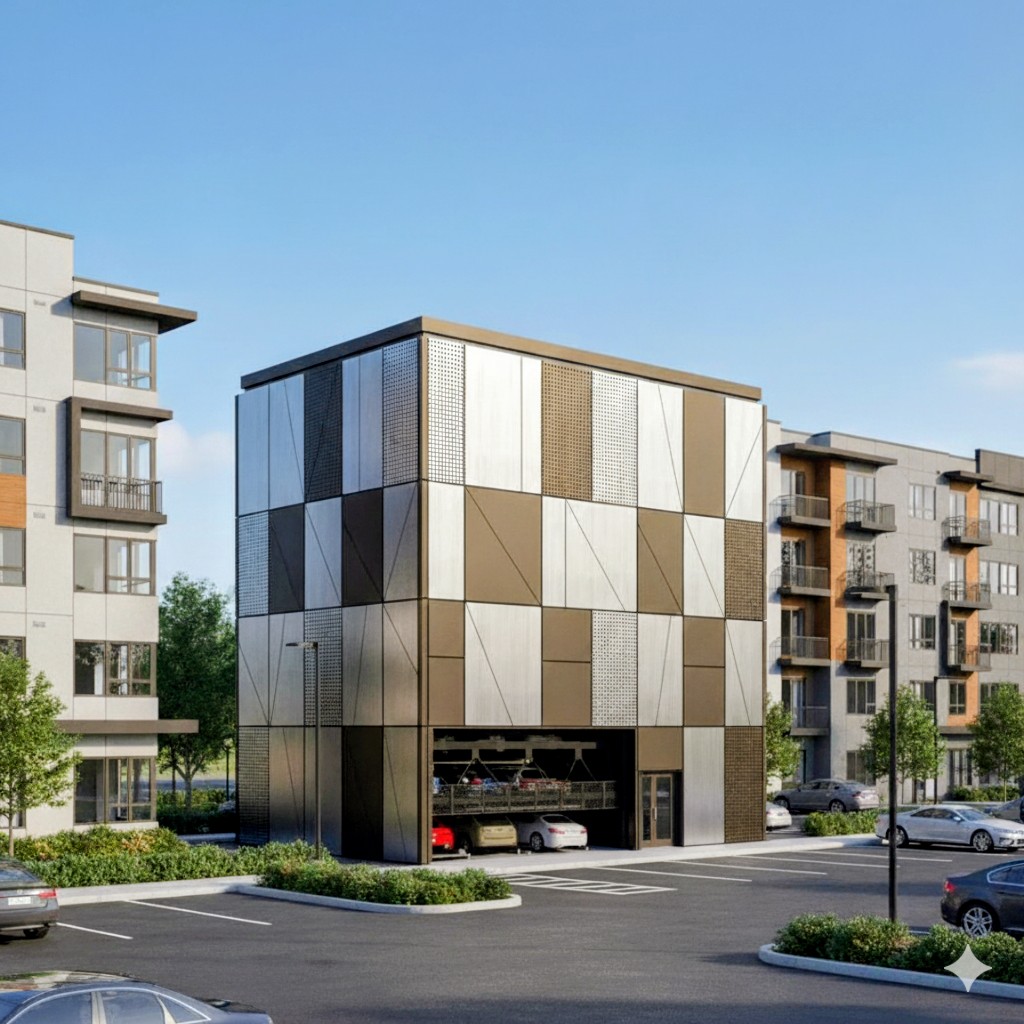
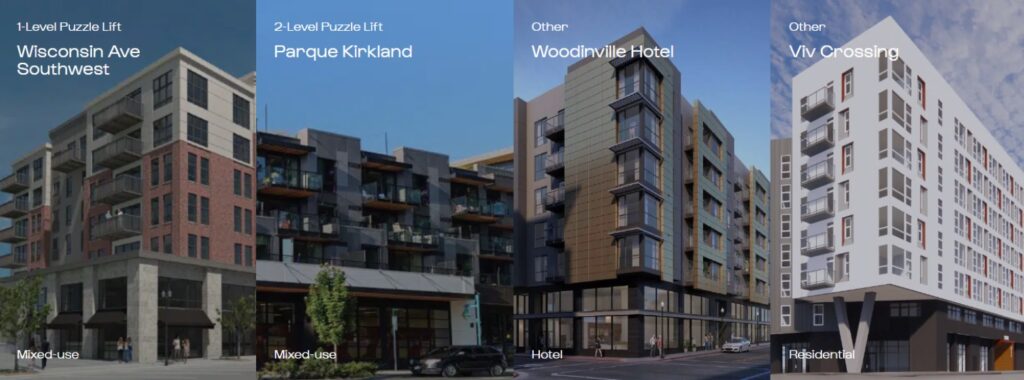
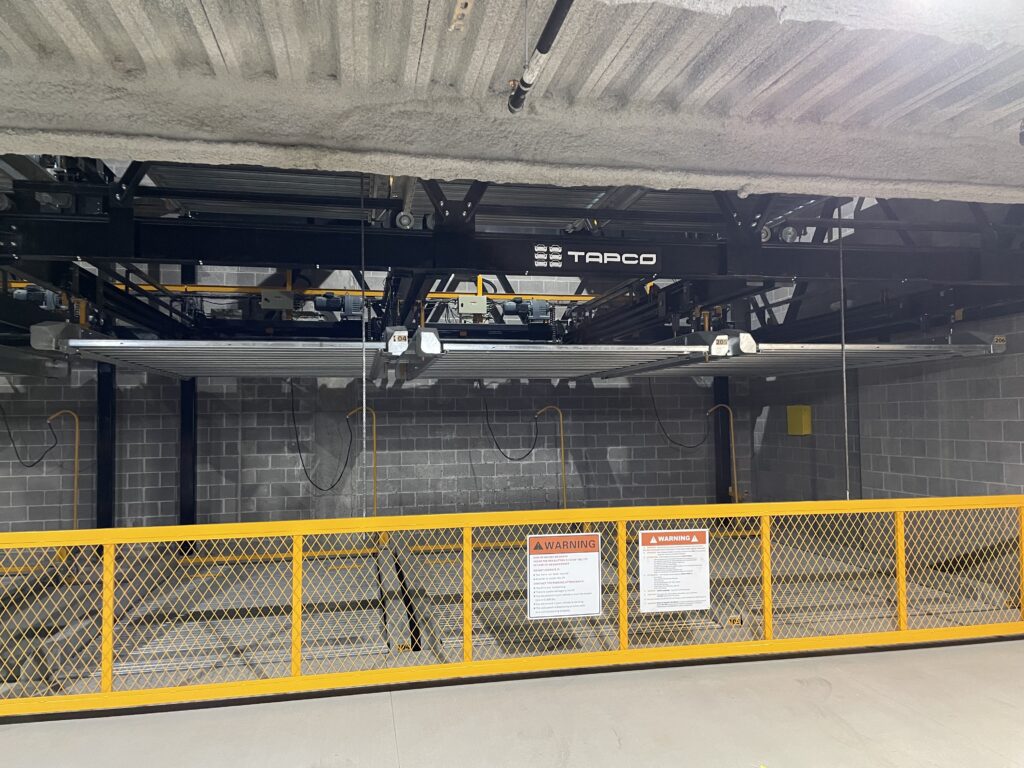
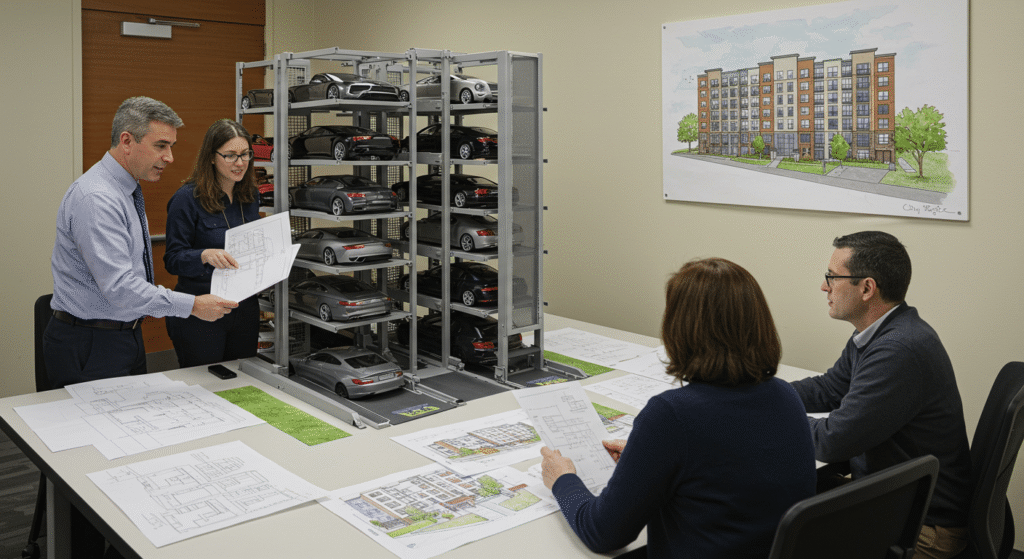
Puzzle Parking Systems stack vehicles vertically in a compact footprint, similar to a 3D vending machine. A driver pulls into an entrance, leaves the vehicle, and the system automatically parks it in an available slot using mechanical lifts and horizontal conveyors. The Automated Parking Company’s custom puzzle offers a bespoke Puzzle Parking solution that is ideal for multifamily, and office Building use. Save space and maximize your parking density. Double, Triple, Quadruple, 5X, 6X or 7X your parking spaces with our Puzzle Parking Systems Design that costs less to build and requires less land.
Semi-Automated Systems combine manual driver parking (in specially designed, narrow-aisle aisles) with technological assistance—sensors, guidance systems, and automated payment—reducing but not eliminating driver involvement.
Attended Oriented Parking Systems Double, Triple, Quadruple your parking spaces with our Car Stacker Parking Systems. We custom design and build Double Car Stackers,Triple Car Stackers, Quad Car Stackers and No Post Car Parking Stacking Lift Systems.
Valet Robots, Puzzle Parking Vertical Lift Systems & Car Stackers Manufactured by The Automated Parking Company can turn parking profitable
Spatial Efficiency
The spatial efficiency gains are transformative:
Metric
Traditional Parking
Automated Parking
Advantage
Space per vehicle
350–450 sq ft
160–200 sq ft
80% reduction
Maneuver aisles
25–30% of footprint
0% (mechanical)
Eliminated
Vertical expansion
Limited (cost)
Unlimited (scalable)
Greater capacity density
Ground-floor options
Full garage footprint
Entrance only
More street-front retail/pedestrian space
A case study exemplifies this: A mid-rise residential developer in a major city faced tight zoning and parking requirements on a constrained urban site. The traditional solution would have required a 30-space surface lot or a costly basement garage occupying the entire first level. Instead, a 3-level automated puzzle parking system accommodated 80 vehicles in the same footprint, freeing 6,000+ square feet of ground-floor space for retail, increasing leasable units by 12%, and reducing excavation and foundation costs by 35%.
Automated Parking Solutions in Dense Urban Development: A Strategy for Maximizing Land Value, Density, and Municipal Revenue
Technology Integration
Modern Automated Parking Systems, Puzzle Parking Systems and Car Stacker Parking Systems are far more than mechanical parking machines. Integration with building management systems (BMS), mobile applications, real-time occupancy tracking, and dynamic pricing algorithms transforms parking from a static amenity into a revenue-generating operational asset.
License Plate Recognition (LPR) identifies vehicles automatically, enabling frictionless entry, exit, and billing. Mobile Applications allow users to reserve spaces, retrieve vehicles, and manage payments seamlessly. IoT Sensors and Cloud Platforms provide real-time data on occupancy, user behavior, revenue metrics, and maintenance needs. Dynamic Pricing algorithms adjust rates based on demand, much like airline or hotel revenue management, maximizing revenue while optimizing utilization.
Land Scarcity Solved – Automated Vertical Lift Parking minimizes footprint. Meet municipal parking minimums with The Automated Parking Company
Economic Value Proposition for Real Estate Investors and Developers
Development Economics: The Revenue and Cost Advantage
For developers, Automated Parking Systems, Puzzle Parking Systems & Car Stacker Vertical Lift Systems deliver multiple economic benefits:
Increased Leasable/Sellable Area
By reclaiming ground-floor space, mid-rise and high-rise developments can add leasable square footage—typically retail at $40–$100+ per sq ft annually, or residential units commanding premium pricing due to better ground-floor access and street presence.
Reduced Construction Costs
Underground or large basement parking structures require extensive excavation, reinforced foundations, and ventilation systems—costs that can range from $8,000–$20,000 per space. Automated parking, Puzzle Parking Systems and Car Stacker Vertical Lift Systems occupy minimal vertical profile and surface footprint,and reduce these costs substantially.
Improved Project Feasibility
Many projects—especially in constrained urban sites—become financially feasible only with Automated Parking Systems, Vertical Lift Puzzle Parking Systems and Car Stackers. The mathematics are stark: without efficient parking solutions, some urban sites cannot generate sufficient return on investment. With Automated Parking Systems and Vertical Lift Systems from The Automated Parking Systems, otherwise marginal projects become viable, unlocking development that otherwise would not occur.
Operating Revenue and Asset Value
Developers and property owners also benefit from parking operations revenue. Case study results are compelling:
US Market: A retail property under construction generated over $72,000 in parking revenue by listing 26 available spaces through The Automated Parking Company’s marketplace reservation system, providing cash flow during construction periods
US Market: After implementing APS technology (December 2023), the property generated $586,000+ in total revenue through parking operations, completing nearly 8,000 parking reservations through the smart app, with dynamic pricing optimizing occupancy and revenue
These revenue streams are particularly powerful in mixed-use developments where residential, retail, and office tenants may purchase parking at tiered prices, with excess capacity monetized through commercial reservation systems.
Return on Investment (ROI) Horizon
While initial capital costs for Automated Parking Systems & Vertical Lift Systems exceed traditional structures (typically $20,000–$40,000 per space vs. $20,000–$100,000 for conventional parking), the ROI calculus favors automated parking systems and vertical lift systems like Puzzle Parking From The Automated Parking Company when:
Land value is >$300 per sq ft annually
Ground-floor retail or office premiums exceed $50 per sq ft annually
The development accommodates >50 parking spaces
Operating revenue management is implemented strategically
In high-value urban contexts, payback periods of 7–12 years are common, with property appreciation and land value recovery offsetting initial costs.
Benefits for Architects: Design Freedom and Urban Aesthetics
Architectural Liberation
Automated parking systems, semi-automated parking and car stacker systems provide architects unprecedented design freedoms. Traditional parking—whether surface lots, above-ground structures, or basement levels—imposes rigid constraints: massive floor plates, repetitive ramp spirals, and low clearances. By eliminating or minimizing parking footprints, architects can:
Design authentic street frontage: Ground floors can feature activated retail, plazas, or public spaces rather than garage entries
Respond to site irregularities: Automated parking systems & Vertical parking systems can be configured to fit unusual footprints, rooftop installations, or interior vertical walls
Integrate sustainability: Freed-up space enables green roofs, rain gardens, and community amenities rather than heat-absorbing asphalt
Enhance pedestrian experience: Reduced ground-level intrusion by vehicles and loading zones improves walkability and safety for end users
Unlock Land Value – Reclaim up to 30% of your parking footprint for high-yield amenities and retail.
Mixed-Use Integration
Mixed-use projects—the gold standard of modern urbanism—present particular parking challenges because multiple uses (residential, retail, office, hospitality) have overlapping but distinct parking demand patterns. Automated parking systems, semi-automated parking systems and car stacker vertical lift systems coupled with smart reservation algorithms, can optimize shared parking pools more efficiently than static assignment models.
A developer might configure a 200-unit residential tower with 120 underground automated parking spaces (0.6 spaces per unit, reasonable for transit-accessible urban sites) and 80 spaces on a rooftop automated system reserved for retail/office guests during daytime hours, transitioning to residential overflow at night. This dynamic allocation maximizes utilization and minimizes total spaces required.
Heritage and Context Sensitivity
In historic urban neighborhoods or contexts where building massing is regulated, automated parking systems from The Automated Parking Company enables designs that respect heritage while accommodating modern needs. Rather than a dominating 5-story parking structure, architects can integrate a compact automated parking system below-grade or within the building envelope, preserving streetscape character.
Automated Parking Solutions in Dense Urban Development: A Strategy for Maximizing Land Value, Density, and Municipal Revenue
Municipal and Policy Benefits: Density, Housing, and Revenue
Advancing Housing Density Goals
American cities face an affordability crisis rooted partly in land scarcity and constrained housing supply. Outdated zoning—particularly parking minimums—artificially restricts density. Progressive municipalities recognize that eliminating or reducing parking requirements, coupled with enabling technologies like Automated Parking Systems, Semi-Automated Parking Systems & Car Stacker Vertical Lift Systems, can unlock housing production.
The “Parking 2 People” initiative in Spokane exemplifies this approach: the city provides tax deferrals and incentives for converting underutilized parking lots and surface-parking-dominated sites into multifamily housing. Early projects in US markets—have demonstrated viability, converting former parking-dominated downtown blocks into mixed-use residential complexes with integrated automated parking systems. The initiative requires 50% affordability in units while generating community benefits.
Automated Parking Solutions in Dense Urban Development: A Strategy for Maximizing Land Value, Density, and Municipal Revenue
Potential Impact: A typical 1-acre surface parking lot in a downtown core (supporting ~150 traditional spaces) could be redeveloped as:
This transformation increases urban density, addresses housing shortages, and preserves community character—all enabled by efficient parking technology from The Automated Parking Company
Municipal Revenue Streams
Municipalities increasingly view parking as a revenue source, particularly in constrained urban contexts where demand exceeds supply. Smart parking systems, leveraging real-time occupancy data and dynamic pricing, enable:
Curb management fees: Municipalities can charge for premium curb access, with real-time pricing reflecting demand
Residential permit revenue: Digital systems streamline residential permit issuance and enforcement
Mobile payment processing fees: Cities partnering with payment platforms capture transaction data and modest revenue
Data monetization: Anonymized parking occupancy and traffic pattern data inform urban planning, retail site selection, and transportation policy
Cities across the nation—from Colorado Springs to Philadelphia—are deploying smart parking technology as fiscal stabilization during budget constraints.
Addressing “Parking Anxiety” and Downtown Revitalization
Post-COVID, many downtown areas struggle with reduced foot traffic and retail vacancy. Parking anxiety—the stress and time cost of finding parking—is a documented deterrent to downtown visitation. Smart parking systems paired with Automated parking from The Automated Parking Company enable advance reservations, real-time availability information, streamlined payment and easy parking and vehicle retrieval, reduce parking anxiety and encourage downtown engagement and commerce.
Automated Parking Valet Robots, Puzzle Parking Systems and Car Stacker Manufacturer
Environmental and Sustainability Considerations
Reduced Vehicular Circulation and Emissions
A well-documented inefficiency of traditional parking: drivers spend significant time circulating lots or garages searching for available spaces. Urban studies indicate drivers spend 10–30 minutes hunting for parking in congested areas, burning fuel and emitting CO₂. Automated parking systems, puzzle parking systems and car stackers eliminate this behavior. Users drive directly to a parking entrance, surrender their vehicle, and parking is automated. Users can then summon their vehicle and retrieval happens almost automatically. The environmental benefit is immediate.
Green Space and Urban Heat Island Effect
By reducing parking lot footprints, Automated Parking Systems, puzzle parking systems and car stacker vertical lift systems, enable developers and municipalities to expand green infrastructure. Urban heat island effect—where cities are significantly warmer than surrounding rural areas due to extensive impervious surfaces—is mitigated by replacing asphalt with vegetation, permeable pavement, or water features. Studies in the Urban Climate journal demonstrate mixed-use developments (enabled by efficient parking) significantly reduce carbon emissions compared to sprawling, parking-dominated alternatives.
Integration with Sustainable Building Certifications
LEED, Fitwel, and other green building standards increasingly favor parking efficiency. By demonstrating reduced parking footprints and incorporation of Automated Parking Systems, Puzzle parking systems and Car Stacker vertical lift systems technologies, projects earn credits and enhanced sustainability ratings, improving marketability and potentially reducing financing costs.
Automated Parking Solutions in Dense Urban Development: A Strategy for Maximizing Land Value, Density, and Municipal Revenue
The Automated Parking Company’s Specific Value Proposition
Comprehensive Ecosystem Approach
The Automated Parking Company is a US based turnkey OEM firm that designs, manufactures, installs, and services a full suite of products: automated, semi-automated, and attendant oriented solutions. Our design solutions have proven to reduce parking footprints and lower build cost when compared to traditional parking schemes.
Hardware: Puzzle and modular automated parking systems tailored to various site configurations
Software: Cloud-based management platforms with real-time occupancy tracking, dynamic pricing, and billing integration
User Applications: Mobile apps enabling reservations, vehicle retrieval, and payment
Data Analytics: Occupancy trends, revenue optimization, and urban planning insights
Integration Services: Seamless coordination with building management systems and existing infrastructure
This comprehensive approach means developers, architects, and municipalities adopt not merely hardware but a complete operational and revenue-management solution.
Scalability and Design Flexibility
The company’s modular design philosophy enables deployment across multiple contexts:
Compact urban sites: Tightly constrained downtown parcels with irregular footprints
Retrofit projects: Insertion into existing buildings, parking lots, or underutilized garage structures
Large-scale complexes: Multi-level or distributed systems for major mixed-use campuses
Rooftop installations: Leveraging underutilized building surfaces
Below-grade integration: Efficient basement systems with reduced excavation impact
This flexibility contrasts with monolithic garage designs and positions Automated Parking Systems (APS) as adaptable infrastructure for diverse development contexts.
Automated Parking Valet Robots, Puzzle Parking Systems and Car Stacker Manufacturer
Operator-Friendly and Scalable Operations
Early automated parking systems were criticized for complexity and operational challenges. The Automated Parking Company’s technology is designed for minimal staffing and intervention, with digital maintenance alerts, automated error recovery, and cloud-based remote 24 hour monitoring. As properties expand or demand evolves, system capacity can be scaled with modular additions rather than wholesale replacements.
Case Study Performance Data
The company’s portfolio demonstrates consistent results across multiple development types:
Residential & Mixed-Use: The Avenue at East Falls (Philadelphia)
Challenge: 35-unit residential complex with Airbnb rentals, diverse parking demand
Solution: Integrated LPR and access control with residential smart parking platform
Results: 90% tenant enrollment within 3 months, met revenue targets within first year, improved tenant satisfaction
Light Duty Double Pit Car Stackers Manufactured By The Automated Parking Company
Commercial & Event Spaces:
Challenge: Shared workspaces and event venues with unauthorized parking and inefficient payment
Results: Streamlined operations, reduced unauthorized use, improved user experience
Mixed-Use Commercial:
Challenge: Two parking garages serving hundreds of spaces across competitive urban parking market
Solution: AI-driven dynamic pricing, LPR, enforcement, and internal tenant management
Results: $586,000+ annual revenue, 8,000+ reservations in 12 months
Implementation Pathways for Municipalities, Developers, and Architects
For Municipal Planning Departments
Step 1: Policy Alignment
Review parking minimums and consider relaxation or elimination for transit-accessible sites
Establish zoning overlays in downtown and mixed-use districts permitting reduced parking with automated parking systems, puzzle parking systems and car stackers from The Automated Parking Company
Step 1: Early Engagement with Automated Parking Systems Manufacturers like The Automated Parking Company
Establish design parameters (footprint, height, capacity) early in master planning
Explore site configurations (below-grade, interior, rooftop) maximizing design freedom
Step 2: Ground-Floor Activation
Leverage freed ground-floor space for retail, public plazas, or community amenities
Design streetscape integration with minimal visual parking intrusion
Create attractive pedestrian environments unfragmented by parking access points
Step 3: Building Integration
Coordinate Automated Parking Systems entrance/exit points with overall site circulation and wayfinding
Design loading zones and service access complementing automated parking
Ensure accessibility compliance and universal design principles
Step 4: Sustainability and Resilience
Plan green infrastructure and flood mitigation enabled by reduced parking footprints
Design resilient systems (backup power, emergency vehicle access) for automated parking systems
Optimize building systems integration (ventilation, water management, waste)
Conclusion: Parking as Positive Development Strategy
For decades, parking was viewed as a constraint or necessary evil—a cost to be minimized or hidden. The Automated Parking Company and allied innovations reframe parking as a positive development strategy: a tool for urban densification, revenue generation, and community improvement.
For municipalities, Automated Parking Systems enable policy alignment with housing goals, transit-oriented development, and downtown revitalization while generating new revenue streams and improving planning data.
For real estate investors and developers, APS unlock financial feasibility of constrained urban projects, reduce construction costs, increase developable area, and generate operating revenue.
For architects, APS provides design freedom, enabling creation of vibrant, pedestrian-centric urban environments with minimized parking intrusion.
For urban residents and workers, APS delivers reduced parking anxiety, shorter commutes, and improved public realm quality as parking disappears underground or into efficient technological systems.
The evidence is compelling: a mid-rise urban development utilizing Automated Parking Systems can:
Accommodate 80 parking spaces where traditional systems would fit 30
Free 6,000+ sq ft of ground-floor space for retail and community use
Reduce excavation costs by 35%
Generate $100,000–$600,000+ in annual parking revenue
Enable 12%+ more leasable residential units
These are not marginal improvements—they are transformative multipliers reshaping project economics and urban form.
Light Duty Pit Car Stacker Can Easily Double Your Parking Space Indoors manufactured by The Automated Parking Company
As climate concerns heighten, housing affordability crises deepen, and cities densify, automated parking systems represent essential infrastructure for 21st-century urbanism. TheAutomatedParkingCompany.com, through its integrated hardware, software, and data platform, provides a comprehensive pathway for municipalities, developers, and architects to harness this opportunity.
The question is no longer whether automated parking is viable. Case studies across Philadelphia, Chicago, and other cities have demonstrated market feasibility and user acceptance. The question now is adoption speed: how quickly will municipalities reform zoning, developers redesign project economics, and architects liberate streetscapes from parking dominance?
The transition from parking as constraint to parking as opportunity is underway. Those who lead this transition—through policy innovation, strategic deployment, and design excellence—will shape more livable, equitable, and prosperous cities.
De-Risk Your Parking Strategy with a FREE $5,000 Design Review Credit
If you connect with us, The Automated Parking Company, will provide a FREE in-depth design review, normally valued at $5,000; to assess feasibility, optimize layouts, and align your parking solution with project goals.
When you proceed with us, the full design review fee is credited back to the project, ensuring your early-stage diligence directly supports execution—not overhead.
A disciplined approach to smarter parking investment.
📞 Call Us for a FREE parking design review, valued at $5,000: (877) 827-2611
Follow us for industry insights and project updates:
We value community input and address concerns for harmonious solutions.
Research & Innovation
Continuous research and innovation to improve green parking solutions.
Our Step By Step Process Towards Building Smart Yet Sustainable Parking
At TAPCO, our process ensures seamless delivery of efficient and sustainable parking tech tailored to your evolving project needs.
01
Discovery & Consultation:
Understand your needs, site constraints, and objectives.
02
Customized Design:
Create a tailored parking solution with eco-friendly integration.
03
Project Approval & Collaboration:
Obtain necessary approvals and work closely with your team.
04
Manufacturing & Quality Control:
Ensure the highest standards of quality.
05
Timely Delivery & Installation:
On-time setup with minimal disruptions.
06
Thorough Testing & Commissioning:
Rigorous performance checks and safety adherence.
07
Training & Support:
Comprehensive staff training and ongoing maintenance services.
08
Environmental Responsibility:
Implement eco-friendly practices and sustainability monitoring.
09
Client Satisfaction:
Prioritize your project with any number of our solutions.
Frequently Asked Questions
Q: Can TAPCO’s solutions be tailored to our specific needs?
A: Absolutely! At TAPCO, we understand that every project is unique. Our experienced team of designers and engineers will work closely with you to understand your specific requirements, site constraints, and objectives.
Q: How many levels can The Automated Parking Company design for the Puzzle parking system?
A: The Automated Parking Company has the capability to design systems with 2 to 7 levels, accommodating a varying number of parking spaces. Moreover, if your project calls for additional space optimization, we can even incorporate one or two subterranean levels, effectively increasing the total parking capacity.
Q: Are TAPCO’s parking systems safe and reliable?
A: Yes, safety is our top priority at TAPCO. We adhere to stringent industry safety standards and conduct rigorous testing and quality control measures at every stage of the manufacturing process.
Our car parking solutions are designed and built to ensure the safety of users, vehicles, and your property. We use high-quality materials and employ advanced technology to ensure the reliability and durability of our parking systems.
Improving Parking Convenience with Parking Stackers
When it comes to parking solutions, attended-oriented systems offer a blend of efficiency and convenience that cater to the needs and challenges of urban areas, particularly high-demand areas.
These multi-level car stacker solutions are a game-changer when it comes to parking, allowing the creation of multiple parking spaces within a single area.
TAPCO introduces a wide array of innovative attended-oriented parking systems designed to optimize space utilization as well as offer user-friendly parking practices.
These systems are intended to provide a seamless parking experience and enable attendants to efficiently manage parking procedures while ensuring the convenience and safety of the users. Here are the key benefits of using attended-oriented parking systems.
Optimal Space Utilisation
Our attended-oriented parking systems incorporate car lift storage systems make optimal use of the available space. Vertical stacking of vehicles with the vertical storage lift enables the system to increase the parking capacity within a limited area, hence coping with the increasing parking demands.
Organised vertical stacking
The attended-oriented parking allows vertical stacking of vehicles to utilize a vertical space effectively. This approach reduces the area required for parking, thereby contributing to a more organized and aesthetically pleasant-looking parking facility.
Convenience
The attended-oriented parking system offers ease of use for the attendant as well as the user. While the attendant can successfully navigate the car stacker lift and swiftly move vehicles into a nesting position with minimal effort, users need little to no guidance to park their vehicles safely.
Enhanced Security
Our attended-oriented car stacking system comes with advanced features to ensure the safety of parked vehicles. While users have peace of mind, property managers can also be content with the knowledge that the facility is secure.
Versatile stacked car parking
We offer a variety of car stacker lift solutions. From four post car storage lifts to no post solutions, our systems can be implemented indoors as well as outdoors and can be adapted for various project requirements or property layouts. TAPCO’s attended-oriented parking systems can be used in various environments, from commercial establishments to residential complexes.
Revolutionary Parking Solutions with Automated Lift Parking System
As the urban landscape continues to grow, the demand for efficient car parking solutions has become increasingly important. TAPCO introduces revolutionary semi-automated smart parking systems that are designed to optimise space utilization and streamline parking procedures for multi-family residential complexes and commercial facilities. Compared to the conventional car lift system, our multi level car parks are designed to redefine convenience and efficiency.
Here are some of the key features of our semi-automated car parking systems
Space Optimization
Optimal space utilization is a key focus of our multi-level car storing solutions. Our stack parking systems are designed to accommodate multiple levels, providing an impressive number of parking spaces within a compact footprint. We can design and integrate two to seven parking levels in a single structure and customize varying lengths, widths, and heights.
Seamless Automation
Our smart parking system incorporates advanced automation to simplify the parking process. Drivers can effortlessly park their vehicles with minimum guidance, thereby providing efficient utilization of time.
EV Capability
Given the increasing trend of electric vehicles, our parking solutions are also designed to embrace the future of mobility and Electric Vehicles. To cater to the ever-evolving automotive landscape, we also feature charging facilities for electric cars. We are the only vendor offering 7000# rated systems.
Convenience
We understand that parking can be a source of frustration for people, particularly when you cannot find a spot and have to drive around looking for space. Such layouts can be problematic for larger properties. However, with our Puzzle Parking system, this problem can be easily resolved, offering convenience to individuals and saving valuable time when parking or capturing your auto.
FAQ
Q: What is the difference between a fully automated and semi-automated smart parking system?
A: Semi-automated Puzzle solutions and fully automated AGV parking systems are considered automated parking and compress footprints giving you back valuable square footage.
In a semi-automated parking system, drivers can park and/or retrieve their own auto, so this system rids you of any demand for parking attendants therefore lowering your OpEx. Once the users vehicle is stowed within the system, the semi-automated Puzzle system can move the car up and down or left to right to find its nesting space.
On the other hand, in a fully-automated parking system, the driver pulls into a loading bay where they remove themselves and leave their auto, the system will then maneuver the auto and autonomously stow the users auto within the parking vault.
Q: What is the difference between mechanical lift systems and semi-automated Puzzle Parking systems?
A: In a mechanical stacker system, individuals must operate for it to move, or you must incorporate attendants to manage the parking and retrieval process.. The mechanical stacker parking system is usually a Double, Triple, or Quad Stacker that can raise the vehicle directly up on the platform so that more than one vehicle can be parked in a vertical stack. We strongly encourage trained personnel to operate these systems due to the manual processes of storing or retrieving autos in a vertical arrangement.
On the other hand, in a semi-automated system, there is no demand nor need for attendants or personnel to retrieve autos. Once the driver has parked their vehicle within the system, the semi-automated Puzzle system can intelligently move the car up and down or left to right.
Q: Which properties are semi-automated parking systems suitable for?
A: Our semi-automated parking systems are mostly suitable and used for commercial office and multi-family residential complexes.
Q: Can electric cars be charged in semi-automated parking systems?
A: Absolutely, our semi-automated smart parking systems are EV capable and feature charging facilities for electric vehicles. We offer Level II smart charging capabilities that allow you to bill the user pro-rata and also reduce the number of electrical meters therefore reducing your overall build costs when compared to competitive vendors.
Q: What are the maintenance requirements of semi-automated parking systems?
A: Maintenance and upkeep of the parking systems by The Automated Parking Company are easy as they are designed for minimal maintenance and durability. However, please note that regular checks and maintenance schedules help ensure optimal performance.