Looking for a Car Parking Solution? The Main Things Developers Should Know Before Breaking Ground
Vertical Lift Parking Systems Cost Less In The Long Run Over The Life Of The Parking System Vs. Traditional Parking Structures
Executive Summary
Developers face an increasingly complex parking equation: municipal requirements demand adequate capacity, yet traditional parking structures consume substantial capital, land, and construction time while generating minimal revenue. Automated parking solutions—particularly puzzle/lift-slide systems and car stackers offered by TheAutomatedParkingCompany.com—fundamentally restructure this equation, enabling developers to optimize site utilization, accelerate approvals, reduce per-space costs, and unlock higher-value development opportunities. This analysis examines ten critical considerations for evaluating automated parking systems as a strategic component of real estate development strategy.
Parking is one of those things developers don’t love thinking about: until it becomes the bottleneck that kills a project’s feasibility. Whether you’re working on a multifamily residential tower, a mixed-use development, or a commercial office building, the parking component can make or break your pro forma. The good news? Automated parking solutions have evolved dramatically over the past decade. The not-so-good news? Many developers still approach parking decisions without a clear framework, leading to costly mistakes, project delays, and missed opportunities.
Before you break ground on your next project, here are The main critical things every developer should know about modern car parking solutions.
Define Your Core Parking Objectives Early
Before diving into equipment specs or system comparisons, get clear on what you’re actually trying to achieve. Are you looking to maximize the number of parking spaces in a constrained footprint? Reduce construction costs? Meet code requirements with minimal square footage dedicated to parking? Attract premium tenants with a high-tech amenity? Your primary objective will fundamentally shape which parking solution makes the most sense. A developer trying to squeeze 200 spaces into a tight urban lot has very different needs than one looking to add a luxury amenity to a high-end condo project. Write down your top three priorities before you start evaluating systems. This simple step will save you countless hours of back-and-forth later.
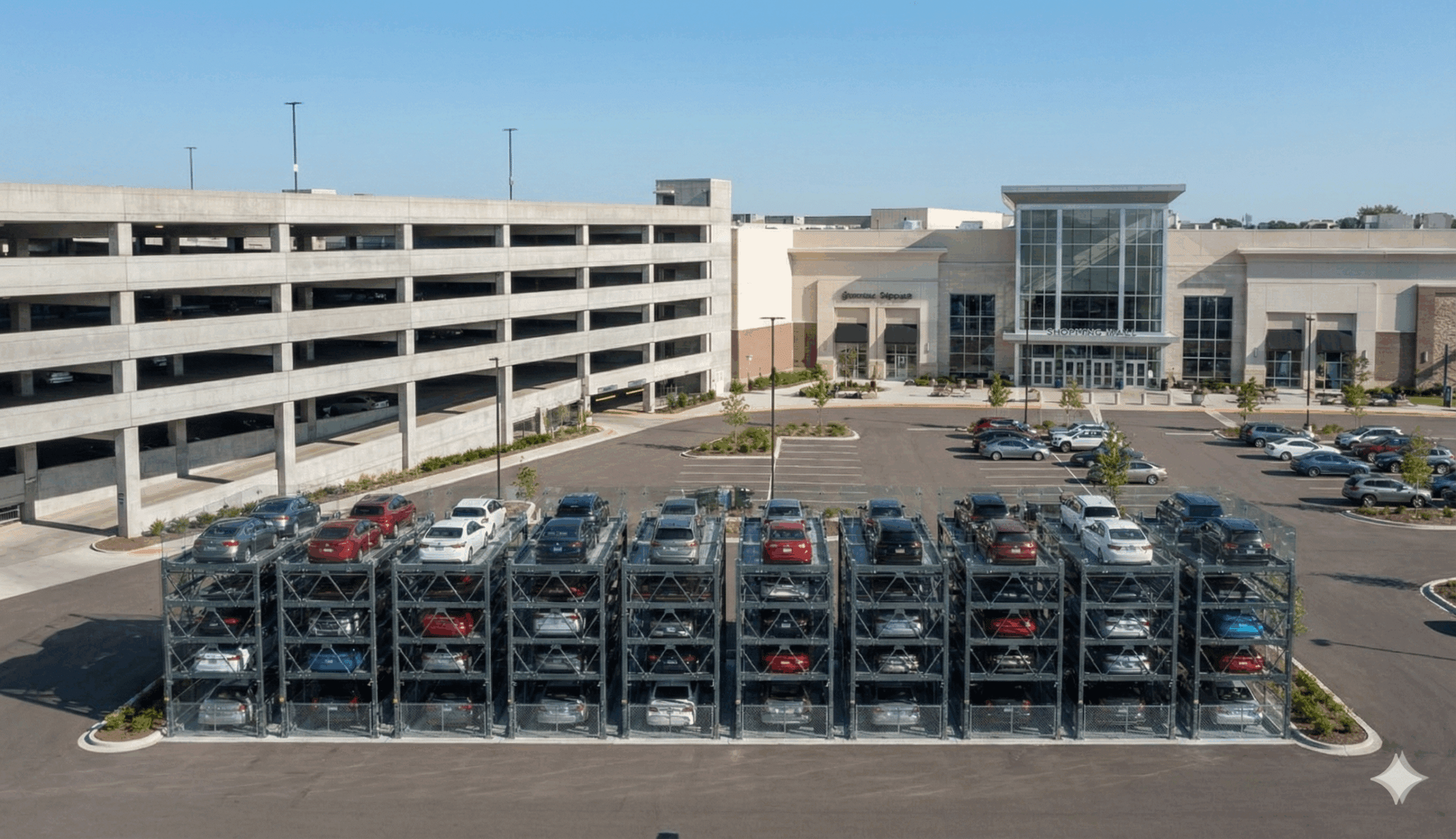
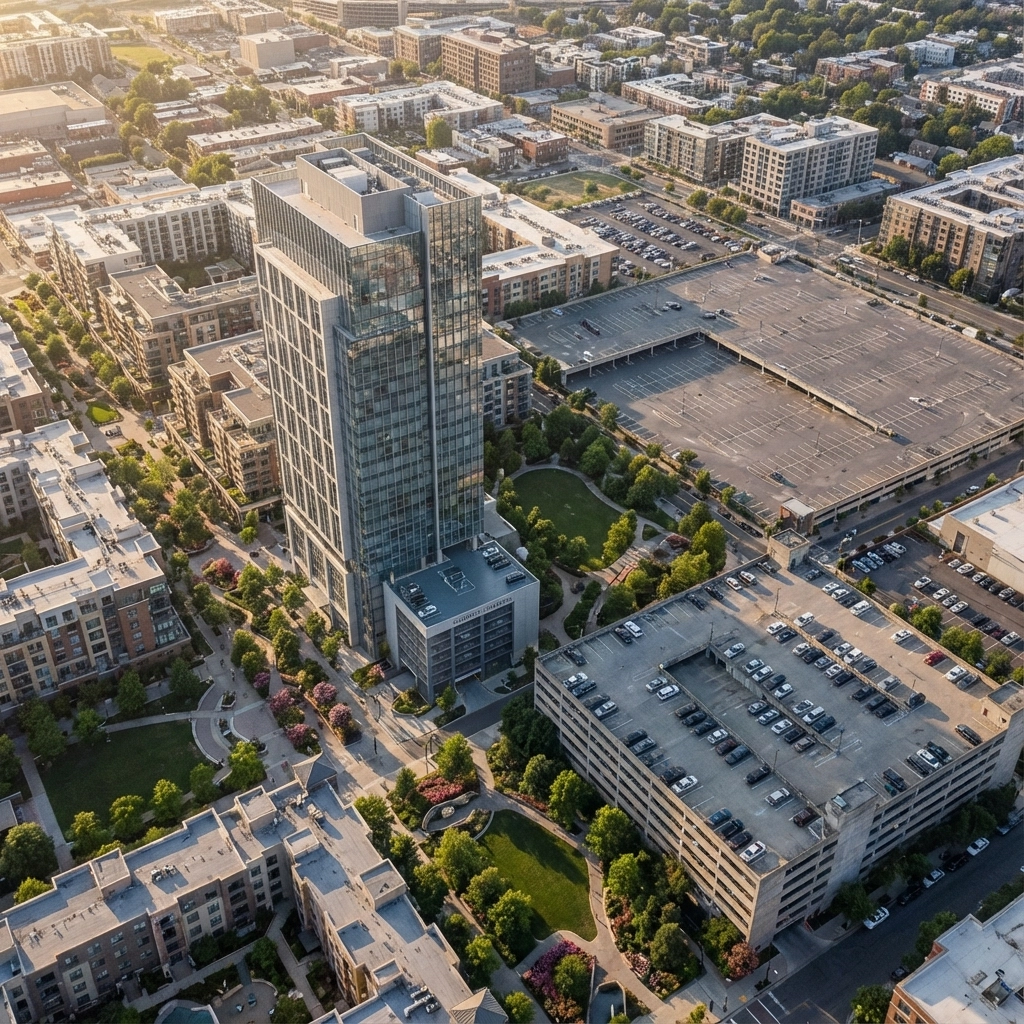
Traditional Parking Structures Are More Expensive to Build and Maintain Vs. Vertical Lift Parking Systems Such As Puzzle Parking System Garages, Car Stacker Garages and even Automated Parking. The AutomatedParkingCompany.com Can Help Your Get 60% More Parking Using 40%-60% Less Space.
Understand the Spectrum of Automated Parking Systems
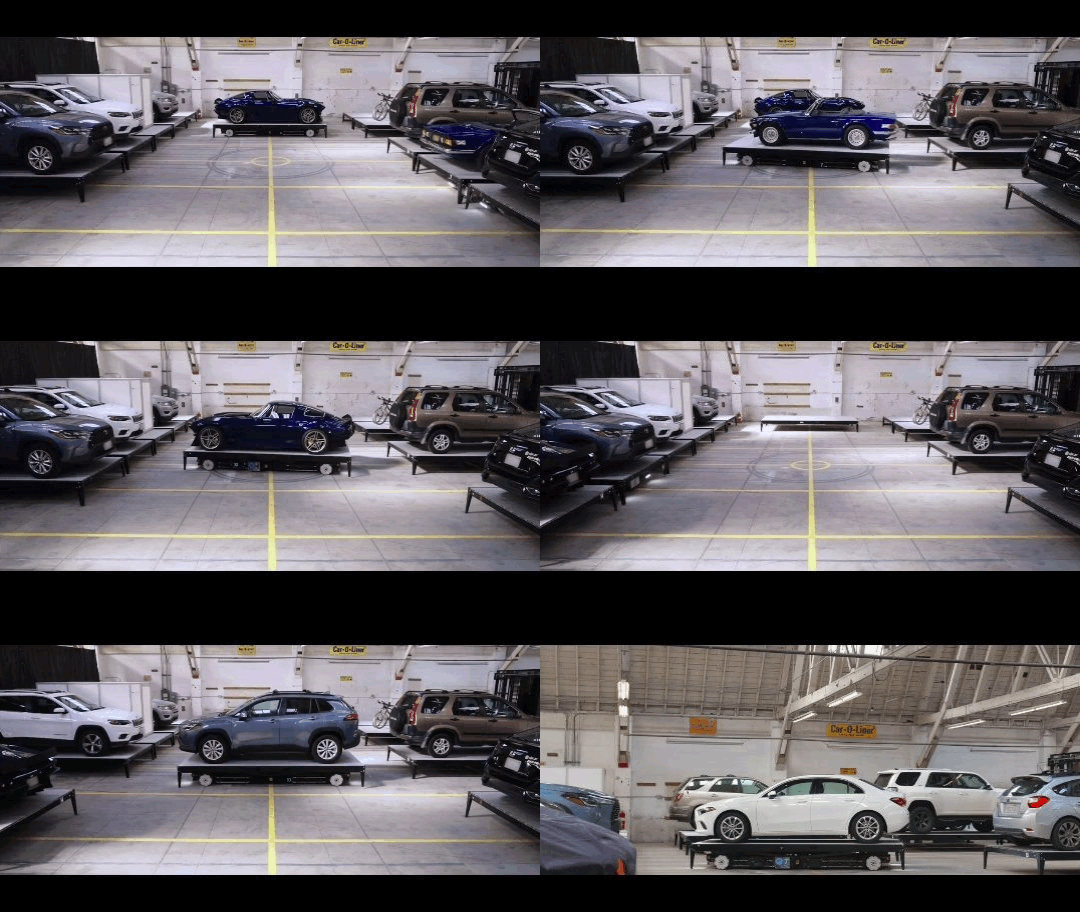
Puzzle parking systems use platforms that shift horizontally and vertically to stack cars efficiently. Drivers park in a designated bay and walk away.
Car stackers are simpler lift-based systems that stack two or more vehicles vertically in the same footprint.
Fully robotic garages use automated guided vehicles (AGVs) or pallet systems to transport cars to storage positions with zero driver involvement beyond the entry terminal.
Each has different space requirements, throughput capabilities, costs, and user experiences. Understanding these distinctions upfront helps you match the right technology to your project’s specific needs.
Get A Free $5,000 Parking Design Review Credit Of Your Construction Project And Let The Automated Parking Company Get You 60% More Parking Spaces Using 40%-60% Less Land and For The Fraction Of The Cost Of Traditional Parking Garages That Require Valuable Land Real Estate
Analyze Your Site Constraints Thoroughly
Automated parking systems shine in constrained sites: but every site has unique challenges. Before selecting a system, conduct a detailed analysis of:
Available footprint (length, width, and ceiling height)
Soil conditions and foundation requirements
Adjacent structures and setback requirements
Access points and traffic circulation patterns
Utility locations and potential conflicts
A garage car stacker might work perfectly for a retrofit situation with limited headroom, while a fully robotic system might require a purpose-built structure with specific dimensional requirements. The more accurately you understand your constraints, the better you can optimize your parking solution.
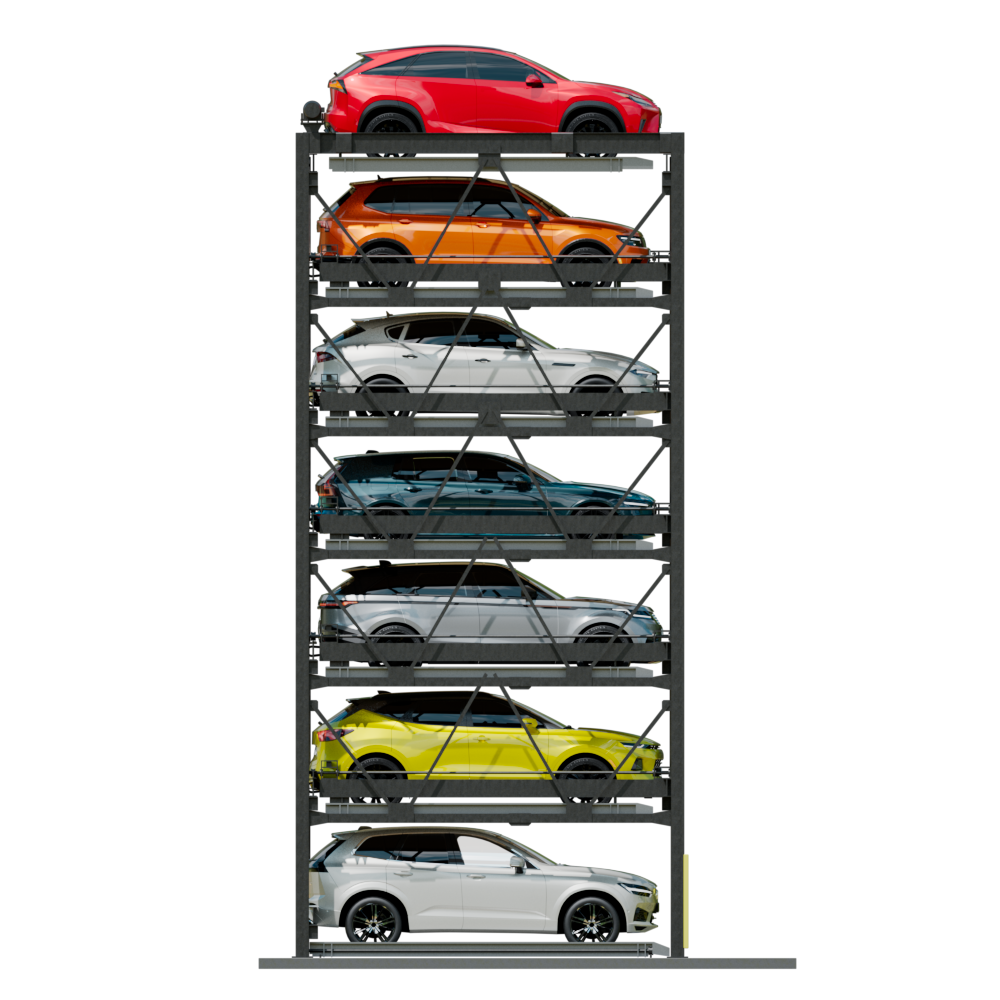
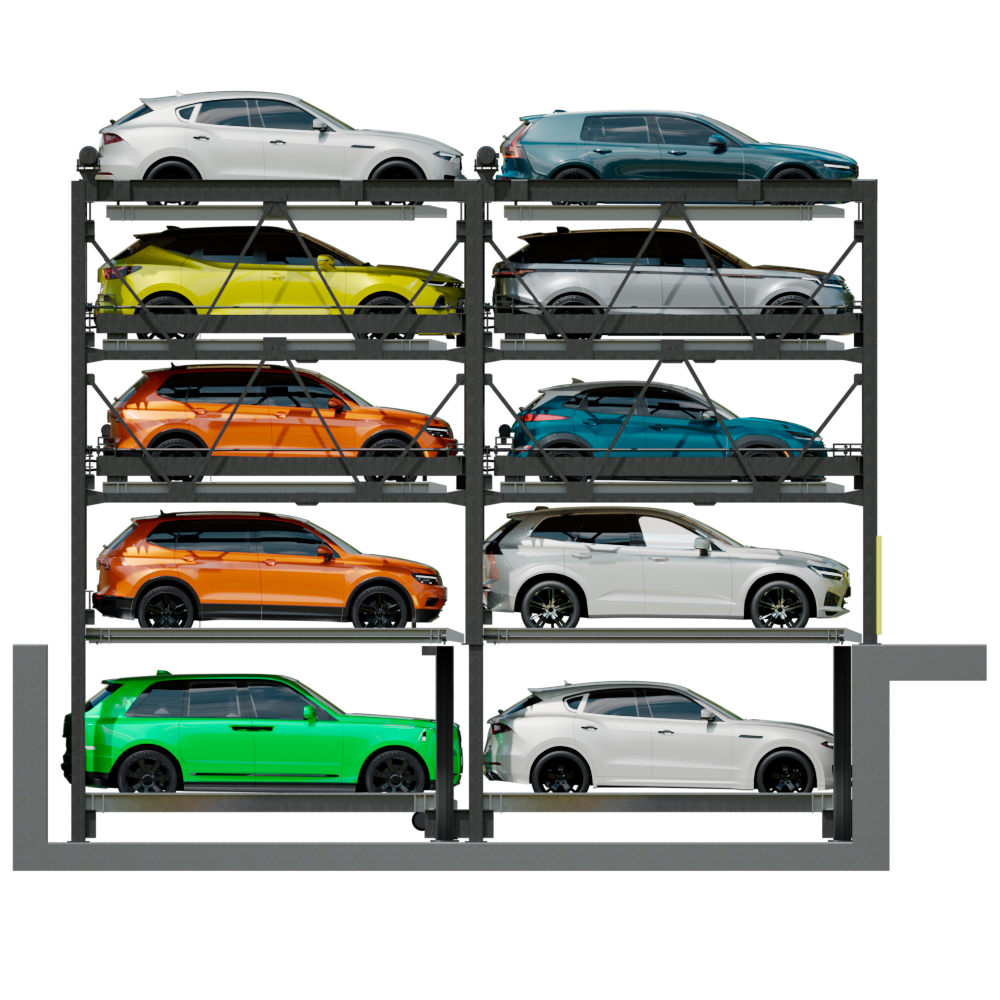
7 High Puzzle System Designed and Manufactured By The Automated Parking Company. Get A Free $5,000 Parking Design Review Credit And Let The Automated Parking Company Build You 60% More Parking Spaces, Using 40%-60% Less Space At The Fraction Of The Cost
Calculate the True Cost-Per-Space
Traditional parking garages typically cost between $50,000 and $75,000 per space when you factor in land, construction, and ongoing maintenance. Automated systems often have higher equipment costs but can dramatically reduce the overall cost-per-space by:
Reducing the building footprint required for parking by 50-70%
Eliminating drive aisles, ramps, and pedestrian circulation areas
Lowering lighting, ventilation, and fire suppression requirements
Freeing up valuable square footage for revenue-generating uses
One developer case study showed how switching to a robotic garage system added $54 million worth of rentable units to a project: space that would have otherwise been consumed by conventional parking ramps. Run the full financial analysis, not just the equipment quote. The numbers often surprise developers who initially balk at automated system pricing.
Factor in Traffic Patterns and Peak Demand
Understanding when and how people will use your parking is essential for system selection. Key questions to answer:
What are your peak arrival and departure times?
How many vehicles need to be retrieved simultaneously during rush periods?
What’s the acceptable wait time for vehicle retrieval?
Will the parking serve residents, visitors, employees, or a mix?
Fully robotic systems with multiple entry/exit terminals can handle higher throughput but cost more. Simpler puzzle systems work great for residential applications where demand is more distributed throughout the day. Match the system’s retrieval capacity to your realistic peak demand: not average demand. Nobody wants frustrated tenants waiting 15 minutes for their car during the morning rush.
Automated Parking Systems Also Known As Robotic Parking Valet Systems Park Your End-Users Vehicles Autonomously. Get A Free $5,000 Parking Design Review
Plan for EV Charging Integration Now
Electric vehicle adoption is accelerating faster than most projections predicted. In 2026, planning for EV charging isn’t optional: it’s essential for any forward-thinking development. The good news is that automated parking systems are ideally suited for EV charging integration. Since vehicles are parked in fixed positions by the system (not by drivers who might ignore designated spots), you can guarantee that EVs always end up at charging-equipped spaces. Many modern systems offer integrated EV charging solutions that charge vehicles automatically while parked. This eliminates the awkward dance of moving cars to free up chargers and ensures maximum utilization of your charging infrastructure. Build EV capacity into your planning from day one, even if you don’t install all the chargers immediately. Retrofitting is always more expensive.
Evaluate Maintenance Requirements and Long-Term Support
Automated parking systems are mechanical equipment: they require ongoing maintenance and occasional repairs. Before committing to a system, understand:
Preventive maintenance schedules and associated costs
Availability of replacement parts and typical lead times
Service response times for emergency repairs
Remote monitoring capabilities for proactive issue detection
Warranty terms and what’s covered
A system from a reputable manufacturer with strong local service support will cost more upfront but save significant headaches over a 20-30 year operating life. The cheapest system isn’t always the best value. Ask potential vendors for references from projects that have been operating for five or more years. That’s where the real performance data lives.
Navigate Local Codes and Permitting Requirements
Automated parking is well-established technology, but not every building department has experience permitting these systems. Expect to invest time educating plan reviewers and addressing questions about:
Fire suppression requirements (often reduced compared to conventional garages)
Emergency vehicle retrieval procedures
Accessibility compliance and ADA considerations
Structural load requirements for the parking equipment
Electrical service and backup power requirements
Engage with your local building department early in the design process. Many jurisdictions are receptive once they understand how the systems work, but surprises late in permitting can cause costly delays.
Understand Realistic Lead Times and Construction Sequencing
Automated parking equipment isn’t off-the-shelf: most systems are engineered and manufactured to order. Typical lead times range from 2-3 months from order to delivery, depending on system complexity and manufacturer backlog. Factor this into your construction schedule. The parking structure needs to be ready to receive equipment when it arrives, and installation typically takes several weeks to several months depending on system size. Coordinate closely between your general contractor, structural engineer, and parking system vendor. Poor sequencing is one of the most common causes of project delays with automated parking installations.
Choose the Right Partner: Not Just the Right Product
Finally, recognize that you’re not just buying equipment: you’re entering a long-term relationship with a technology partner. The company you work with should offer:
Deep expertise in automated parking across multiple system types
Strong project management capabilities for complex installations
Reliable service infrastructure for ongoing support
Financial stability to honor warranties and provide parts for decades
Responsive communication throughout the project lifecycle
The benefits of automated parking systems are substantial, but only when the system is properly designed, installed, and maintained by people who know what they’re doing. Take the time to evaluate potential partners thoroughly. Visit completed installations. Talk to other developers who’ve worked with them. The right partner makes all the difference.
Vertical Lift Parking Systems Semi-Automated Parking By The Automated Parking Company Uses 40%-60% Less Space And Can Create 60% More Parking Spaces. Get a Free $5,000 Parking Design Review Credit For Your New Construction or Existing Parking Lot
Space Efficiency: The Multiplier Effect on Development Capacity
Vertical parking systems deliver transformative density gains that directly impact project economics. Automated parking requires 40-60% less footprint than conventional structured parking, enabling developers to increase buildable units, retail space, or amenities without expanding the overall site envelope. Car stackers achieve 2-4x capacity gains in identical ground-level footprints—a meaningful advantage in urban infill and constrained markets.
For a 20-unit multifamily project, this translates to concrete outcomes. While traditional structured parking requires substantial land allocation, puzzle parking systems (which feature independent access to each level without dependent stacking) reduce site consumption while eliminating the need for parking attendants. For developers in Los Angeles or other high-density markets, this spatial efficiency directly increases leasing revenue potential: property that would have been dedicated to parking ramps can be repurposed as additional units, common areas, or commercial space with substantially higher per-square-foot returns.
TheAutomatedParkingCompany.com’s puzzle systems achieve up to 25% faster traversal speeds than competitor installations—operationally significant for user satisfaction and peak-hour capacity. For mixed-use developments where parking demand fluctuates across tenancies, this performance differential supports premium pricing and reduces congestion-related tenant complaints.
Automated Parking Systems Also Known As Robotic Parking Valet Systems Park Your End-Users Vehicles Autonomously. Get A Free $5,000 Parking Design Review
Municipal Approvals and Zoning Compliance: Reducing Project Risk
A critical, often-overlooked advantage of automated parking involves regulatory pathway acceleration. Many municipalities reject projects citing insufficient parking or unworkable site configurations. TheAutomatedParkingCompany.com’s turnkey approach—integrating professional site analysis, custom engineering, permitting support, and installation—substantially improves approval probability.
The company executes a nine-step process beginning with discovery and consultation to understand site constraints, zoning requirements, and developer objectives. This early-stage engagement identifies regulatory hurdles before detailed design, reducing costly revisions and timeline slippage.
For dense urban sites with irregular configurations, automated parking enables compliance where traditional solutions prove impossible. In Los Angeles, where zoning codes may require 1.0-1.5 parking spaces per unit in certain zones, developments on constrained lots can meet requirements within the project footprint using vertical systems, rather than acquiring additional land or seeking variances. This removes a primary source of project delays: municipalities increasingly require “parking management plans” for any reduction requests; automated systems eliminate the need for such negotiations.
The vertical configuration also satisfies fire code, accessibility, and traffic flow requirements more efficiently. TheAutomatedParkingCompany.com’s design team works alongside local planning commissions and building officials to streamline the approval pathway.
Timeline Management: From Ground Break to Revenue Generation
Development project success depends on timeline predictability. Traditional parking construction—including excavation, structural systems, electrical/mechanical work, and traffic circulation—extends the critical path, delaying project opening and revenue commencement.
Automated parking systems compress construction schedules through modular design and reduced complexity. Excavation footprints are smaller, reducing soil removal and foundation work. Internal circulation systems are eliminated (no ramps, aisles, or traffic lanes), reducing overall buildable area and associated trades. Installation can proceed in parallel with other trades, rather than sequentially.
For a 300-unit residential development with required parking, traditional multi-level garages add 6-9 months to the construction timeline. Automated systems compress this to 3-4 months, enabling units to reach market earlier. In a typical Los Angeles market with 8-12% annual appreciation, this three-month acceleration often justifies the technology investment through enhanced unit pricing alone, independent of operational savings.
TheAutomatedParkingCompany.com’s phased approach—design consultation, regulatory approval collaboration, manufacturing, and on-site installation with testing and commissioning—provides developers with certainty around both schedule and performance standards.
The regulatory environment for parking is rapidly evolving. Many jurisdictions are simultaneously reducing minimum parking requirements while imposing maximum parking caps and mandating EV-charging infrastructure. This creates a complex optimization problem: developers must size parking to meet minimum requirements without oversupplying, while future-proofing for electric vehicles and potential occupancy changes.
Automated parking systems provide regulatory flexibility. Puzzle parking and car stackers can be designed to support mixed vehicle types (standard, compact, oversized) and can be retrofitted with EV charging infrastructure. TheAutomatedParkingCompany.com explicitly integrates EV charging capability into system design, enabling developers to meet current charging mandates (often requiring 5-10% of spaces to support Level 2 charging) while remaining adaptable to future requirements.
Jurisdictions such as Arlington County, Virginia and Fairfax County increasingly rely on developers’ own parking analyses rather than rigid minimum requirements, enabling developers with sophisticated parking studies to reduce requirements based on local transit access, shared mobility options, and demographic patterns. TheAutomatedParkingCompany.com’s consultation process supports this analysis, providing data on comparative site conditions and user demand patterns.
Puzzle System Designed and Manufactured By The Automated Parking Company. Get A Free $5,000 Parking Design Review Credit And Let The Automated Parking Company Build You 60% More Parking Spaces, Using 40%-60% Less Space At The Fraction Of The Cost
Environmental Impact and Sustainability Positioning
ESG considerations increasingly influence both project financing and tenant demand. Automated parking systems deliver measurable environmental benefits that strengthen sustainability narratives and may improve access to green financing.
A 200-vehicle automated parking system reduces annual emissions equivalent to removing 92 vehicles from the road—or planting 67,000 trees. Specific reductions include:
CO₂ reduction: 83%
NOₓ reduction: 81%
CO reduction: 77%
VOC reduction: 68%
These benefits accrue from two mechanisms: (1) drivers no longer circle searching for parking, reducing idle time and fuel consumption, and (2) vehicles remain off during storage, with no running engines or exhaust. Modern systems achieve up to 83% fuel consumption reduction versus conventional parking.
Energy consumption for system operation is substantial but highly efficient. Modern puzzles and stackers use electromechanical drives that consume power only during active cycles, entering low-power standby between operations. Compared to conventional garages requiring 24/7 lighting, ventilation, and HVAC in occupied zones, automated systems consume 50-70% less energy.
For properties pursuing LEED, Fitwel, or Enterprise Green Community certifications, automated parking systems generate point-eligible documentation. EV charging integration further strengthens environmental positioning. The Automated Parking Company explicitly markets lifecycle sustainability benefits, enabling developers to substantiate green claims with third-party data.
User Experience and Market Positioning: Parking as Premium Amenity
In increasingly competitive rental and commercial markets, parking quality differentiates properties and justifies pricing premiums. Automated parking systems reframe parking from operational nuisance to user convenience amenity.
Key user experience advantages include:
Sub-30-second retrieval times: Users deposit vehicles at grade level and retrieve them within seconds, eliminating the frustration of searching multi-level garages or waiting for shuttle systems
Mobile app integration: Some systems offer app-based vehicle requests, providing transparency and predictability
Safety: Automated systems eliminate contact with other vehicles and occupants, reducing theft, vandalism, and parking lot incidents
Environmental messaging: Residents and commercial tenants increasingly value sustainability; automated parking communicates operational excellence and environmental commitment
For multifamily housing, this translates to competitive advantage. Properties with premium parking amenities command 2-4% rental premiums and exhibit higher lease-up rates. For office and commercial properties, parking convenience directly impacts tenant retention and recruitment. TheAutomatedParkingCompany.com’s 25% speed advantage over competitors creates measurable operational distinction, supporting premium pricing narratives.
Maintenance, Operations, and Lifecycle Cost Planning
A critical misconception regarding automated parking involves maintenance complexity. In practice, modern systems require less routine maintenance than conventional garages.
Operational Cost Drivers:
Category
Conventional Garage
Automated System
Staffing (security, attendants)
High
Minimal/None
Lighting & Ventilation
High
Low
Pavement/Structural Maintenance
Substantial
Minimal
Insurance & Liability
Higher
Lower
Annual Cost/Space
$1,200-$1,500
$540-$675
Maintenance requirements for automated systems include routine inspections, sensor calibration, and software updates—well-understood, predictable tasks manageable by trained technicians. Hydraulic or electric drive systems have established service intervals. The Automated Parking Company provides 24-36 month warranty coverage and structured maintenance contracts, ensuring operators maintain performance standards.
Financial Modeling and Stakeholder Alignment: Improving Project Bankability
Rising construction costs and constrained capital markets have sharpened lender focus on project feasibility and risk mitigation. Parking cost overruns represent a primary source of development risk; inadequate parking supply jeopardizes lease-up and revenue; excessive parking supplies destroy unit economics.
The Automated Parking Company’s comprehensive consultation and design process directly addresses lender concerns. By conducting detailed site-specific parking demand analysis—accounting for local transit access, demographic composition, shared mobility penetration, and comparative parking utilization—developers can present credible parking assumptions to financing partners. This mitigates a key source of project risk.
Financial modeling benefits include:
Reduced equity requirement: Lower parking costs per space improve project IRR, reducing equity capital requirements and improving developer returns
Shortened payback periods: Rapid construction timelines and lower operating costs accelerate cash flow realization
Property value enhancement: Efficient parking contributes to higher cap rates and residual values for multi-family properties
Regulatory certainty: Turnkey approvals support reduce unexpected costs and delays
For cross-capital partners and institutional investors evaluating multiple development opportunities, projects with optimized parking economics consistently outperform those with traditional structures.
Actual operating cost performance frequently exceeds projections. In a reported 2-year study, maintenance fees paid to the automated parking operator were approximately 12% less than pre-installation estimates, suggesting conservative design margins and reliable performance.
For developers evaluating long-term property ownership versus disposition, this predictable cost structure enables accurate financial forecasting. Properties with controlled parking costs exhibit higher NOI multiples and capitalization rates, improving exit values.
Puzzle Systems and Car Stackers Designed and Manufactured By The Automated Parking Company. Get A Free $5,000 Parking Design Review Credit And Let The Automated Parking Company Build You 60% More Parking Spaces, Using 40%-60% Less Space At The Fraction Of The Cost
Strategic Integration and Future-Proofing: Adaptability for Market Evolution
The final consideration involves long-term market adaptability. Over 20-50 year property lifecycles, user preferences, regulatory requirements, and technological capabilities will evolve substantially. Automated parking systems provide architectural flexibility to accommodate these changes.
Future-Proofing Dimensions:
EV Infrastructure Evolution: Integrated EV charging (Level 2, DC fast) positions properties to support electrification without costly retrofits. The Automated Parking Company designs systems with charging integration from inception
Autonomous Vehicle Readiness: As autonomous vehicles mature, parking demand and access patterns will shift. Modular automated systems can be adapted to serve autonomous fleets with minimal structural modification
Occupancy Adaptation: Mixed-use and multifamily developments experience changing parking demand as tenant mix evolves. Semi-automated systems without dependent stacking enable flexible space utilization
Technology Integration: Modern systems incorporate API-driven software, IoT sensors, and mobile connectivity, enabling future integration with smart building infrastructure, dynamic pricing, and mobility platforms
Structural Resilience: Modular, steel-frame construction allows systems to be disassembled and relocated, providing recovery optionality in market disruption scenarios
The Automated Parking Company’s emphasis on proprietary software and controls infrastructure—rather than off-the-shelf mechanical components—supports long-term technical support and system evolution.
Conclusion and Developer Decision Framework
Automated parking systems, particularly The Automated Parking Company’s puzzle lift-slide and car stacker solutions, represent a fundamental shift in how developers approach parking economics and site utilization. By reducing per-space construction and operating costs by 20-55%, compressing timelines by 3-6 months, expanding development capacity, and improving regulatory approval probability, automated parking systems directly enhance project returns and reduce execution risk.
The optimal deployment occurs in market contexts characterized by: (1) constrained site geometry requiring density optimization, (2) high land costs justifying capital-intensive vertical infrastructure, (3) urban locations with mixed-use and multifamily positioning, and (4) forward-looking developers seeking sustainability and user experience differentiation.
Before committing to traditional parking infrastructure, developers should engage The Automated Parking Company for feasibility analysis, competitive cost modeling, and regulatory pathway assessment. The turnkey nature of their service—encompassing design, approvals, manufacturing, and installation—substantially reduces execution risk and enables side-by-side financial comparison with conventional alternatives.
In Los Angeles and comparable high-cost urban markets, automated parking frequently represents the superior financial and operational choice, transforming parking from a cost center into a competitive advantage.
5 High 2 Deep Puzzle System Designed and Manufactured By The Automated Parking Company. Get A Free $5,000 Parking Design Review Credit And Let The Automated Parking Company Build
De-Risk Your Parking Strategy with a FREE $5,000 Design Review Credit
If you connect with us, The Automated Parking Company, will provide a FREE in-depth design review, normally valued at $5,000; to assess feasibility, optimize layouts, and align your parking solution with project goals.
When you proceed with us, the full design review fee is credited back to the project, ensuring your early-stage diligence directly supports execution—not overhead.
A disciplined approach to smarter parking investment.
📞 Call Us for a FREE parking design review, valued at $5,000: (877) 827-2611
We value community input and address concerns for harmonious solutions.
Research & Innovation
Continuous research and innovation to improve green parking solutions.
Our Step By Step Process Towards Building Smart Yet Sustainable Parking
At TAPCO, our process ensures seamless delivery of efficient and sustainable parking tech tailored to your evolving project needs.
01
Discovery & Consultation:
Understand your needs, site constraints, and objectives.
02
Customized Design:
Create a tailored parking solution with eco-friendly integration.
03
Project Approval & Collaboration:
Obtain necessary approvals and work closely with your team.
04
Manufacturing & Quality Control:
Ensure the highest standards of quality.
05
Timely Delivery & Installation:
On-time setup with minimal disruptions.
06
Thorough Testing & Commissioning:
Rigorous performance checks and safety adherence.
07
Training & Support:
Comprehensive staff training and ongoing maintenance services.
08
Environmental Responsibility:
Implement eco-friendly practices and sustainability monitoring.
09
Client Satisfaction:
Prioritize your project with any number of our solutions.
Frequently Asked Questions
Q: Can TAPCO’s solutions be tailored to our specific needs?
A: Absolutely! At TAPCO, we understand that every project is unique. Our experienced team of designers and engineers will work closely with you to understand your specific requirements, site constraints, and objectives.
Q: How many levels can The Automated Parking Company design for the Puzzle parking system?
A: The Automated Parking Company has the capability to design systems with 2 to 7 levels, accommodating a varying number of parking spaces. Moreover, if your project calls for additional space optimization, we can even incorporate one or two subterranean levels, effectively increasing the total parking capacity.
Q: Are TAPCO’s parking systems safe and reliable?
A: Yes, safety is our top priority at TAPCO. We adhere to stringent industry safety standards and conduct rigorous testing and quality control measures at every stage of the manufacturing process.
Our car parking solutions are designed and built to ensure the safety of users, vehicles, and your property. We use high-quality materials and employ advanced technology to ensure the reliability and durability of our parking systems.
Improving Parking Convenience with Parking Stackers
When it comes to parking solutions, attended-oriented systems offer a blend of efficiency and convenience that cater to the needs and challenges of urban areas, particularly high-demand areas.
These multi-level car stacker solutions are a game-changer when it comes to parking, allowing the creation of multiple parking spaces within a single area.
TAPCO introduces a wide array of innovative attended-oriented parking systems designed to optimize space utilization as well as offer user-friendly parking practices.
These systems are intended to provide a seamless parking experience and enable attendants to efficiently manage parking procedures while ensuring the convenience and safety of the users. Here are the key benefits of using attended-oriented parking systems.
Optimal Space Utilisation
Our attended-oriented parking systems incorporate car lift storage systems make optimal use of the available space. Vertical stacking of vehicles with the vertical storage lift enables the system to increase the parking capacity within a limited area, hence coping with the increasing parking demands.
Organised vertical stacking
The attended-oriented parking allows vertical stacking of vehicles to utilize a vertical space effectively. This approach reduces the area required for parking, thereby contributing to a more organized and aesthetically pleasant-looking parking facility.
Convenience
The attended-oriented parking system offers ease of use for the attendant as well as the user. While the attendant can successfully navigate the car stacker lift and swiftly move vehicles into a nesting position with minimal effort, users need little to no guidance to park their vehicles safely.
Enhanced Security
Our attended-oriented car stacking system comes with advanced features to ensure the safety of parked vehicles. While users have peace of mind, property managers can also be content with the knowledge that the facility is secure.
Versatile stacked car parking
We offer a variety of car stacker lift solutions. From four post car storage lifts to no post solutions, our systems can be implemented indoors as well as outdoors and can be adapted for various project requirements or property layouts. TAPCO’s attended-oriented parking systems can be used in various environments, from commercial establishments to residential complexes.
Revolutionary Parking Solutions with Automated Lift Parking System
As the urban landscape continues to grow, the demand for efficient car parking solutions has become increasingly important. TAPCO introduces revolutionary semi-automated smart parking systems that are designed to optimise space utilization and streamline parking procedures for multi-family residential complexes and commercial facilities. Compared to the conventional car lift system, our multi level car parks are designed to redefine convenience and efficiency.
Here are some of the key features of our semi-automated car parking systems
Space Optimization
Optimal space utilization is a key focus of our multi-level car storing solutions. Our stack parking systems are designed to accommodate multiple levels, providing an impressive number of parking spaces within a compact footprint. We can design and integrate two to seven parking levels in a single structure and customize varying lengths, widths, and heights.
Seamless Automation
Our smart parking system incorporates advanced automation to simplify the parking process. Drivers can effortlessly park their vehicles with minimum guidance, thereby providing efficient utilization of time.
EV Capability
Given the increasing trend of electric vehicles, our parking solutions are also designed to embrace the future of mobility and Electric Vehicles. To cater to the ever-evolving automotive landscape, we also feature charging facilities for electric cars. We are the only vendor offering 7000# rated systems.
Convenience
We understand that parking can be a source of frustration for people, particularly when you cannot find a spot and have to drive around looking for space. Such layouts can be problematic for larger properties. However, with our Puzzle Parking system, this problem can be easily resolved, offering convenience to individuals and saving valuable time when parking or capturing your auto.
FAQ
Q: What is the difference between a fully automated and semi-automated smart parking system?
A: Semi-automated Puzzle solutions and fully automated AGV parking systems are considered automated parking and compress footprints giving you back valuable square footage.
In a semi-automated parking system, drivers can park and/or retrieve their own auto, so this system rids you of any demand for parking attendants therefore lowering your OpEx. Once the users vehicle is stowed within the system, the semi-automated Puzzle system can move the car up and down or left to right to find its nesting space.
On the other hand, in a fully-automated parking system, the driver pulls into a loading bay where they remove themselves and leave their auto, the system will then maneuver the auto and autonomously stow the users auto within the parking vault.
Q: What is the difference between mechanical lift systems and semi-automated Puzzle Parking systems?
A: In a mechanical stacker system, individuals must operate for it to move, or you must incorporate attendants to manage the parking and retrieval process.. The mechanical stacker parking system is usually a Double, Triple, or Quad Stacker that can raise the vehicle directly up on the platform so that more than one vehicle can be parked in a vertical stack. We strongly encourage trained personnel to operate these systems due to the manual processes of storing or retrieving autos in a vertical arrangement.
On the other hand, in a semi-automated system, there is no demand nor need for attendants or personnel to retrieve autos. Once the driver has parked their vehicle within the system, the semi-automated Puzzle system can intelligently move the car up and down or left to right.
Q: Which properties are semi-automated parking systems suitable for?
A: Our semi-automated parking systems are mostly suitable and used for commercial office and multi-family residential complexes.
Q: Can electric cars be charged in semi-automated parking systems?
A: Absolutely, our semi-automated smart parking systems are EV capable and feature charging facilities for electric vehicles. We offer Level II smart charging capabilities that allow you to bill the user pro-rata and also reduce the number of electrical meters therefore reducing your overall build costs when compared to competitive vendors.
Q: What are the maintenance requirements of semi-automated parking systems?
A: Maintenance and upkeep of the parking systems by The Automated Parking Company are easy as they are designed for minimal maintenance and durability. However, please note that regular checks and maintenance schedules help ensure optimal performance.
EV-Chargers Form
EV Chargers
You’re almost there
Fill in the details below to get our Spec Sheet, CAD, and Revit!